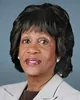
MEMBER OF CONGRESS

Maxine Waters

Follow by RSS

Maxine Waters, a California Democrat, focuses on financial regulation and consumer protection, opposing bank deregulation and defending Dodd-Frank and the CFPB, and speaking at length against gun violence. She argues her case mostly by citing outside authority—letters from labor, consumer, and gun safety groups, statistics, and fines like the one against Wells Fargo—and frames votes as choices between “Wall Street” and “working families.” She frequently attributes policy to President Trump’s control, asserting without evidence that independent agency heads “will do nothing but what they are told to do.” Most distinctively, she often answers something other than what was asked: debates over a specific banking bill regularly turn into extended digressions about big-bank customer service phone menus, small mortgages, and the affordability crisis “caused by Trump’s failed policies,” rather than the bill’s provisions. On the other hand, she rarely leaves promises undated or vague, and she fills less time than most with tributes or personal anecdotes.Written by AI from their statements. Updated .

Average grade
B–
72 / 100 over 10 statements
Signal 68 / 100
Relevance 60 / 100
Reasoning 78 / 100
Respect Not scored yet
Clarity 96 / 100
Averaged over the 10 of 10 statements graded so far.

In their own words

Loses points more than most for

Loses points less than most for A promise with no date, no measure and no one responsible.Less often than most members.What the tags mean Thanks and tributes.Less often than most members.What the tags mean A story that illustrates instead of making a point.Less often than most members.What the tags mean

Statements 10

House of Representatives ·

Main Street Capital Access Act

“I want the House to vote against this bill. It rolls back rules on big Wall Street banks instead of helping regular people with the high cost of living. It also breaks a compromise we just made on another bill to help community banks.”
Official Congressional Record

Mr. Speaker, we know how to support community banks and credit unions. We just did that with our landmark housing bill, and I was pleased to work with the chairman of that committee, Mr. Hill. It became law just a few days ago and included five Republican bills and four Democratic ones that were focused on supporting community banks. Now, here come Republicans to push for what they and their allies want: financial deregulation. This bill has 24 Republican provisions compared to just 2 from Democrats. In fact, I am disappointed that my friends on the other side of the aisle are advancing provisions that even contradict our carefully crafted bipartisan agreement in the housing bill. There is a provision in this bill on de novo banks that goes beyond our bipartisan deal, allowing regulators to decide whether to make permanent reforms that really should be for Congress to decide. We struck a compromise in passing the 21st Century ROAD to Housing Act, and I think everyone who voted for that should honor that compromise. Ultimately, Mr. Speaker, this bill is a distraction from what Congress should be focusing on: ending the affordability crisis caused by Trump’s failed policies. Nothing in this bill will help consumers afford groceries or pay for gas. Do you know who is not suffering during the affordability crisis? Wall Street. This bill would loosen the guardrails on Wall Street mega banks even as they report record profits. Even Chairwoman Foxx admitted that this bill is all about deregulation and rolling back Dodd-Frank, a law she said she strongly dislikes. Chairman Hill said they received drafting assistance from Trump’s regulators and banks, but not from organizations that represent workers or consumers. Mr. Speaker, we are not stupid. We understand that Trump controls all of his so-called organizations that are independent. He tells them what to do. We get that. He is in control. He is running this country. Those people who are selected to run these so-called independent agencies are those who will do nothing but what they are told to do. That is probably because the groups who represent actual people oppose this bill. That is what they are told to do. That is the leadership they have. Now is not the time to plant new seeds for the next crisis. Now is not the time to juice the mega banks’ profit margins. Now is not the time to legitimize Trump’s efforts to gut the CFPB, fair lending, and other consumer protections. Again, I am so proud and pleased with the work we did in a bipartisan manner. I am so proud and pleased that we were able to negotiate through some very tough times. I am so proud to announce that we had to give some, and we took some. They gave some, and we worked it out. I don’t know exactly what they are being told by Trump, but I know Trump is in charge, and he is charging a lot of what is going on. I urge my colleagues to please vote ``no’’ on this bill, and support the citizens, support their constituents, not Wall Street. Mr. Speaker, I yield back the balance of my time.

“I oppose this bill. Many groups warn that weakening bank rules will make another taxpayer bailout more likely, especially while watchdogs already lack the power and resources to oversee the markets.”
Official Congressional Record

Mr. Speaker, I yield myself the balance of my time. Mr. Speaker, I have another letter that says: ``This dangerous bank deregulation package would undermine core safeguards and supervision, push risk into the shadows, and make the next publicly financed bailout more likely. Further deregulation is especially alarming at a time when financial regulatory agencies are under political attack, pursuing industry-friendly agendas, and starved of resources, and when there is effectively no oversight of financial markets.’’ It was signed by the AFL-CIO, Americans for Financial Reform, and dozens of others. Mr. Speaker, I include this letter in the Record.

“I oppose this bill. It helps big banks and rich people instead of working families who need fair loans.”
  • Speech on a bill

    Relevance 0 of 100

    None of this speech addressed the bill under debate and what it would change.

    See full analysis
  • Speech on a bill

    Signal 24 of 100

    Much of this statement went to praise, blame, greetings, routine procedure or general stories rather than reasons, requests or specific points.

    See full analysis
Official Congressional Record

Members have a choice today. Whose side are you on? Do you want to advance Donald Trump’s deregulatory agenda to help out his wealthy friends on Wall Street, or are you on the side of working families, labor unions, consumers, and civil rights groups like those all over the country who just want equal and fair access to affordable financial products and services? For many of you who have been in this struggle with banks, where you have tried to get help with all kinds of issues, I want you to, again, go to your bank where you have a problem--don’t go because they are only available on the phone--and state your problem. See who you can get to talk to. See if you can get an appointment. See if you can get some answers to the questions that you have. You can’t do this with these big mega banks. They don’t have time for you. They don’t have time to listen to you talking about how you only have $200,000 and you want to buy this House around the corner. They are not interested in that. They are interested in the big money. They are interested in not only providing the loans for those who are spending a half million or so on a bank that they are trying to use to get a house. It is clear: The Big Banks are sick and tired of the way that they are being treated. They know they have a lot of power and a lot of friends in the Congress of the United States of America. They don’t know a new day is coming and a new way is coming. People are learning more and more why they have a right to be disturbed about the way that they are being treated. I tell people: Don’t be afraid to confront those Big Banks. Call us. Get your legislator to help you out. That is what we are supposed to do. Sometimes they can’t find us. Mr. Speaker, I reserve the balance of my time.

“I want the House to vote against this bill. Many civil rights, labor, and consumer groups across the country oppose it. It weakens rules that stop banks from discriminating and makes it harder to hold banks accountable.”
Official Congressional Record

Mr. Speaker, I yield myself such time as I may consume. Mr. Speaker, a wide variety of labor, consumer, and civil rights groups are strongly opposed to this bill. Let me read from one of the letters we received: ``The National Community Reinvestment Coalition (NCRC) and our network of 700+ community organizations urge Members to oppose H.R. 6955, the Main Street Capital Access Act and vote no on the House floor.’’ That is what we are being urged to do by our supporters. ``H.R. 6955 is a broad bank deregulation package that would weaken fair lending transparency, community accountability, bank supervision, and merger review. The bill would reduce the tools regulators and communities rely on to detect redlining, monitor access to credit, evaluate bank mergers, prevent harmful consolidation, and hold financial institutions accountable to the people they serve.’’ The signers of the letters don’t just come from blue States but from all over the United States of America. This includes Build WyCo from the great State of Kansas. We also have Building Neighborhoods Together in Pennsylvania, Fair Housing Center of Northern Alabama, and Freedom Equity in Ohio. More signers include Georgia Advancing Communities Together, the Neighborhood Recovery Community Development Corporation in Texas, and the United States Broadway Corporation in New Mexico. I could go on and on, but there is no time for that. Mr. Speaker, I include in the Record the letter from NCRC.

“I oppose this bill. Supporters say it helps small community banks, but it actually helps giant banks avoid government oversight.”
Official Congressional Record

Mr. Speaker, I yield myself such time as I may consume. Mr. Speaker, proponents say this bill is just for community banks, but here we have another example of the Big Banks sneaking in their rollbacks. I have four postings from the Bank Policy Institute, which represents all of the largest banks, like Wells Fargo. These postings advocate for indexing regulatory thresholds to nominal GDP instead of inflation. Why? It allows more and more banks to escape regulatory scrutiny. This bill will give Trump’s regulators--and only Trump’s regulators-- the opportunity to index 40 different thresholds to let large banks off the hook. Wall Street is making record profits while they are helping them. Mr. Speaker, for those of us who really care about community banks, we want to keep them because they service their communities in a more profound way. Again, I will repeat: They know and understand when you have a problem, you can call a big bank and you will find nobody. You will go through different menus that they have, but you will not be able to walk into the bank and talk to somebody sitting at a desk who will help you with your problem. Do I have to say more? Mr. Speaker, I reserve the balance of my time.

“I oppose this bill. It removes rules on big banks and lets them take over smaller ones. These giant banks ignore regular people who need small home loans, break the law, and treat fines as just the cost of doing business. This bill hurts community banks instead of helping them.”
Official Congressional Record

Mr. Speaker, I yield myself such time as I may consume. Mr. Speaker, I will mention again one of the atrocities that I have been able to experience working on these issues. Again, Wells Fargo was fined $3.7 billion just a few years ago for widespread mismanagement of automobile loans and mortgages. Their actions included unlawful fees and even repossession of cars. Now, someone would say, $3.7 billion, well, I want you to know they make so much money that is just a cost of doing business. They will keep doing it if we keep allowing them to get away with what they are trying to get away with today. If my friend wants a guarantee that this bill helps Wells Fargo, then he should support Ms. Garcia’s amendment that says that megabanks can’t benefit from this bill, but I guess he won’t. After all, my friend knows that today is Dodd-Frank’s birthday, and he is the skunk at the party. There is so much that we could point out that the average citizen knows in dealing with their banks. The average citizen is tired of being treated in the way that they are treated by their banks. I tell my friend that he is correct in the support that he did for the big bill that Mr. Hill and I worked so hard on. We have a lot in that bill. But let me point out one of the things in that bill that gives us cause to be concerned. Right now, Mr. Speaker, if you find a residence that you would like to buy, particularly if you are in a rural community, or you may be a low-income community, but you work every day and you can afford a house for maybe $90,000 to $100,000, the bank doesn’t want to be bothered with you. The bank wants the big loans. The bank wants the million-dollar loans. They want the half-billion-dollar mortgages. They don’t want the small mortgages. Guess what, Mr. Speaker. They don’t do them. As a matter of fact, many communities where there are residents who could afford the houses in their community are sold out to private equity firms and others who come and buy these houses for pennies on the dollar, but they won’t sell them to you, Mr. Speaker, because you don’t look like a big profitmaker for them. I am so pleased I worked with Mr. Hill, and we have done something to change that to encourage the banks to pay attention to those who can afford that $90,000 house, that $100,000 house, that $150,000 house, that $200,000 house. They are working every day. They can afford it, but the banks are not interested. My friend tells me that we should not be concerned about deregulation that puts these banks in a position where they are not only moving toward consolidation, but they are taking over banking in ways that will help them to get richer and richer. Guess what, Mr. Speaker. They will keep paying the fines, the big banks will, because that is the cost of doing business, and they still make money. This is outrageous. This is ridiculous. No more deregulation. No more looking at how you can frame it in such a way, Mr. Speaker, that you are saving the community banks. Mr. Speaker, you are not saving the community banks. As a matter of fact, you are putting them out of business. Mr. Speaker, I reserve the balance of my time.

“I want the House to vote against this bill. It rolls back bank rules and helps the biggest banks buy up smaller ones. It will hurt local community banks.”
  • Speech on a bill

    Signal 44 of 100

    Much of this statement went to praise, blame, greetings, routine procedure or general stories rather than reasons, requests or specific points.

    See full analysis
Official Congressional Record

Mr. Speaker, I yield myself such time as I may consume. Let me be clear: Dodd-Frank has not led to bank consolidation. That trend began when Congress repealed Glass-Steagall almost 30 years ago. What Dodd-Frank has done is ensure the longest stretch of economic growth in a generation. The threat to community banks is not Dodd- Frank, but it is to repeal it and return to their needless days, reckless days that led to the 2008 financial crisis. Just last week, we passed my bill as part of the 21st Century ROAD to Housing Act. My bill eased the requirements on new banks. H.R. 6955, however, would set new banks up for failure. In fact, the bill undermines much of what we were trying to accomplish when we worked together in a bipartisan way. What we have to do at this point in time is understand a provision of the housing bill that was carefully negotiated. Mr. Speaker, I thought we all were supposed to be in support of the housing bill. Everybody raved about the greatness of it. Now, 10 days after it became law, now some on the opposite side of the aisle are already trying to undo the bill. Now, this bill will actually make it easier for more, not less consolidation. The bill is bad for new banks but great for megabanks. Let me just say this: We all talk about loving community banks. I want you to know it is not the talk about loving community banks, it is action and what we do for or against them. I want you to know the big megabanks don’t even want them in their doors. They don’t even want to have those working behind the counter serving us. They have you serving from outside the bank. When you can get in touch with them, I want you to know, you have got to go through a hell of a menu to try to talk with someone that maybe in a community bank you can talk to. Do you know why we love community banks? It is because they understand the community. They know the people in the community. They work with you when you have a problem. The megabanks don’t know you, don’t care about you, don’t do anything to assist you, and hope you can’t get through their menus in order to speak with anybody. I say, it is not a lot of talk about loving community banks. It is action and what you do. Now, then you come in here talking about how much you love the community banks, yet you know that you can’t get the deregulation that you are doing unless you hid behind the community banks. If you love the community banks, all you have got to do is work with us to separate the regulations in a way that it does not undermine the community banks. If you want to be fair, charge all your big friends and all the big banks everything they should be charged with regulation. This is about whether or not you are going to use your power to literally undo what we have worked so hard to do to give the average person a decent chance with a bank, and that is community banks. Mr. Speaker, I am asking for a ``no’’ vote on this bill because, in the final analysis, I know that if you get away with these deregulations, we are going to have consolidation. It will only be five banks, almost only five big banks in the country that control everything. I am asking for a ``no’’ vote, and I reserve the balance of my time.

“I oppose this bill. It claims to help community banks, but it actually removes rules and oversight for the biggest banks on Wall Street. Weakening these safeguards will put our economy at risk of another financial crisis and make it harder to protect consumers from fraud.”
Official Congressional Record

Mr. Speaker, I yield myself such time as I may consume. Mr. Speaker, let me start by saying that we all care about community banks and credit unions. For that reason, I was pleased to work with Chair Hill on a package of community bank provisions included in our landmark housing bill, the 21st Century ROAD to Housing Act. Now, even though Trump refused to sign it, that legislation has become the law of the land. That law not only will get America back in the business of building housing, but it will help community lenders provide mortgages and other types of financing to support the American Dream of homeownership. Importantly, that bill did not have handouts. It did not have handouts for megabanks, Big Tech, payday lenders, debt collectors, or credit bureaus. That is not the case for the bill that is before us today. H.R. 6955 is Wall Street deregulation--that is what it is--hiding as a community bank bill. This package is made up of 24 Republican bills with just two Democratic bills. Today, we mark the 16th anniversary of the Dodd-Frank Wall Street Reform and Consumer Protection Act being signed into law. That is the law that bears the name of the late great and former Chairman Barney Frank. Unlike President Trump, President Obama knew when to sign a good bill when he saw it. That law was passed in response to the 2008 financial crisis when, in case my Republican colleagues have forgotten, millions of Americans lost their jobs, their homes, and their life savings. Yet, H.R. 6955 ignores these lessons and rolls back a long list of safeguards and oversight of the largest banks. Importantly, the Nation is grappling with an affordability crisis and surge in financial scams and fraud, costing consumers tens of billions of dollars. This was all made worse when Trump shut down the Consumer Financial Protection Bureau. Voting for H.R. 6955 would add insult to injury by thwarting a future CFPB from issuing rules, such as fixing credit reporting or reining in debt collectors or abusive medical debt practices. Maybe that is the point. Interestingly, Rules Committee Chairwoman Foxx said the quiet part out loud yesterday. She confessed that Republicans love deregulation. That is what this bill is all about. It is not affordability and not protecting consumers. It is about deregulation for Wall Street’s megabanks. Mr. Speaker, what is more is that this bill ignores lessons from the failures of Silicon Valley Bank and other regional banks just 3 years ago. Those large regional banks failed after Congress rolled back capital, liquidity, and other rules specifically for those banks. Nevertheless, this bill allows even more of these large banks to escape critical safeguards, which risks even more failures and harm to Americans and small businesses. If H.R. 6955 were to become law, it would be the most sweeping deregulation of Wall Street since the 2008 financial crisis. Two sections of the bill, sections 203 and 204, amend 15 different banking and consumer protection laws and would increase more than 40 different regulatory thresholds. There are so many laws being rolled back. The committee report for this bill is over 600 pages long, mostly to show how all these different laws are amended. In fact, the sponsors of this bill were so zealous to raise thresholds that they increased two thresholds that will aid bad actors who commit fraud against a bank or a large financial institution. You can’t make this up. There is a provision that will increase the amount that individuals can defraud a bank or future AIG by and then get government money to buy those failed assets for their own benefit. The largest labor union in the U.S., the AFL-CIO, and consumer advocates like Americans for Financial Reform and others wrote a letter saying that taken together, these changes would be more damaging than the sum of their parts, leaving the financial system dramatically weaker and more vulnerable to instability and crisis. Now, Republicans made some technical changes at the request of Trump regulators, but let me give you another example of what they didn’t fix. Wells Fargo, which many of you may remember created millions of fake consumer accounts and has been the subject of countless enforcement actions for consumer harm, like discrimination and anti-money- laundering deficiency, would have a new tool to delay future enforcement actions when consumers have been harmed. Mr. Speaker, instead of letting Wall Street put Americans and our economy at risk again, we should be addressing the affordability crisis caused by Trump’s failed economic policies and endless war with Iran. Mr. Speaker, I urge Members to oppose this bill, and I reserve the balance of my time.

House of Representatives ·

Protecting Privacy in Purchases Act

“I oppose this bill. Letting credit card companies use special codes for gun stores helps spot suspicious buying and can save lives. This bill stops states from using those codes.”
Official Congressional Record

Mr. Speaker, I yield myself the balance of my time. As I conclude, I will point out that when our committee held a hearing last year, none of the majority’s witnesses said a single positive thing about this bill in their testimony. That is probably because there is nothing positive to say about this harmful bill. Now, using merchant category codes for firearm retailers won’t solve this problem, not even close. The codes themselves don’t identify what is purchased, but it might have triggered a flag for unusual and suspicious purchases that get reported to law enforcement. Mr. Speaker, that might save 1 life or 10 lives or 100 lives or 1,000 lives or 10,000 lives. Even if it is a fraction of the 416,000 who have died from gun violence over the past decade, wouldn’t it be worth it? Mr. Speaker, the audacity of the opposite side of the aisle to tell States they cannot use these merchant codes, any State in the United States of America, even those who started in some way using these codes, they are now saying they want a law that would preempt your State from being able to use the merchant codes. Mr. Speaker, I yield back the balance of my time.

“I oppose this bill. It stops banks and credit card companies from using special codes for gun stores. Those codes help police spot suspicious gun purchases and stop mass shootings before they happen.”
  • Speech on a bill

    Reasoning 100 of 100

    This statement drew 3 conclusions and gave a reason for each one.

    See full analysis
Official Congressional Record

Mr. Speaker, I yield myself such time as I may consume. Mr. Speaker, I strongly oppose this bill because it limits efforts to detect and investigate gun violence and acts of terrorism. Before I discuss the bill, let’s start with a few sobering statistics: 46,000 Americans die from gun violence every year. That comes out to an average of more than 125 Americans losing their life each day due to gun violence. Of course, America is unusual in this regard. Americans are 26 times more likely to be shot and killed than if you lived in any other high- income country. Nearly one in five Americans say they have personally witnessed someone shot. In the past decade, more than 1.2 million Americans have been shot, with more than 400,000 who died from gun violence. For many who survive a gunshot, they may still suffer a lifetime of devastating consequences. Most of these data points come from GIFFORDS, a gun violence prevention group set up by our former colleague in the House, Gabby Giffords. Of course, she herself was shot when she served as a Congresswoman, and she later set up the group following the Sandy Hook Elementary mass shooting when 20 children and 6 educators lost their lives. Now, a few States, including California, New York, and Colorado, have taken action to require payment card networks to use a merchant category code, or an MCC, to distinguish firearms retailers from other types of retailers. Many different types of retailers have unique MCC codes, including florists, barbershops, art dealers, automotive tire shops, and even candy stores. While these merchant codes don’t reveal what individual goods are purchased, they can indicate an unusually large purchase at a type of business that might reveal a risk. This information could help law enforcement track suspicious purchases and prevent even more gun violence. Leading gun safety groups, including Brady, Community Justice, Everytown for Gun Safety, GIFFORDS, Guns Down America, and Newtown Action Alliance, sent the House a letter to urge Members to vote ``no’’ on this harmful legislation. In the letter that was sent to me, they said: ``We write in strong opposition to H.R. 1181, the Protecting Privacy in Purchases Act. This bill would make it easier for mass shooters, gun traffickers, and even terrorists to abuse our financial systems to stockpile firearms and ammunition undetected.’’ They go on to note that between 2007 and 2018, credit cards were used to finance at least eight major mass shootings. One of these included the shooting at Pulse nightclub in Orlando, Florida, where 49 people were killed and nearly 60 more were injured a decade ago last month, in June 2016.’’ Now, listen to this: Just days before the shooter opened fire, his internet search history included the terms ``credit card unusual spending,’’ ``FBI,’’ and ``why banks stop your purchases.’’ He had opened six new credit card accounts in the 8 months prior, and 12 days before the shooting, he spent more than $26,000 on things like a rifle, a semiautomatic pistol, several large magazines, and thousands of rounds of ammunition. Before this, his average monthly spending on his single card was $1,500. None of the credit card operators, payment processors, or banks were alerted to the types of transactions being undertaken, and they did not notify law enforcement officials about these purchases. We don’t know for sure, but had these MCC codes been in place for gun shops back then, a financial institution would have been empowered to report these suspicious credit card purchases to law enforcement. Americans are tired of the senseless gun violence and want Congress to do something to curb it. Unfortunately, this bill goes in the opposite direction and would implement a ban on such merchant reporting on the Federal level and would literally preempt existing State laws like those in California, New York, and Colorado. Mr. Speaker, I urge my colleagues to vote ``no’’ on this bill, and I reserve the balance of my time.