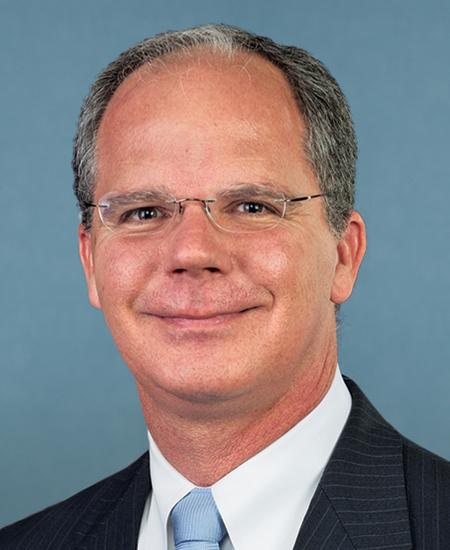
“I want this bill to pass. I'm moving its passage.”
“I want the House to pass this bill. It tells the Department of Energy to study how artificial intelligence and supercomputers can improve the nation's electric power system.”
“Madam Speaker, I move to suspend the rules and pass the bill (H.R. 9339) to require the Secretary of Energy to conduct an assessment on the use of artificial intelligence and high-performance computing technologies to enhance the bulk-power system, and for other purposes. The Clerk read the title of the bill. The text of the bill is as follows:”
Official Congressional Record
Madam Speaker, I move to suspend the rules and pass the bill (H.R. 9339) to require the Secretary of Energy to conduct an assessment on the use of artificial intelligence and high-performance computing technologies to enhance the bulk-power system, and for other purposes. The Clerk read the title of the bill. The text of the bill is as follows:
“I support this bill. It's about a study. A study to use AI for the electric grid. I want you to support the bill too.”
“I want the House to pass this bill. It tells the Department of Energy to study how artificial intelligence can make our electric grid more reliable and affordable. Our power grid is huge and complex, and AI is built to handle problems like that.”
“Madam Speaker, I yield myself such time as I may consume. Madam Speaker, I rise in support of H.R. 9339, the Affordable Innovation for the Grid Act, sponsored by my colleague Congresswoman Harshbarger of Tennessee. This bill directs the Secretary of Energy to develop a report on the opportunities to use artificial intelligence to enhance the reliability and affordability of our electric grid. The Nation's electric grid is replete with complex operational challenges, a network of millions of miles of wires and thousands of generators to keep the lights on every minute of the year. That makes it a particularly important use case for AI models that are designed to handle such complexities. Madam Speaker, I urge my colleagues to support this legislation, and I reserve the balance of my time.”
Official Congressional Record
Madam Speaker, I yield myself such time as I may consume. Madam Speaker, I rise in support of H.R. 9339, the Affordable Innovation for the Grid Act, sponsored by my colleague Congresswoman Harshbarger of Tennessee. This bill directs the Secretary of Energy to develop a report on the opportunities to use artificial intelligence to enhance the reliability and affordability of our electric grid. The Nation's electric grid is replete with complex operational challenges, a network of millions of miles of wires and thousands of generators to keep the lights on every minute of the year. That makes it a particularly important use case for AI models that are designed to handle such complexities. Madam Speaker, I urge my colleagues to support this legislation, and I reserve the balance of my time.
“I introduced this bill. It's a bipartisan bill. Our energy grid is important. New power can't connect fast enough. It takes too long. That's bad for the grid and for competitiveness. This bill makes the Department of Energy study how AI and computing can help. It can speed up connections. It can improve reliability. We need to understand the risks. We don't know the status of these technologies now. The study will tell us. Then we can act. I want us to have affordable and reliable energy. Support my bill.”
“I want the House to pass this bill. It directs the government to study how artificial intelligence and advanced computers can make our electric grid faster, more reliable, and more efficient. Right now, delays in connecting new power to the grid hurt our economy. This study will give Congress the facts it needs to fix those problems.”
“Madam Speaker, I rise today in support of the Affordable Innovation for the Grid Act. It is bipartisan legislation I introduced with my colleague from California, Congressman Mullin. Our energy grid is the backbone of our economy, and every hospital, factory, and family in America depends on it working reliably. Right now, the system connecting new power generation to that grid is badly backlogged. Interconnection studies that should take months are dragging on for years, and that delay is more than just a paperwork problem. It is a drag on the grid performance and on American competitiveness at a moment when energy demand is skyrocketing like never before. This bill takes a commonsense first step toward fixing that. It directs the Secretary of Energy, working with FERC and NERC, to conduct a comprehensive assessment to determine how technologies like high- performance computing and artificial intelligence can be used to enhance grid operations, finding efficiency in our existing capacity, speeding up these interconnection studies, and improving reliability with tools like predictive maintenance and digital twins. Understanding how these tools can help our bulk power system run on full power will be critical to ensuring affordable rates for the long term. As part of the study, DOE will also work to understand the technical and cybersecurity barriers for widespread adoption. Madam Speaker, we don't have a clear national picture of where this technology stands, but this bill gets us that picture with a report due to Congress within a year and substantive recommendations so policymakers have the facts on how these technologies can help reliability and performance of our grid and where the challenges lie. My bill is both bipartisan and forward looking. Most importantly, it is about making sure America leads the world as the epicenter for affordable, reliable energy. Madam Speaker, I urge my colleagues to support this bill.”
Official Congressional Record
Madam Speaker, I rise today in support of the Affordable Innovation for the Grid Act. It is bipartisan legislation I introduced with my colleague from California, Congressman Mullin. Our energy grid is the backbone of our economy, and every hospital, factory, and family in America depends on it working reliably. Right now, the system connecting new power generation to that grid is badly backlogged. Interconnection studies that should take months are dragging on for years, and that delay is more than just a paperwork problem. It is a drag on the grid performance and on American competitiveness at a moment when energy demand is skyrocketing like never before. This bill takes a commonsense first step toward fixing that. It directs the Secretary of Energy, working with FERC and NERC, to conduct a comprehensive assessment to determine how technologies like high- performance computing and artificial intelligence can be used to enhance grid operations, finding efficiency in our existing capacity, speeding up these interconnection studies, and improving reliability with tools like predictive maintenance and digital twins. Understanding how these tools can help our bulk power system run on full power will be critical to ensuring affordable rates for the long term. As part of the study, DOE will also work to understand the technical and cybersecurity barriers for widespread adoption. Madam Speaker, we don't have a clear national picture of where this technology stands, but this bill gets us that picture with a report due to Congress within a year and substantive recommendations so policymakers have the facts on how these technologies can help reliability and performance of our grid and where the challenges lie. My bill is both bipartisan and forward looking. Most importantly, it is about making sure America leads the world as the epicenter for affordable, reliable energy. Madam Speaker, I urge my colleagues to support this bill.