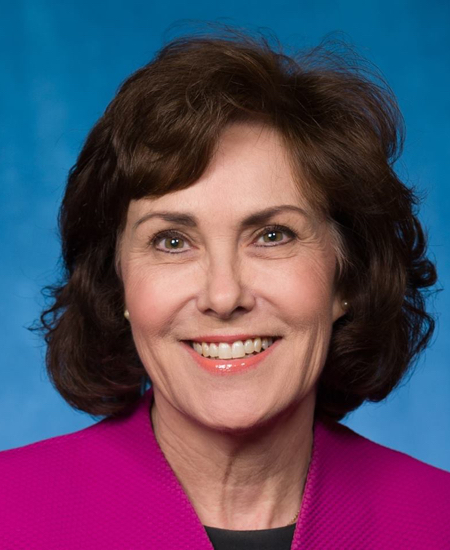
Jacky Rosen, NV
Linked statement
“Something is wrong. Jewish people are scared. They should not be scared in their places of worship. But they are. Because bad things have happened. Many attacks. It's real. The data shows it. It is not good. I was president of a synagogue. I know how much security costs. Synagogues spend a lot of money on guards and security. That is a lot of money. I want the government to spend more money to help pay for this security. I want my bill to pass. It would give more money for security grants. It would help. We can't wait. We need to act now. We must keep people safe.”
“I want the Senate to pass my bill to protect synagogues and other houses of worship. Attacks and hatred against Jewish people are rising quickly. My bill gives synagogues more money for security and helps local police protect places where people pray.”
“Madam President, this past weekend, Jews across the country and around the globe celebrated Rosh Hashanah, bringing in the new year with hope and excitement for what is to come. Now we are just days away from the holiest day in the Jewish calendar, Yom Kippur, when we take time to reflect on the year ahead and atone for actions we have taken in the past year. The 10 days between Rosh Hashanah and Yom Kippur are the most sacred and widely observed time in the Jewish calendar. This is a time we all come together with family and friends and loved ones, a time for reflection, for gratitude, and for celebrating the traditions that connect us to one another and the generations before us. Unfortunately, for too many American Jews, the High Holidays are now also bringing something else: fear. While Jewish families are preparing to hear the shofar and gather around their holiday tables, synagogue leaders and their congregations are asking themselves questions that no one should ever have to ask before they go to worship, before they go to pray, before they go to a sanctuary. They are asking: Is our place of worship safe? Do we have enough security? Are our doors secure? Do we have enough cameras? What happens if someone targets our congregation? What if there is an active shooter? Do we know all the exits? Do we know what to do? Do we know where to go? These are the questions that no one who goes to worship should ever have to ask in this country, and yet it is a reality for too many Jewish communities today. Of course, if you look at the data, these fears are not unfounded. According to a recent ADL report, 2025 was the third highest year for anti-Semitic incidents in the United States since the ADL began collecting data, and physical assaults against Jews were higher in 2025 than ever before. The FBI data has shown that Jewish Americans were the target of nearly 70 percent--70 percent--of religiously motivated hate crimes in this country in 2025 despite making up just 2 percent of the population. This data corresponds to horrific incidents we have seen on news reports this past year, including a historic synagogue in Jackson, MS, being firebombed and Jewish congregations defaced in Austin, TX; Albuquerque, NM; Hot Springs, AR; and Oak Park, MI. And in West Bloomfield, MI, a man drove his car into a building housing a synagogue and a preschool and then opened fire--opened fire. I wish I could say these were isolated incidents, but I can't. These incidents are part of an alarming trend. Jews in America are facing the kind of hatred that reminds us that anti-Semitism is not something of the past. It is not something that we only read about in history books, though they have shown us what happens when anti-Semitism is allowed to take hold of a society. I recently returned from Poland, where I visited the Auschwitz- Birkenau Memorial and Museum. The preserved grounds of the concentration and extermination camps stand as a testament--a sad testament--of what can happen when hatred is allowed to reach its most evil form. It happened after years and years of increasing discrimination, violence, and marginalization that went unchecked--went unchecked. There are countless lessons of the Holocaust, but one of the strongest ones is what can happen when ordinary people look at hatred with indifference. The Holocaust did not only happen because of the Nazis, but because of the millions of people who also kept silent in the face of dehumanization and prejudice. They kept silent, and this indifference allowed for the murder of 6 million Jews, as well as millions of others. This is why we must recommit ourselves to relearning these lessons and not allowing hatred to go ignored in our country today--in our country. So during the August State work period, I also met with rabbis from four congregations in Southern Nevada to discuss how they are preparing for the High Holidays. They all shared the same concern: physical safety of their congregations, of their congregants, of people who come to worship, from the newborn all the way to the oldest senior citizen. We talked about the security preparations they have to make during this time of year and the costs that go along with them. We talked about the fear that comes with knowing that a place of worship can become a target in an instant--we all know this--and the burden that falls upon synagogue leaders and volunteers to protect their place of worship, their congregants, their families, and their friends. And it is a burden I know all too well. Before I came to the Senate, I served as president of the largest Reform synagogue in Nevada. I know exactly what it takes to prepare a congregation for High Holidays, and I know that security plans have become an unfortunate and expensive part of that preparation. In fact, security costs are usually the largest portion of a synagogue's budget now--the largest portion of the budget because they have to pay for hiring guards, installing barricades, adding bulletproof glass to windows, reinforcing doors, and metal detectors. You have to walk through a metal detector and screening to get into my synagogue now. According to a recent study from the Jewish Federations of North America, the Jewish community spends an average of $1 billion a year now--$1 billion a year now--on security. It is a record high--billions of dollars just to worship safely. So think about that for a moment. In the United States, in 2026, we have Americans who have to worship behind locked doors and bulletproof glass, protected by armed guards, just to be with their family and friends and pray. Imagine if you didn't feel it was safe to go worship, gather together. And we can't ask these communities to shoulder that burden alone. This is exactly why I have always supported fully funding and reforming the Nonprofit Security Grant Program. This program helps synagogues and other houses of worship and other at-risk institutions make critical security improvements for the safety of their congregations. It is a lifesaving program that helps the Jewish community and other religious communities, as well, that are at risk of violence. It helps them offset the cost of keeping themselves and their families safe, which is why I introduced bipartisan legislation to nearly triple the funding for the Nonprofit Security Grant Program and to improve it, to make sure that the money actually gets to the communities that need it. My Jewish American Security Act, which I introduced with Senator Lankford and a broad bipartisan coalition of Senators, would also create a new Department of Justice grant program to help State and local law enforcement increase security around at-risk houses of worship. And these additional protections, well, they mean the difference between walking into a synagogue and thinking about prayer or walking into your synagogue and looking for the exits and thinking about what your escape route might be. These additional protections are about making sure that a child can walk into a preschool or a Hebrew school and think about learning, not about an active-shooter drill. And they are about making sure that our houses of worship remain what they are supposed to be: places of faith, places of community, places of peace. I often say that anti-Semitism is a canary in a coal mine; it is a warning sign. When hatred against one community is allowed to grow, it threatens all of us. So we cannot wait for the next attack. We cannot wait for another synagogue to be targeted, and we cannot wait for another family to be afraid just to walk through the doors of their own house of worship anywhere. We have to act now. We have to act now, before it is too late. And as Jewish families gather together in the coming days for Yom Kippur, they will reflect on the year behind them and the year ahead. So please let us all commit ourselves to doing everything that we can to make sure that those families can worship safely and in peace. I yield the floor.”
Madam President, this past weekend, Jews across the country and around the globe celebrated Rosh Hashanah, bringing in the new year with hope and excitement for what is to come. Now we are just days away from the holiest day in the Jewish calendar, Yom Kippur, when we take time to reflect on the year ahead and atone for actions we have taken in the past year. The 10 days between Rosh Hashanah and Yom Kippur are the most sacred and widely observed time in the Jewish calendar. This is a time we all come together with family and friends and loved ones, a time for reflection, for gratitude, and for celebrating the traditions that connect us to one another and the generations before us. Unfortunately, for too many American Jews, the High Holidays are now also bringing something else: fear. While Jewish families are preparing to hear the shofar and gather around their holiday tables, synagogue leaders and their congregations are asking themselves questions that no one should ever have to ask before they go to worship, before they go to pray, before they go to a sanctuary. They are asking: Is our place of worship safe? Do we have enough security? Are our doors secure? Do we have enough cameras? What happens if someone targets our congregation? What if there is an active shooter? Do we know all the exits? Do we know what to do? Do we know where to go? These are the questions that no one who goes to worship should ever have to ask in this country, and yet it is a reality for too many Jewish communities today. Of course, if you look at the data, these fears are not unfounded. According to a recent ADL report, 2025 was the third highest year for anti-Semitic incidents in the United States since the ADL began collecting data, and physical assaults against Jews were higher in 2025 than ever before. The FBI data has shown that Jewish Americans were the target of nearly 70 percent--70 percent--of religiously motivated hate crimes in this country in 2025 despite making up just 2 percent of the population. This data corresponds to horrific incidents we have seen on news reports this past year, including a historic synagogue in Jackson, MS, being firebombed and Jewish congregations defaced in Austin, TX; Albuquerque, NM; Hot Springs, AR; and Oak Park, MI. And in West Bloomfield, MI, a man drove his car into a building housing a synagogue and a preschool and then opened fire--opened fire. I wish I could say these were isolated incidents, but I can't. These incidents are part of an alarming trend. Jews in America are facing the kind of hatred that reminds us that anti-Semitism is not something of the past. It is not something that we only read about in history books, though they have shown us what happens when anti-Semitism is allowed to take hold of a society. I recently returned from Poland, where I visited the Auschwitz- Birkenau Memorial and Museum. The preserved grounds of the concentration and extermination camps stand as a testament--a sad testament--of what can happen when hatred is allowed to reach its most evil form. It happened after years and years of increasing discrimination, violence, and marginalization that went unchecked--went unchecked. There are countless lessons of the Holocaust, but one of the strongest ones is what can happen when ordinary people look at hatred with indifference. The Holocaust did not only happen because of the Nazis, but because of the millions of people who also kept silent in the face of dehumanization and prejudice. They kept silent, and this indifference allowed for the murder of 6 million Jews, as well as millions of others. This is why we must recommit ourselves to relearning these lessons and not allowing hatred to go ignored in our country today--in our country. So during the August State work period, I also met with rabbis from four congregations in Southern Nevada to discuss how they are preparing for the High Holidays. They all shared the same concern: physical safety of their congregations, of their congregants, of people who come to worship, from the newborn all the way to the oldest senior citizen. We talked about the security preparations they have to make during this time of year and the costs that go along with them. We talked about the fear that comes with knowing that a place of worship can become a target in an instant--we all know this--and the burden that falls upon synagogue leaders and volunteers to protect their place of worship, their congregants, their families, and their friends. And it is a burden I know all too well. Before I came to the Senate, I served as president of the largest Reform synagogue in Nevada. I know exactly what it takes to prepare a congregation for High Holidays, and I know that security plans have become an unfortunate and expensive part of that preparation. In fact, security costs are usually the largest portion of a synagogue's budget now--the largest portion of the budget because they have to pay for hiring guards, installing barricades, adding bulletproof glass to windows, reinforcing doors, and metal detectors. You have to walk through a metal detector and screening to get into my synagogue now. According to a recent study from the Jewish Federations of North America, the Jewish community spends an average of $1 billion a year now--$1 billion a year now--on security. It is a record high--billions of dollars just to worship safely. So think about that for a moment. In the United States, in 2026, we have Americans who have to worship behind locked doors and bulletproof glass, protected by armed guards, just to be with their family and friends and pray. Imagine if you didn't feel it was safe to go worship, gather together. And we can't ask these communities to shoulder that burden alone. This is exactly why I have always supported fully funding and reforming the Nonprofit Security Grant Program. This program helps synagogues and other houses of worship and other at-risk institutions make critical security improvements for the safety of their congregations. It is a lifesaving program that helps the Jewish community and other religious communities, as well, that are at risk of violence. It helps them offset the cost of keeping themselves and their families safe, which is why I introduced bipartisan legislation to nearly triple the funding for the Nonprofit Security Grant Program and to improve it, to make sure that the money actually gets to the communities that need it. My Jewish American Security Act, which I introduced with Senator Lankford and a broad bipartisan coalition of Senators, would also create a new Department of Justice grant program to help State and local law enforcement increase security around at-risk houses of worship. And these additional protections, well, they mean the difference between walking into a synagogue and thinking about prayer or walking into your synagogue and looking for the exits and thinking about what your escape route might be. These additional protections are about making sure that a child can walk into a preschool or a Hebrew school and think about learning, not about an active-shooter drill. And they are about making sure that our houses of worship remain what they are supposed to be: places of faith, places of community, places of peace. I often say that anti-Semitism is a canary in a coal mine; it is a warning sign. When hatred against one community is allowed to grow, it threatens all of us. So we cannot wait for the next attack. We cannot wait for another synagogue to be targeted, and we cannot wait for another family to be afraid just to walk through the doors of their own house of worship anywhere. We have to act now. We have to act now, before it is too late. And as Jewish families gather together in the coming days for Yom Kippur, they will reflect on the year behind them and the year ahead. So please let us all commit ourselves to doing everything that we can to make sure that those families can worship safely and in peace. I yield the floor.