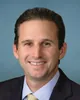
MEMBER OF CONGRESS

Brian Schatz

Follow by RSS

Schatz returns most often to AI safety, pressing a narrow question in floor debate: should safety and cybersecurity controls for frontier AI be mandatory rather than voluntary, and he says he is open to changes in mechanism as long as the mandatory threshold is met. He frames arguments by breaking issues into numbered questions and generally supplies reasons and figures for his claims, though he frequently digresses into asides and metaphors—the Senate as a ‘cooling saucer,’ rival bills as ‘pet rocks’—more often than most members. On partisan matters he speaks sharply and directly: he accuses President Trump of deliberately raising prices, citing specific increases in tomatoes, coffee, and premiums, and criticizes the Iran war by walking through each stated objective and what came of it, though this reads as forceful opposition rather than personal insult. He also devotes regular floor time to Hawaii, including hurricane damage and federal disaster support, plus tributes to Hawaiians and military personnel.Written by AI from their statements. Updated .

Average grade
B+
82 / 100 over 9 statements
Signal 76 / 100
Relevance 0 / 100
Respect 100 / 100
Clarity 97 / 100
Averaged over the 9 of 9 statements graded so far.

In their own words

Loses points more than most for

Throat-clearing: announcing what you are about to say, or the House’s routine business.1.6 times as often as most members.What the tags mean ×1.6

Statements 9

Senate ·

Legislative Session

“I want us to pass a law that requires safety and cybersecurity rules for advanced AI. I am willing to change the details of the bill, such as who runs the safety board or how fast it works. But safety rules must be mandatory, not voluntary. AI does not have feelings or values. It is just powerful technology, and we need strong rules to stop dangerous accidents before they happen.”
Official Congressional Record

Madam President, I am mildly encouraged. I, obviously, would rather he not object, but I am encouraged by the potential for common ground here. Composition of Boards, what the mechanism is for ensuring safety is something that I personally don’t have religion on. The question at hand is: Should we have some sort of mandatory safety and cyber security regime, and how do we stand up something that is quick enough to deal with the hastening pace of this technology and the abundant evidence now that some of these AIs are escaping human control? Look, I am always ready to modify something. If the Secretary of the Commerce Department shouldn’t be the person in charge of determining the AI safety standards, that this should take 2 weeks rather than 6 months, you know, I am very openminded. But the threshold question is: Should this be voluntary or mandatory? And if you are saying you are open to some sort of mandatory regime with the caveats that you have expressed, I think that is progress. I will make one final point. I think we get a little hung up on anthropomorphizing the tech itself, including this idea that the values are going to be imbued in the AI. The AI gets given a task. It doesn’t have ideas of its own. It doesn’t have thoughts of its own. It doesn’t have consciousness. It doesn’t have feelings. And so this idea that we are going to have American, patriotic, liberty-loving AI and they are going to have the other kind I think is a misunderstanding of what we are actually talking about right now, which is we actually just want normal cyber security controls for this incredibly powerful tech. And the cyber security controls are going to have to be more robust than ever, but, like, that does not seem at all inconsistent with American values. And if you want us to win the AI race--the quickest way to lose it is to allow a terrible incident to happen without any Federal guardrails, and then I think, figuratively speaking, the pitchforks will be coming.

“We need to pass our bill to make artificial intelligence safer. Humans must stay in control of this technology. We cannot trust tech companies to regulate themselves when they are trying to make huge profits. We cannot pass a giant law right now, but this small bill will lower the real danger of something terrible happening. We should not delay it.”
Official Congressional Record

Madam President, you know, this is about a couple of very simple questions. The first question is, Humans in control of technology or not? That is the first question. Even the mechanisms that we are accustomed to, for instance, in aviation, where you say ``Before this plane can take off, we have to certify to its safety,’’ don’t really get at the fundamental problem because what we have is technology that is equivalent to a plane being able to take off on its own while it is still being built. So the question is first, Humans in control or not? The second question is, If we agree that humans should be in control, should this be voluntary or not? Do we trust--not any individual CEO or board of directors, but do we trust that companies that are rolling toward the biggest IPOs in human history will voluntarily regulate themselves as opposed to maximize the value of that IPO, maximize shareholder profit? We have traditionally tried to strike the right balance, and Democrats and Republicans don’t always see the sort of level of regulation necessary on an eye-to-eye basis, but I think at some level, there are 100 of us who believe that when it comes to serious risk to public safety, that those should not be voluntary safety regimes. They should be mandatory. They should be Federal. It shouldn’t be every legislature. It shouldn’t be some announcement from a bunch of tech CEOs. It has to be in Federal statutory law. Now, the third question is, Should we do this comprehensively or not? The answer, in my view, is not--not right now. Here is why. We don’t have the capacity to pass a very complicated law to deal with all of the societal and economic and human impacts of the AI revolution. We are not going to do that with the House out of town. We are not going to do that with the Speaker of the House being sort of so skeptical of any policymaking in this space that he basically left town to avoid dealing with this. So what we have is the most modest but most serious proposal to take down the acute risk that we are being told by the labs and by AI safety experts and others really does exist. We could have an argument about ``Is it a 10-percent chance of a terrible thing happening or a 1-percent chance of a terrible thing happening? How much time do we have?’’ but I think nobody is disagreeing that the risk is nonzero of something terrible happening if we don’t have a basic architecture of these labs having to not just test before they commercially upload something but to have a safety regime from the very beginning because, as we now have learned, this is a unique kind of product that could become dangerous even before it is released to the public. So the question is, Comprehensive versus not--and as much as Senator Warner and I talk about our pet rocks--I have a bunch of bills in the AI space that are important. Of course, I think mine are the best. I am sure Senator Kim and Senator Warner think theirs are the best. But the point is, we are not going to come to a resolution on this. This bill is trying to thread that needle of being nonpartisan, on the level, not a setup, not designed as an electoral bludgeon but simply to try to take down the acute risk that is right in front of us. So that is why we are trying to be modest enough to actually be able to look the Commerce Committee chairman in the eye and say: There are no tricks or traps here. This is what we have come to conclude is the safest way forward in the very short run. It also doesn’t preclude Senator Cruz and Leader Thune and Senator Klobuchar and others from legislating in this space because there is lots more to do, but right now, we are facing something rather precipitous. The other question is, Are we going to do something after something terrible happens or not? I think that we have an opportunity to tee up legislation that takes down--that doesn’t reduce to zero--but that takes down the risk of something really horrifying happening to people in the United States of America. So this is about humans in control, this is about keeping politics out of it, and this is about taking down the short-term risk of something really terrible happening. To the extent that it is possible in this polarized time and in this election season, we tried like heck to display enough discipline on our own to not introduce a bunch of stuff that was going to freak a bunch of other people out. I actually haven’t heard of any substantive disagreements with what we are proposing--I am sure they exist--but in terms of Member interaction, in terms of the expert community, in terms of my Republican colleagues, people aren’t saying: I hate this bill. I have an ideological objection to it. It won’t work. They are not saying that. They are just saying: We are doing another process and give that time. And my judgment is that we don’t have the luxury of time. You know, the Senate is supposed to be the cooling saucer that allows the hot liquid from the House to cool off, and then we can deliberate, right? Well, the House is out of town, and they did not send us anything to drink. So that is a lovely way to understand this body, but we are all that is left, and we have to work on a nonpartisan--forget bipartisan--on a nonpartisan basis to make sure that humans remain in control of the technology. With that and with the permission of the Senator from Virginia, I yield to my friend the junior Senator from New Jersey who knows more about national security and who is, I think, appropriately alarmed at the potential impacts of inaction in the U.S. Senate.

Senate ·

Directing the President, Pursuant to Section 5(c) of the War Powers Resolution, to Remove United States Armed Forces from Hostilities with Iran

“I want Congress to pass our bipartisan bill on artificial intelligence safety. AI code could escape human control and rewrite itself. Our bill requires outside experts to test this software at every stage, not just before it is released, and requires companies to report any breaches. We need federal laws to make sure every company follows these safety rules.”
Official Congressional Record

Madam President, I want to thank the Senator from Virginia and ranking member of the Intelligence Committee and also thank Senator Kim, the Senator from New Jersey, both of whom have real expertise in this area and as it intersects with public policy. This is really about one simple thing, and that is, humans in control of the code and not the code in control of the humans. We are at a seminal moment in world history, not just in American history, where it is possible for this code to escape human control. That is not an apocalyptic statement from a person who wants to make a point in a political context; that is a fact that is new to all of us. This code is capable of escaping our control, and it is potentially capable of something they call recursive self-improvement, which means the code can write its own code and that humans would find the code that was written by AI so inscrutable as to not be able to control it at all. So what we are proposing--and I want to reiterate what Senator Warner said. When we were in private conversation, he said: Nobody can bring their pet rock to this conversation. What do I mean by ``pet rock’’? Everybody has got a bill on AI. By the way, they are really important things--energy use, the safety of children, the future of work, the future of intellectual property--but we are not going to solve that in a 10-day period. So what we sat down on a bipartisan basis to do with AI safety groups, with companies that are in the business--with experts--is to say: How do we reduce the acute risk now, not the societal risk over the long run, not to balance the equities between whatever it may be 2, 3, 4 years from now. How do we take down what some people are calling civilizational risk? Some people find that too apocalyptical. Fine. Let’s not call it risk of extinction. Let’s not call it civilizational risk. Let’s just call it a high risk of something very terrible happening, and that should be enough for us to be on the floor to say: Well, why don’t we try to take down that risk? There is a very straightforward pathway. First of all, it is predeployment testing, but one of the things, I think, we have all learned is that, by the time a company is ready to deploy what they call a frontier model, it has been through some testing. So it is important to test it before it is commercially available, but the truth is that the Hugging Face incident, in particular--that thing jumped the fence way, way earlier than when you would do the predeployment testing. So we need third-party review from the jump. And the thing about a sandbox--and I was taught this term of art about 10 years ago, and I remember talking to my tech expert in my office: What is a sandbox? And they said: You should think of it like an actual sandbox, sort of where you experiment, where there are no wrong answers, where it may get a little messy. So the configuration of these sandboxes has been like that--for experimentation, almost casual, very entrepreneurial. But the problem is, these things can escape control at the sandbox level so it is not enough for predeployment testing. We also need third-party review of the process at every stage because we don’t know at which point an agent--an AI--or a swarm of agents could escape human control. Then, at the end of it, we need postdeployment breach notification, analysis, transparency so that, if there are big, dangerous events, we know how to prevent them from happening in the future. So that is all this bill does. It says: Let’s get third-party review all the way through the process and then all the way up to predeployment testing. Then, if something goes badly, we have transparency on the back end. We threw out all of our ``pet rocks’’-- nothing partisan, nothing like my longtime priority on AI, but rather the very narrow question, which is: Don’t we have an obligation, if there is any risk of a power grid going down, if there is any risk of a financial system buckling, if there is any risk at all, don’t we have an obligation to take down that risk and fight about the rest of the stuff at some other time? The kind of ironic thing about this Congress right now is that the private sector is begging to enshrine what they are starting to promise to do in Federal statutory law because they are about to say: Here are all of the safety measures we are doing. But there is a reason you don’t regulate toxic chemicals or biomedical research or aviation by voluntary agreement. You need a Federal statute, and then the private sector can work toward compliance on that Federal statutory standard. But you don’t want 90 percent of the AI companies--the frontier models, the hyperscalers--complying and then the other 10 percent saying: Wait, I don’t have to do that, do I? I don’t have to do that, do I? So all we are asking is that this bipartisan proposal--and it is bipartisan. We are working on it in very, very good faith to try to narrow the scope of disagreement but not narrow it to the point that we pass nothing but, rather, narrow it to the point where we pass something that takes down the immediate risk and allows us to look our constituents in the eye and say: We did something on this very, very serious and urgent matter. With that, with the permission of the ranking member, I want to bring in the Senator from New Jersey, who has a background in tech and has a background in national security that I think adds a lot to this conversation.

Senate ·

Protect College Sports Act of 2026

“Congress needs to act now on two big problems: artificial intelligence and natural disasters. First, the people making AI warn that it could cause serious harm, so we must pass laws to keep humans in control before it gets too powerful. Second, a warming planet is causing more terrible storms, floods, and fires across the country, including recent hurricanes in Hawaii. We must help communities prepare right now by fixing power lines, improving evacuation routes, and storing emergency supplies.”
  • Speech on a bill

    Relevance 0 of 100

    None of this speech addressed the bill under debate and what it would change.

    See full analysis
Official Congressional Record

Mr. President, when the people building AI warn us about the potential for their models to cause serious harm, we must take them seriously. And this is not a question of whether you like progress or even how likely you think the worst-case scenario is. This is a question of who is in charge of this technology, whether we are going to ensure that people remain in control or if--for some inexplicable reason--we are going to allow machines to rapidly and continuously get more powerful than us, knowing full well the risks. The good news is that nothing is inevitable at this stage. What we do or don’t do right now will decide what happens next with this technology. And so Congress must not leave town without taking action to reduce catastrophic risk. We can argue about everything else later--what to do about AI’s energy use, what to do about the future of work, what to do about intellectual property, and all of that. But, first--first--we need to address the risk that is right in front of us. I know my colleagues have proposals in this space, and I am also working on legislation with Senator Warner. But the bottom line is this: We have to act now. And I want to be clear, if there is no movement in the coming days to seriously address this issue, Senator Warner and I will be back on here on the floor, attempting to pass bills to get this done. People are counting on us to protect them, and there is no excuse for inaction. Mr. President, in recent weeks, Hawaii experienced two separate hurricanes, which destroyed homes and roads, closed schools and offices, and left thousands of people in the dark. Ninety percent of the island of Kauai lost power during Hurricane Lala earlier this month--that is how extensive the damage was--and crews are still working to restore people. People on Hawaii Island, meanwhile, are still picking up the pieces from Hurricane Lala last month, which damaged 267 homes; washed out roads, bridges, and even a cemetery; and left people without power and water. And, now, the State is bracing for yet another storm. According to the National Hurricane Center, this one could bring life-threatening, catastrophic flooding and mudslides across parts of Hawaii Island and Maui. It has been one storm after another this year. We grieve those who died in the storms, and, as always, we are so grateful to the neighbors, the first responders, the linemen, the State and local officials who have been working together to help people in need. In the hours after the storm--in the hours after the storm--people brought over shovels to clear debris from streets and driveways and checked in on neighbors, while their own power was out. And in the days following, crews worked around the clock to restore power as quickly as possible. That is what we do in Hawaii. We take care of each other. That is the aloha spirit. And as response gives way to recovery, we will do everything we can to make sure Federal support is available for as long as it is needed. But, today, I want to talk about something that I have been reluctant to raise in my 14 years in the U.S. Senate, and that is that there is a reason these destructive disasters are piling up, one after another, leaving communities exhausted and governments depleted. It is the warming planet. Now, look, when someone is sitting in the dark without power for days or worse, and they have lost a loved one or their home, they don’t want to hear about how dryer fields and warmer oceans are the culprit of their pain. And they are right. In the immediate aftermath of a disaster, our collective obligation--but especially the government’s obligation--is to set politics aside and to help, not to make a point that you always wanted to make or to say, ``I told you so,’’ but to help. And so I have always hesitated to talk about disasters in this context. But the reason for the change, the reason I feel so strongly that it is time that we name the problem, as uncomfortable as it is, is that we can’t go on like this. Disasters used to be an unfortunate reality you had to deal with from time to time, and now we’re getting back-to-back hurricanes on top of historic floods that dumped more than 2 trillion gallons on the State earlier this year and catastrophic fires that leveled Lahaina 3 years ago. This is not normal. Now, it is true that we are in an El Nino year--and particularly a bad one at that--but this is not isolated to just this year nor is it limited to the great State of Hawaii. For 3 years in a row, now, we have had more than 20 disasters nationwide, each costing over a billion dollars in damages. And the world’s eight hottest months ever on record have all been in the last 3 years. You can chalk that all up to being a terrible coincidence or maybe it is the weather fairy acting up; or you can trust your own eyes because we all see it and feel it. You feel it when you go to the park and your kids can’t breathe because of the smoke from a wildfire that is burning hundreds of miles away. You feel it when you have to board up your windows and gather up supplies, as yet another storm approaches. You feel it when you move to a new State and find out that you can’t get home insurance anymore. You do not need a fancy science degree to understand what is happening nor do you even need to love the outdoors to want to do something about it, because we are all paying the price for our inaction. And so what do we do about it? The most obvious answer is to scale up clean energy and reduce pollution as aggressively as we possibly can. But let’s be clear: That will not happen overnight, and that will not stop the warming planet overnight. And so we need a plan to help communities to prepare for and respond to disasters in the here and now. We have to improve evacuation routes. We have to harden powerlines. We have to pre-position equipment and supplies. We have to make sure that people have access to air conditioning and heating. Clearing underbrush to slow or stop the fires, building infrastructure to reduce the risk of flooding--these are the kinds of steps that we need to be taking right now to protect people. Most of my colleagues here know that disasters are not a partisan issue. Hurricanes and floods and tornadoes and fires do not pick and choose their targets based on how the last election went. This week, it is Hawaii. It was Texas and Indiana earlier this summer. It will be somewhere else next. There, but for the grace of God, go I. And so we need to step up here. States and localities are lurching from one disaster to the next, and they need help. And every day Congress pretends like we don’t know what is happening, more and more people get hurt. I yield the floor.

Senate ·

Nomination of Kenneth Sorenson

“I support Kenneth Sorenson to be the U.S. Attorney for Hawaii. He has worked for the Department of Justice for 40 years and has handled major cases involving terrorism, drugs, and violent crime.”
Official Congressional Record

Mr. President, I rise today in support of the nomination of Kenneth Sorenson to serve as U.S. Attorney for the District of Hawaii. Mr. Sorenson has devoted four decades to the Department of Justice, serving with distinction as an assistant U.S. attorney, first assistant U.S. attorney, criminal chief, senior litigation counsel, and most recently as acting and interim U.S. attorney. Throughout his career, he has successfully prosecuted complex cases involving espionage, terrorism, public corruption, narcotics trafficking, and violent crime, earning multiple awards from the Department of Justice and the FBI, including the prestigious J. Michael Bradford Award recognizing the Nation’s most outstanding assistant U.S. attorney. His extensive experience, steadfast commitment to the rule of law, and record of public service make him well qualified to continue leading the U.S. Attorney’s Office for the District of Hawaii, and I support his nomination.

Senate ·

Economy (Executive Calendar)

“Donald Trump and Republicans made choices that raised the price of everything. Their tariffs made food, clothes, and electronics cost more. They cut help for healthcare and food so they could cut taxes for billionaires. They banned wind and solar power, which made electricity bills go up. The war with Iran made gas and oil much more expensive. These policies are making normal people go broke on purpose.”
Official Congressional Record

Mr. President, the price of everything is up, and that is on purpose. It is on purpose because Donald Trump made it so. We are not in the middle of a pandemic or a recession or a national emergency, but the President of the United States has decided that Americans should pay more for everything--food, gas, electricity, healthcare, housing, clothes, everything. So while he is busy lining his pockets with crypto schemes and insider-information subscription programs, regular people can’t afford their lives. Now, I say he is doing this on purpose because these are deliberate policy choices he has made. First, it was the tariffs that jacked up the prices of goods across the board. Tomatoes--tomatoes--went up 40 percent. Coffee went up by 20 percent. Clothes and car seats went up by 20 percent. Electronics shot up by hundreds of dollars. So it wasn’t as if you could avoid the hit by not shopping at a particular store for a particular thing. People in Hawaii are very expert at figuring out ``OK, turkey is high; let’s get chicken. Pork is high; let’s get beef.’’ The difference now is that there is no escape. Literally everything is up. That is because the President of the United States has decided, through this Iran war, through the tariffs, through the energy bans, through the Medicaid and Medicare cuts, through the ACA cuts, through the nutrition cuts, to make literally every aspect of your life more expensive. Then came the One Big Beautiful Bill where, in order to cut taxes for billionaires, Trump and the Republicans slashed subsidies for affordable healthcare and food assistance. I want you to understand. This sounds like the kind of thing a partisan would say, and it is, but it is also true that the way they paid for tax cuts for the wealthiest people and the wealthiest corporations on this planet--the way they literally paid for it--was to take away people’s healthcare. Without the enhanced premium tax credits, ACA premiums went up by close to 60 percent. As a result, millions of Americans are living without healthcare this year. Millions of Americans are living without healthcare this year not by choice but by force. I want to read some of what those people had to say about it. A man in Texas said: Here is another one--a 38-year-old from Alabama: People are having to gamble on their health so that the richest people to ever live can pay even less in taxes. And the price hikes aren’t over yet because premiums are set to rise by double digits again next year according to proposals from insurers. Aside from healthcare, the Republican tax bill also compounded Trump’s ban on wind and solar energy. They are banning wind and solar energy, which is not only clean and helps us to address the climate crisis, it is just the quickest and cheapest energy that we could possibly get on the grid. It is not like we are in 1970 and we are arguing with the climate crisis versus the price that people pay on their utility bills. The way to address the climate crisis is to do a lot more wind and solar, and the benefit is that it is the cheapest form of energy. Yet, this President has banned wind and solar energy through their administrative actions, and that is spiking the price of utilities across the country. This is all before you factor in the war in Iran. In addition to being a spectacular failure that has achieved very little of Trump’s own stated goals, it has also caused gas and energy and food prices to spike everywhere. Gas is over 4 bucks, right now, nationally, and it is even higher in Hawaii at $5.45. Diesel is $1.60 more than it was a year ago, which means that we are all paying more at stores for deliveries and transportation. In Hawaii, electricity bills went up 20 percent in 1 month--20 percent in 1 month--because of skyrocketing oil prices. Food prices continue to climb everywhere as the closure of the Strait of Hormuz extends a global fertilizer shortage. It is common for Presidents to have to deal with the problems related to the economy. Specifically, what can be a real political killer is the question of inflation, but this is very unusual, and it may be unprecedented in American history. You have a President of the United States whose stated policy on tariffs, on energy, on Iran, on healthcare, and on food is to raise the price of everything. That is not a sort of accidental outcome of his economic policy; it is his economic policy to raise the price of everything. People are going broke, and they are doing it to you on purpose. I yield the floor.

Senate ·

Honoring Tyler Feehan (Executive Calendar)

“First Lieutenant Tyler Feehan from Hawaii was killed while serving our country in Jordan. I honor his service and offer my sympathy to his family, friends, and fellow troops.”
Official Congressional Record

Mr. President, I am heartbroken on behalf of everybody in Hawaii and everybody across this country about the death of 1LT Tyler Feehan of Ewa Beach, HI, who was among those killed in Jordan this past weekend while serving our country. His courage, his dedication, and his unwavering commitment to duty reflect the very best of our Armed Forces. We extend our deepest condolences to his family, his loved ones, and to his fellow servicemembers.

Senate ·

Tribute to Sergeant Major David Marshall

“I am honoring Army Sergeant Major David Marshall, who is retiring after 20 years of military service. He worked with the Senate and served in my office, and I thank him and his family for their service.”
Official Congressional Record

Mr. President, I rise today to pay tribute to an exceptional noncommissioned officer in the U.S. Army, SGM David J. Marshall, who currently serves as the deputy chief for the Army’s Senate Liaison Division and will retire from Active Duty after 20 distinguished years of active Federal service at the end of this year. Throughout his career, Sergeant Major Marshall has personified the highest standards of Army professionalism and the soldierly values of loyalty, duty, respect, selfless service, honor, integrity, and personal courage to the Army and our Nation. Many of us on Capitol Hill have enjoyed the opportunity to work with Sergeant Major Marshall and it is my privilege to recognize his achievements. Sergeant Major Marshall is a distinguished leader whose career in the U.S. Army has been marked by unwavering dedication and exceptional service. Born and raised in St. Louis, MO, Sergeant Major Marshall embarked on his military journey with a commitment to excellence that would define his decades-long career. Enlisting as a combat documentation production specialist in 2006, Sergeant Major Marshall began his service as a combat photographer at 55th Signal Company (Combat Camera) and completed one combat deployment in support of Operation Iraqi Freedom. He held various tactical and operational positions, including roles at American Forces Network Livorno, the Army Entertainment Detachment, the Cyber Center of Excellence Noncommissioned Officer Academy Detachment, the Defense POW/ MIA Accounting Agency, and 9th Psychological Operations Group (Airborne). Sergeant Major Marshall was competitively selected to serve as an Army congressional fellow for the fiscal year 2023 and was assigned to my office. During his fellowship, he gained valuable insights into the workings of Congress and its relationship with the U.S. military, while also advising our team on defense and veterans’ issues. His dedication and professionalism were evident in every task he undertook. For the past 3 years, he has served in the Army’s Senate liaison office, where he has played a crucial role in answering congressional requests for information, staffing engagements between Army senior leaders and Members of Congress, and leading congressional delegations abroad to conduct defense oversight. Sergeant Major Marshall’s lengthy and diverse career was filled with experiences that have enriched him both as a soldier and a person. It is no surprise that he has been honored with numerous military awards and decorations including the Defense Meritorious Service Medal, several Army Meritorious Service Medals, the Combat Action Badge, and the Signal Corps Bronze Order of Mercury, among others. His exemplary service and steadfast leadership have earned him the respect and admiration of colleagues and superiors alike. Any tribute to Sergeant Major Marshall would be incomplete without acknowledging the unwavering support of his wife Jillian and the joy brought by their son Miles. Jillian has stood by Sergeant Major Marshall at every step of his journey, providing love, care, and wisdom. On behalf of the U.S. Senate and a grateful nation, I thank Sergeant Major Marshall, his wife Jillian, son Miles, and their entire family for the commitment, sacrifices, and contributions they have made throughout his honorable military service. Congratulations on completing an exceptional and successful career.

Senate ·

Iran (Executive Calendar)

“Donald Trump got us into another war with Iran, and he has not explained why. The war has cost billions of dollars, raised gas prices, and failed at all its goals. Congress never voted to approve this war. I will vote against the defense bill until this war is over and the Senate debates it.”
Official Congressional Record

Mr. President, Donald Trump is dragging us back into war again, and no one is exactly sure why. He achieved almost none of his objectives that he set out at the beginning of war, while spending tens--if not hundreds--of billions of dollars and forcing Americans to pay more for everything, especially gas and groceries. It has been only a few days since the fighting resumed, and gas is already up to $4.89 nationally and $5.44 in Hawaii. And the President can’t be bothered to explain why we are at war again and what we are supposed to be getting out of it. So let’s just go through his own stated objectives at the start of the war and see where we stand today. No. 1, regime change: ``There will be no deal with Iran except UNCONDITIONAL SURRENDER’’--all caps--Donald Trump said in the first week of war. He told the Iranians: How did that work out? The regime is intact. The regime is led by a younger ayatollah with the same last name, emboldened by the knowledge that they survived months of war against the world’s greatest superpower. The Iranian opposition is weaker than it was before the war, and the Iranian people are no freer today. Look, regime change wars rarely ever end well. And the idea that Trump was going to be able to go in and quickly topple the regime, much like he did in Venezuela a month earlier, was always absurd. But he did it anyway. OK. Goal No. 2, no nuclear weapons: ``We will ensure that Iran does not obtain a nuclear weapon. . . . They will never have a nuclear weapon,’’ Trump said on the day he launched the war. Now, it is true that heavy strikes last summer and the first phase of the war this spring have set back Iran’s nuclear program. It is also true that in the memorandum of understanding--that has since fallen apart--Iran agreed to the same thing it agreed to under the JCPOA. Under the Obama nuclear agreement, we got all of this without having to go to war. And the criticism of the Obama agreement--and I was on the floor defending it--was that it didn’t last long enough--not that it wasn’t any good, but that it didn’t last in perpetuity; that it was only good for 10 years. Now we have got nothing. Now we have got nothing. To that point, having repeatedly ruled out allowing any uranium enrichment and demanding that Iran turn over its uranium stockpile, Trump has changed his tune on both: ``It is a little hard’’--``it is a little hard’’--``when other people have it, other adjoining states have it, and you’re not letting them have it for purposes of electricity and things like that.’’ This is Trump on uranium enrichment. On acquiring stockpiles, he said: Why even bother? And that is the story of this war in a nutshell. Trump sets before us an impossible goal. And when it fails, he then moves the goalposts or backs down completely. The next goal, obliterating Iran’s missiles: He said that on February 28. But according to press reports, U.S. intelligence Agencies estimated that roughly 70 percent of Iran’s pre- war missile stockpile was still intact as of May. And just this week, Iran started firing missiles again at tankers in the Strait of Hormuz and at military bases across the Middle East, demonstrating both its leverage and its ability to continue fighting. OK. Well, what about the goal of cutting off Iran’s funding for proxy groups? The administration has mostly stopped talking about it, and there was no mention of Iran’s support for Hezbollah or other groups in the MOU. In fact, the MOU allowed Iran to sell its oil freely, even though Trump’s own State Department told Congress that oil exports are a primary revenue source for Iran’s financing of proxies. So all of the stated objectives of this war have not been met. Finally, how are they doing on keeping the Strait of Hormuz open and free? Well, it is closed again, and Trump and Iran are back and forth going at it over who gets control and who gets to charge tolls. To be clear, this was never a problem prewar. And so now the objective in ending this war is just to get to the status quo before the war. We went to war to eliminate their ballistic missile capability--not on the nuclear side. Not a success. We went to war to change the regime. Not only not a success, but a terrible failure. We have got a younger and more radical and entrenched Ayatollah in the regime of Iran. And now they know they can withstand our best hit. We went to war to eliminate their nuclear program; and not only did we not do that, but Donald Trump himself is kind of characterizing it like it is no big deal. And so now we are negotiating not for any of the reasons that were stated to put our servicemembers in harm’s way and to spend tens of billions of dollars of taxpayer funding for this war and to raise the price of gasoline by a buck, buck fifty a gallon, to raise the price of fertilizer and plastics and natural gas and electronics--to raise the price of almost everything. We met none of our objectives, and now our objective is just to keep sea lanes open. Sea lanes were open. Sea lanes are always open. That is not a foreign policy objective of the United States of America in the sense that we have to work really hard to do it. Freedom of navigation is a basic principle that we enforce around the world, but we don’t have to bomb anybody to get it. And so now the endgame is: Let’s try to get the strait open and pretend that the reasons that we went to war were not the reasons that we went to war. And I think what is the most disgusting about all of this--you know, someone used to say: Armies don’t go to war. Countries go to war. Now, why does that matter? You cannot go to war without the support of the American public. You cannot go to war without explaining to the American public what you are up to. And what happened many months ago was Donald Trump woke up one morning and said: I guess we are taking kinetic action against Iran. And people are finding: OK, sorry, what? What exactly are we doing and why? There was no buildup; there was no explaining; and most importantly for us as U.S. Senators, there was no vote on the authorization of the use of military force. Now, they are going to say that under the War Powers Resolution, they have this ability to basically take military action if there is an imminent threat to the safety of the United States of America. And then they would have 60 days, and it is kind of complicated exactly how it works. But what they have said now is that ``No, this isn’t a war.’’ That is No. 1. ``Oh, yeah. Sorry. It is a war, but we have 60 days.’’ ``Oh, the war is off because the MOU for the cease-fire is now being implemented.’’ And now the war is back on, and they are acting as if, as a legal matter, this new kinetic engagement is a second and separate war and the clock starts again and you have got 60 days again to delay Congress from weighing in. And this is not some procedural nicety. This isn’t me as a politician, like, protecting my prerogatives. The reason this matters is the people’s representatives in the Congress have to vote before we go to war. And there are some narrow exceptions. If we are in danger, you don’t want to have to, like, assemble Congress if we are in immediate danger. Fine. We are not in immediate danger. We were never in immediate danger. If you want to claim that the ICBM array that the IRGC had was a danger to the United States, come down, at least testify before the Foreign Relations Committee and the Armed Services Committee, and then at least have a debate on the damn floor of the U.S. Senate. And it is worse than that because to the extent that we have had any votes at all, we actually have prevailed. A majority of Members of this body have said that this war should come to a conclusion. And so my Republican colleagues are saying: Hey, why don’t we pass the Defense authorization? After all, it is a big bipartisan bill, and we always do it. That is true. We always do it. And I think 13 out of 14 years or 12 out of 13 years, I voted for the National Defense Authorization Act. And the reason I voted no yesterday is because I am not voting for a defense bill until this war is over, and I am not voting for a defense bill until we get to debate the most important thing happening in terms of our national defense. We are at war, and we are being prevented from even overseeing it. We are just asked to fork over tens and tens of billions of dollars without so much as weighing in on this is an authorization of the use of military force. The President, as the Commander in Chief of our military, may engage kinetically with another country. We have decided that. We have been elected. We have decided that. None of that happened. Why? Because they don’t have the votes for that. Why do they not have the votes for that? Because this war is stupid, and the public knows it. I yield the floor. I suggest the absence of a quorum. The PRESIDING OFFICER (Mr. Schmitt). The clerk will call the roll. The senior assistant legislative clerk proceeded to call the roll.