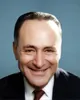
“I am honoring Lee Saunders, who just retired as president of the public workers union. He fought for workers' pay and benefits for nearly 50 years. I am also warning Donald Trump about his meeting with China's leader, Xi Jinping. Trump must not let China buy our best AI chips and equipment, and my colleagues and I are calling for strict bans on those sales. Trump must also stop Chinese electric cars from hurting our auto workers, push China harder to stop fentanyl chemicals, and stop being weak on China while fighting trade wars with our allies.”
“Mr. President, let me say a few words about a great leader who has just retired--AFSCME president Lee Saunders. Today, I will pay tribute to a dear friend and a juggernaut for labor who recently began a well-deserved retirement--AFSCME president Lee Saunders. On Monday, there will be a celebration of Lee and all his work for the labor movement over the years. It will be quite a party. I am grateful to have known Lee for decades and have always been in awe of his steadfastness in defending working people. For nearly 50 years, you could find Lee on the frontlines for every labor issue imaginable--equal pay, better benefits, safer working conditions. You name it, Lee fought for it. That includes these past 14 years that Lee has served as president of AFSCME. He also made history as the union’s first African-American president. As Lee steered this mighty union, I have had the privilege of standing shoulder to shoulder with him on issue after issue after issue. Together, during the COVID-19 pandemic, we fought hard to secure $350 billion for frontline workers and State and local governments, keeping communities afloat with public servants on the payroll. Many, if not most, of these workers would have lost their jobs had it not been for these dollars. We had real opposition from many on the other side of the aisle, but we fought hard and prevailed. Together, we worked tirelessly to ensure that over 2 million public servants received their hard-earned Social Security benefits. Together, we continue to fight for the PRO Act so that workers can better organize and bargain for fair wages and benefits, and we have applied that PRO Act in companion legislation for public workers. I couldn’t have asked for a better partner in the trenches, and AFSCME’s members couldn’t have elected a better president to stand up for their rights in the face of some of the greatest challenges to organized labor for generations. In my own city of New York, city workers get paid a much better wage than they used to, better benefits, better pensions--all because of the AFSCME and fight Lee Saunders led. It is nice to see that hard-working public servants are actually being paid a decent wage, although obviously many of us think it should be greater. Lee was always rising to meet the moment, unafraid to take on the hardest fights, and Lee’s example will continue to inspire future efforts to support American workers. Lee, you lit an eternal flame in the heart of the labor movement, and it will long endure no matter how hard corporate interests and union busters try to stamp it out. I wish this great American the very best in his retirement and congratulate him on such a historic career. Mr. President, now on the Xi Jinping visit, as Donald Trump hunts for a headline and photo-op with Xi Jinping today, he is at risk of losing sight of what is at stake for the American people. Trump risks giving China a leg up on a variety of issues if he bends the knee to Xi. As I have been warning not only for weeks but actually for years, Trump cannot let the Chinese Communist Party get its hands on our most advanced AI chips and manufacturing equipment. If Trump truly wants to preserve America’s lead in the AI race, the answer is to prohibit the sale of this cutting-edge technology to China, not to let AI develop and continue without guardrails. We all ought to be concerned by Trump handing over this tech to China, which is why Senator Warren and I, along with Senators Slotkin and Kim, will be holding a press conference today on the urgent need to tighten export controls and cut off the flow of AI technology to the CCP. AI is just one area where there is a risk of Trump selling out America. We will be closely watching what Trump does across the spectrum of challenges that the United States faces with the PRC. Trump has already undermined America’s competitiveness by gutting Federal R&D and technical training and making it harder for American companies to recruit top talent from abroad. His actions have forced much of our best talent to flee this country and go to Europe and go to China--the best talent who come here to work and prosper, and he cuts off their grants, and they leave. What does that do for America? It certainly makes us weaker in scientific endeavor and makes our rivals-- even friendly rivals--stronger. It is almost like China is trying to sabotage American industry for decades to come. He gets these stupid bugs in his head that research is bad, that science is bad, that they are all a big bunch of liberals or something. He is so hurting America--Trump is--and strengthening China. Decades from now, historians will look back and say this may have been a turning point because we had such bad, stupid, ignorant leadership. Let’s not forgot the implications Trump’s meetings with Xi could have for American autoworkers. If Trump lets China flood the market with Chinese EVs--an idea he has flirted with before--he will put even more manufacturing workers out of a job than he already has. China also needs to stem the flow of fentanyl to the United States that is devastating our communities. I met with Xi on this very issue face to face 3 years ago. I told President Xi that he ought to stop the flow of these precursor chemicals to the United States. Well, Trump must push the PRC to do more to crack down on these synthetic opioid precursors. Our first discussions with Xi got some action but not close to enough. Trump ought to take legal action against those opioid precursors that have already been scheduled to come in here and crack down on illicit financing schemes keeping this deadly trade going. As I said, after our meeting with Xi, China made some steps in the right direction, but it needs to do more. Trump also needs to explain why on Earth he continued providing tariff relief to China, our main competitor, while escalating his costly trade war with Canada, one of our closest allies. Square that circle for us, Donald. Crucially, there is real risk that Trump could let Xi off the hook for helping Russia and Iran evade sanctions, even helping Iran target American troops in the Middle East. All of this and Trump has the gall to call Xi Jinping ``a great gentleman.’’ Trump, stop fawning over strongmen like Xi, and put your foot down. Put your American foot down, and defend our country and our workers. Standing up for the American people means standing up to Xi. (The remarks of Mr. SCHUMER pertaining to the introduction of S. 5461 are printed in today’s Record under ``Statements on Introduced Bills and Joint Resolutions.’’)”
Mr. President, let me say a few words about a great leader who has just retired--AFSCME president Lee Saunders. Today, I will pay tribute to a dear friend and a juggernaut for labor who recently began a well-deserved retirement--AFSCME president Lee Saunders. On Monday, there will be a celebration of Lee and all his work for the labor movement over the years. It will be quite a party. I am grateful to have known Lee for decades and have always been in awe of his steadfastness in defending working people. For nearly 50 years, you could find Lee on the frontlines for every labor issue imaginable--equal pay, better benefits, safer working conditions. You name it, Lee fought for it. That includes these past 14 years that Lee has served as president of AFSCME. He also made history as the union’s first African-American president. As Lee steered this mighty union, I have had the privilege of standing shoulder to shoulder with him on issue after issue after issue. Together, during the COVID-19 pandemic, we fought hard to secure $350 billion for frontline workers and State and local governments, keeping communities afloat with public servants on the payroll. Many, if not most, of these workers would have lost their jobs had it not been for these dollars. We had real opposition from many on the other side of the aisle, but we fought hard and prevailed. Together, we worked tirelessly to ensure that over 2 million public servants received their hard-earned Social Security benefits. Together, we continue to fight for the PRO Act so that workers can better organize and bargain for fair wages and benefits, and we have applied that PRO Act in companion legislation for public workers. I couldn’t have asked for a better partner in the trenches, and AFSCME’s members couldn’t have elected a better president to stand up for their rights in the face of some of the greatest challenges to organized labor for generations. In my own city of New York, city workers get paid a much better wage than they used to, better benefits, better pensions--all because of the AFSCME and fight Lee Saunders led. It is nice to see that hard-working public servants are actually being paid a decent wage, although obviously many of us think it should be greater. Lee was always rising to meet the moment, unafraid to take on the hardest fights, and Lee’s example will continue to inspire future efforts to support American workers. Lee, you lit an eternal flame in the heart of the labor movement, and it will long endure no matter how hard corporate interests and union busters try to stamp it out. I wish this great American the very best in his retirement and congratulate him on such a historic career. Mr. President, now on the Xi Jinping visit, as Donald Trump hunts for a headline and photo-op with Xi Jinping today, he is at risk of losing sight of what is at stake for the American people. Trump risks giving China a leg up on a variety of issues if he bends the knee to Xi. As I have been warning not only for weeks but actually for years, Trump cannot let the Chinese Communist Party get its hands on our most advanced AI chips and manufacturing equipment. If Trump truly wants to preserve America’s lead in the AI race, the answer is to prohibit the sale of this cutting-edge technology to China, not to let AI develop and continue without guardrails. We all ought to be concerned by Trump handing over this tech to China, which is why Senator Warren and I, along with Senators Slotkin and Kim, will be holding a press conference today on the urgent need to tighten export controls and cut off the flow of AI technology to the CCP. AI is just one area where there is a risk of Trump selling out America. We will be closely watching what Trump does across the spectrum of challenges that the United States faces with the PRC. Trump has already undermined America’s competitiveness by gutting Federal R&D and technical training and making it harder for American companies to recruit top talent from abroad. His actions have forced much of our best talent to flee this country and go to Europe and go to China--the best talent who come here to work and prosper, and he cuts off their grants, and they leave. What does that do for America? It certainly makes us weaker in scientific endeavor and makes our rivals-- even friendly rivals--stronger. It is almost like China is trying to sabotage American industry for decades to come. He gets these stupid bugs in his head that research is bad, that science is bad, that they are all a big bunch of liberals or something. He is so hurting America--Trump is--and strengthening China. Decades from now, historians will look back and say this may have been a turning point because we had such bad, stupid, ignorant leadership. Let’s not forgot the implications Trump’s meetings with Xi could have for American autoworkers. If Trump lets China flood the market with Chinese EVs--an idea he has flirted with before--he will put even more manufacturing workers out of a job than he already has. China also needs to stem the flow of fentanyl to the United States that is devastating our communities. I met with Xi on this very issue face to face 3 years ago. I told President Xi that he ought to stop the flow of these precursor chemicals to the United States. Well, Trump must push the PRC to do more to crack down on these synthetic opioid precursors. Our first discussions with Xi got some action but not close to enough. Trump ought to take legal action against those opioid precursors that have already been scheduled to come in here and crack down on illicit financing schemes keeping this deadly trade going. As I said, after our meeting with Xi, China made some steps in the right direction, but it needs to do more. Trump also needs to explain why on Earth he continued providing tariff relief to China, our main competitor, while escalating his costly trade war with Canada, one of our closest allies. Square that circle for us, Donald. Crucially, there is real risk that Trump could let Xi off the hook for helping Russia and Iran evade sanctions, even helping Iran target American troops in the Middle East. All of this and Trump has the gall to call Xi Jinping ``a great gentleman.’’ Trump, stop fawning over strongmen like Xi, and put your foot down. Put your American foot down, and defend our country and our workers. Standing up for the American people means standing up to Xi. (The remarks of Mr. SCHUMER pertaining to the introduction of S. 5461 are printed in today’s Record under ``Statements on Introduced Bills and Joint Resolutions.’’)