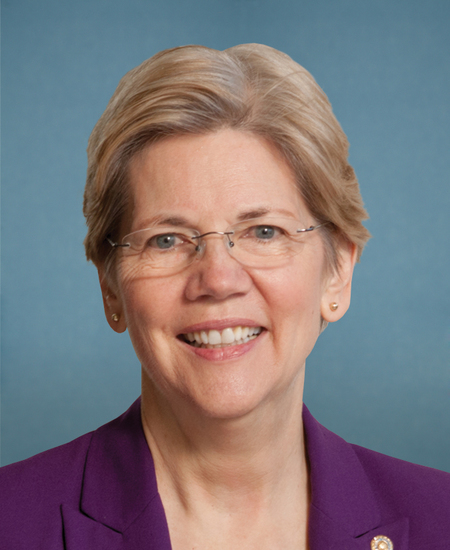
Elizabeth Warren, MA
“This bill is bad. It helps Donald Trump make money. Trump made a lot of money from crypto. I don't like Trump. The bill lets Trump keep making money. The bill lets terrorists and criminals use crypto. The bill hurts the stock market. The bill lets banks use your money to gamble on crypto. States and Tribes can't enforce their laws. People don't care about crypto. The bill helps Trump's corruption. Vote no on this bill. We need a different bill.”
“I am voting against this crypto bill, and I urge my colleagues to vote no. It lets Donald Trump use the presidency to get richer from his own crypto businesses, and the ethics rules in it have big loopholes his staff can easily waive. The bill also makes it easier for terrorists and cartels to use crypto, lets banks gamble with people's deposits, and weakens laws that protect investors. Both parties should work together on a better bill instead.”
“Mr. President, I come to the Senate floor today to oppose my Republican colleagues' efforts to jam through the Clarity Act. I believe we can get crypto legislation that both Republicans and Democrats can agree on but not this bill. This bill poses a massive risk to families, to our economy, and to our national security. We need crypto legislation that stops political self-dealing, and I know that many in the crypto industry agree with that. But this bill would turbocharge Donald Trump's unprecedented corruption. Donald Trump's primary campaign promise was that he would lower prices beginning on day one--his promise, his words. Instead, Trump's tariffs, Trump's forever war halfway around the world, Trump's healthcare cuts, Trump's closing cheaper, clean energy--Trump's policies are boosting the cost of everything. From groceries, to gas, to healthcare, to utilities, they are all going up, up, up. While Donald Trump is raising costs for working people, Trump is also using the Presidency to make himself richer, and he has added crypto to his ways to cash in. Instead of doubling down on efforts to prosecute crypto scams and to block terrorists and drug traffickers from using crypto, Donald Trump has used his office to promote crypto. He has talked up crypto. He has held crypto contests with the prize being dinner with the President, and he has appointed crypto-friendly regulators. And the money has just rolled in for him. Shortly before he was sworn in as President the second time, Trump opened his own crypto business, and boy, what a launch that man had. As he talked up crypto, the money just kept rolling in. In 2025 alone, Trump and his family raked in $1.4 billion from their crypto ventures. In fact, Donald Trump made more from crypto last year than any publicly traded crypto company in America. There is no one who has more to gain personally from this bill than the President of the United States. OK. So Trump won big time on crypto. Who lost? The working people who followed their leader. People who bought into Trump's crypto ventures have lost billions of dollars. For example, the fans who bought Trump's meme coins have lost nearly $4 billion. Trump just keeps pumping up the crypto industry. He has disbanded the DOJ's Crypto Enforcement Team, he has dropped crypto enforcement actions against companies that donated millions of dollars to his campaign, and he has given multiple Presidential pardons for crypto executives convicted of serious crimes. Trump's corruption is so extensive that he has infected crypto's entire financial regulatory framework. Now Republicans are not only turning a blind eye to Trump's corruption; now they want to vote today to boost that corruption. Late on Sunday night, the Republicans released new ethics provisions that the Republicans negotiated with the White House. They read exactly like what the most corrupt President in our history would bless--a tiny, little fig leaf that claims it is doing something about corruption but that is carefully written to make sure it will not prevent Donald Trump from making his next $1.4 billion in crypto profits. First, the new text guarantees that Donald Trump will never ever be held accountable under the law. Why? Because Trump's lapdogs would have the power to shut down any enforcement of the ethics provisions against Donald Trump. The text says the Attorney General--you know, that is the guy who at his confirmation hearing said, ``I'm [Trump's] lawyer''--not America's lawyer; Trump's lawyer. This is the guy who would decide whether to bring an enforcement action against the President. The bill would not allow the State attorneys general to bring any enforcement actions against the President. All they could do is try to sue Trump's former personal lawyer, the Attorney General, to do something about it. Here is the kicker: Nobody thinks the Attorney General is going to bring an action against Donald Trump, but this bill has belt and suspenders built right in to ensure that Donald Trump's moneymaking schemes just keep right on rolling. The bill says that Trump's handpicked cronies at his Office of Government Ethics can wave a magic wand by issuing a legal opinion, and then, as if by magic, Donald Trump would suddenly be protected from any enforcement at all against his next round of crypto corruption. An ethics restriction that the President himself can have completely waived is not an ethics restriction. Second, even if these provisions were enforceable, there are massive loopholes in them that would allow Trump to continue juicing his crypto empire. Under the new text, Trump would be allowed to continue making hundreds of millions of dollars from his crypto ventures, including World Liberty Financial and his meme coin. Not only would Trump easily be able to keep or restructure his existing crypto ventures, he would also be able to create new ones--extra corruption. For example, this new text does nothing to stop Donald Trump from becoming the first President in American history to own and regulate his own bank. Lastly, Trump could just put his holdings in a blind trust in name only while still knowing exactly what assets are there and still in charge of the regulators who can juice the value of Donald Trump's crypto investments. Trump has already made $1.4 billion in 2025 alone as a crypto wheeler-dealer, and the bill the Republicans want to vote on today would make sure he can just keep raking in the dough. It is not just the ethics provisions that are terrible; this bill would make it easier for terrorist organizations, for drug cartels, and for rogue states to buy and sell weapons and pay off government officials--all using crypto; easier for terrorists to finance their operations and harder for law enforcement to catch them; easier for scammers to cheat Americans and harder for law enforcement to catch them; easier for Iran and North Korea to evade sanctions and harder for law enforcement to catch them. This bill would put us all at risk of a crypto-fueled economic crash. The crypto bill has become a Christmas tree with gifts for other high- risk scammers. The bill, for example, would blow a massive hole in our nearly century-old securities laws by allowing and encouraging companies that have nothing to do with crypto to throw their assets on a blockchain to escape the investor protections that apply to traditional securities--you know, like stocks, the stock market. Now, that could drain billions of dollars out of our stock market that families depend on to fund their retirement savings, and it could decimate the guardrails that were put in place after the Great Depression. In fact, unions are opposed to this bill specifically because they see it as putting workers' hard-earned pensions at risk. Really, you should just ask yourself, what does this have to do with crypto? Why are we putting provisions in place to blow up protections on the stock market because a handful of crypto bros want it? This bill would give banks a green light to use America's banking deposits to engage in a brandnew list of risky crypto activities: lending against crypto as collateral, buying crypto directly, trading crypto derivatives, operating blockchain notes, selling crypto software. The list goes on and on. Think about how the price of crypto shot up and down and up and down, in just the last couple of years alone, and then imagine what happens when the biggest banks in America use the money in your savings account to load up on that kind of crypto. The bill also blocks States and Tribal nations from enforcing their own laws on the books to protect their citizens from getting scammed. The president of the Indian Gaming Association calls this bill ``the greatest threat to Tribal sovereignty in a generation.'' This is not what the American people want. They want Congress to do something about the affordability crisis. They want an end to Trump's war in Iran. They want their elected leaders to step up and regulate AI. According to a survey by crypto news outlet CoinDesk, just 1 percent of respondents rank crypto as their top concern. Another poll found that if there is anything that voters want to do on crypto, it is to put in place meaningful anti-fraud and anti-corruption measures. That is the kind of thing this bill glaringly fails to do. So you have got to ask yourself: Why are we here? We need crypto regulation. Yes, we do. But we do not need a crypto bill written by the crypto industry to benefit only the most extreme voices in the crypto industry and at the expense of our national security, our economic stability, and to help the most corrupt President in the history of the United States make himself even richer. I urge my Republican colleagues to come to the table and negotiate a real bipartisan crypto bill. But until then, I urge my colleagues to vote no. I yield the floor.”
Mr. President, I come to the Senate floor today to oppose my Republican colleagues' efforts to jam through the Clarity Act. I believe we can get crypto legislation that both Republicans and Democrats can agree on but not this bill. This bill poses a massive risk to families, to our economy, and to our national security. We need crypto legislation that stops political self-dealing, and I know that many in the crypto industry agree with that. But this bill would turbocharge Donald Trump's unprecedented corruption. Donald Trump's primary campaign promise was that he would lower prices beginning on day one--his promise, his words. Instead, Trump's tariffs, Trump's forever war halfway around the world, Trump's healthcare cuts, Trump's closing cheaper, clean energy--Trump's policies are boosting the cost of everything. From groceries, to gas, to healthcare, to utilities, they are all going up, up, up. While Donald Trump is raising costs for working people, Trump is also using the Presidency to make himself richer, and he has added crypto to his ways to cash in. Instead of doubling down on efforts to prosecute crypto scams and to block terrorists and drug traffickers from using crypto, Donald Trump has used his office to promote crypto. He has talked up crypto. He has held crypto contests with the prize being dinner with the President, and he has appointed crypto-friendly regulators. And the money has just rolled in for him. Shortly before he was sworn in as President the second time, Trump opened his own crypto business, and boy, what a launch that man had. As he talked up crypto, the money just kept rolling in. In 2025 alone, Trump and his family raked in $1.4 billion from their crypto ventures. In fact, Donald Trump made more from crypto last year than any publicly traded crypto company in America. There is no one who has more to gain personally from this bill than the President of the United States. OK. So Trump won big time on crypto. Who lost? The working people who followed their leader. People who bought into Trump's crypto ventures have lost billions of dollars. For example, the fans who bought Trump's meme coins have lost nearly $4 billion. Trump just keeps pumping up the crypto industry. He has disbanded the DOJ's Crypto Enforcement Team, he has dropped crypto enforcement actions against companies that donated millions of dollars to his campaign, and he has given multiple Presidential pardons for crypto executives convicted of serious crimes. Trump's corruption is so extensive that he has infected crypto's entire financial regulatory framework. Now Republicans are not only turning a blind eye to Trump's corruption; now they want to vote today to boost that corruption. Late on Sunday night, the Republicans released new ethics provisions that the Republicans negotiated with the White House. They read exactly like what the most corrupt President in our history would bless--a tiny, little fig leaf that claims it is doing something about corruption but that is carefully written to make sure it will not prevent Donald Trump from making his next $1.4 billion in crypto profits. First, the new text guarantees that Donald Trump will never ever be held accountable under the law. Why? Because Trump's lapdogs would have the power to shut down any enforcement of the ethics provisions against Donald Trump. The text says the Attorney General--you know, that is the guy who at his confirmation hearing said, ``I'm [Trump's] lawyer''--not America's lawyer; Trump's lawyer. This is the guy who would decide whether to bring an enforcement action against the President. The bill would not allow the State attorneys general to bring any enforcement actions against the President. All they could do is try to sue Trump's former personal lawyer, the Attorney General, to do something about it. Here is the kicker: Nobody thinks the Attorney General is going to bring an action against Donald Trump, but this bill has belt and suspenders built right in to ensure that Donald Trump's moneymaking schemes just keep right on rolling. The bill says that Trump's handpicked cronies at his Office of Government Ethics can wave a magic wand by issuing a legal opinion, and then, as if by magic, Donald Trump would suddenly be protected from any enforcement at all against his next round of crypto corruption. An ethics restriction that the President himself can have completely waived is not an ethics restriction. Second, even if these provisions were enforceable, there are massive loopholes in them that would allow Trump to continue juicing his crypto empire. Under the new text, Trump would be allowed to continue making hundreds of millions of dollars from his crypto ventures, including World Liberty Financial and his meme coin. Not only would Trump easily be able to keep or restructure his existing crypto ventures, he would also be able to create new ones--extra corruption. For example, this new text does nothing to stop Donald Trump from becoming the first President in American history to own and regulate his own bank. Lastly, Trump could just put his holdings in a blind trust in name only while still knowing exactly what assets are there and still in charge of the regulators who can juice the value of Donald Trump's crypto investments. Trump has already made $1.4 billion in 2025 alone as a crypto wheeler-dealer, and the bill the Republicans want to vote on today would make sure he can just keep raking in the dough. It is not just the ethics provisions that are terrible; this bill would make it easier for terrorist organizations, for drug cartels, and for rogue states to buy and sell weapons and pay off government officials--all using crypto; easier for terrorists to finance their operations and harder for law enforcement to catch them; easier for scammers to cheat Americans and harder for law enforcement to catch them; easier for Iran and North Korea to evade sanctions and harder for law enforcement to catch them. This bill would put us all at risk of a crypto-fueled economic crash. The crypto bill has become a Christmas tree with gifts for other high- risk scammers. The bill, for example, would blow a massive hole in our nearly century-old securities laws by allowing and encouraging companies that have nothing to do with crypto to throw their assets on a blockchain to escape the investor protections that apply to traditional securities--you know, like stocks, the stock market. Now, that could drain billions of dollars out of our stock market that families depend on to fund their retirement savings, and it could decimate the guardrails that were put in place after the Great Depression. In fact, unions are opposed to this bill specifically because they see it as putting workers' hard-earned pensions at risk. Really, you should just ask yourself, what does this have to do with crypto? Why are we putting provisions in place to blow up protections on the stock market because a handful of crypto bros want it? This bill would give banks a green light to use America's banking deposits to engage in a brandnew list of risky crypto activities: lending against crypto as collateral, buying crypto directly, trading crypto derivatives, operating blockchain notes, selling crypto software. The list goes on and on. Think about how the price of crypto shot up and down and up and down, in just the last couple of years alone, and then imagine what happens when the biggest banks in America use the money in your savings account to load up on that kind of crypto. The bill also blocks States and Tribal nations from enforcing their own laws on the books to protect their citizens from getting scammed. The president of the Indian Gaming Association calls this bill ``the greatest threat to Tribal sovereignty in a generation.'' This is not what the American people want. They want Congress to do something about the affordability crisis. They want an end to Trump's war in Iran. They want their elected leaders to step up and regulate AI. According to a survey by crypto news outlet CoinDesk, just 1 percent of respondents rank crypto as their top concern. Another poll found that if there is anything that voters want to do on crypto, it is to put in place meaningful anti-fraud and anti-corruption measures. That is the kind of thing this bill glaringly fails to do. So you have got to ask yourself: Why are we here? We need crypto regulation. Yes, we do. But we do not need a crypto bill written by the crypto industry to benefit only the most extreme voices in the crypto industry and at the expense of our national security, our economic stability, and to help the most corrupt President in the history of the United States make himself even richer. I urge my Republican colleagues to come to the table and negotiate a real bipartisan crypto bill. But until then, I urge my colleagues to vote no. I yield the floor.
