Directing the President, Pursuant to Section 5(c) of the War Powers Resolution, to Remove United States Armed Forces from Hostilities with Iran

Official Congressional Record (opens in a new tab)

Seth Moulton, MA

Democrat
“The gentleman from Florida asked if Iran is a threat. He already knows I think so. I said that before. He also asked what troops or things should be removed. Easy answer. We should remove troops and things from a war that failed. It backfired. We need those things elsewhere. That is my answer. I will talk more about it later. Now I yield time to Mr. Meeks.”
57% shorter Analysis
Official Congressional Record

Mr. Speaker, I yield myself such time as I may consume to briefly respond to the remarks from my colleague from Florida. The gentleman from Florida has asked two basic questions. The first is: Is Iran a threat? The second is: What troops or materiel should be removed? There is actually a very simple answer. He answered the first one himself by quoting me when I have in the past many times said that Iran is a serious threat. The second question: What should be removed? Also has a very simple answer. We should remove the troops and materiel that are going towards a war that has not only failed but backfired. These are troops and materiel that are depleting resources needed elsewhere in the globe. That is a very simple answer to the gentleman's question, which I will be happy to detail later. Mr. Speaker, I yield 5 minutes to the gentleman from New York (Mr. Meeks).

Gregory W. Meeks, NY

Democrat
“I support the resolution. The war with Iran is unauthorized and unconstitutional. The President has no right to start it without Congress. He started a war anyway. We told him to stop. We did it twice. He won't listen. This war is bad. It cost too much money. Gas prices are high. People pay more for everything. Many soldiers got hurt. We lost 19. We spent too much on this. Iran still has missiles and nuclear stuff. The Strait is still dangerous. Our partners are still under attack. This war did not do anything good. We have less weapons now. This is not about parties. It is about the Constitution. Congress should decide about war. Not the President. We are not rubber stamps. The Foreign Affairs Committee hasn't had a single hearing. We need diplomacy. Not bombs. We need real diplomats. Not real estate guys. We need to hold the President accountable. The American people don't want this war. We should vote yes. Stand with the people. Not with Trump.”
75% shorter Analysis
Official Congressional Record

Mr. Speaker, I thank the gentleman from Massachusetts for yielding. Mr. Speaker, I rise today in strong support of Representative Moulton's Iran War Powers Resolution. We are 7 months into a war of choice that President Trump said would only last 4 to 6 weeks. American families have paid over $100 billion more for gasoline and diesel, roughly $800 more per household, while gas averages more than $4 a gallon and diesel is near $6. This resolution closely follows my resolution, H. Con. Res. 86, which passed both the House and the Senate. That resolution made clear what the Constitution makes clear: Congress, not the President, has the power to decide when the United States goes to war. This Congress has not authorized a war with Iran, and yet this administration has kept our troops in harm's way, without a declaration of war, without an authorization from Congress, and without any plan for how to win or end the war. Congress has already acted. H. Con. Res. 86 passed both Chambers, directing the President to remove U.S. Forces from hostilities with Iran, and in July, the House again passed H. Con. Res. 89 with the same message, a simple message: End this war. It is important that we do so again. I have also introduced a binding resolution demanding Speaker Johnson take legal action to defend congressional authority. When Congress' constitutional authority is challenged, this institution has an obligation to defend its own prerogatives. The administration hasn't just continued to wage this illegal war in direct violation of the Constitution, it has done so while Americans bear the costs: 19 fallen servicemembers and more than 750 servicemembers wounded, extended troop deployments, and billions of dollars in additional spending. The President's mismanagement of this war has hurt America's ability to prepare for future threats. I ask this body a simple question: Are Americans better off now than before this war started? Are we safer? Are we more secure? Has this war produced any of the results the administration promised the American people? The administration has yet to demonstrate that 7 months of war have produced a lasting strategic resolution to the threats posed by Iran. The Strait of Hormuz remains a source of enormous risk to global energy markets, and Iran's nuclear and missile capabilities, despite what the administration claims, clearly remain. One only needs to ask our Gulf partners who continue to bear the brunt of Iran's missile and drone attacks. This war has been a strategic failure. What is left are depleted weapons stockpiles and a tab of more than $100 billion that taxpayers will have to cover, while families continue to pay more for gas, groceries, and electricity. Let me be clear: This should not be a partisan question. It is a constitutional one. It is a vote about whether Congress still believes that the power to decide when this Nation goes to war belongs to the Congress, as the Constitution provides. Our servicemembers deserve clear objectives. Their families deserve accountability, and the American people deserve a Congress willing to exercise its constitutional authority. Let me remind this body that the House Foreign Affairs Committee has still not held a single public hearing with an administration official on this war, the committee charged with matters of war and peace, zero hearings. Our constituents did not send us here to be a rubber stamp for any administration. We cannot bomb our way out of this war. We need dialogue and diplomacy with our allies and adversaries alike. We need real diplomats at the table, not real estate developers who are in over their heads. We, this body, need to hold this administration accountable. I ask my colleagues to uphold the oath that we all took. Join us and make clear, once again, that this President cannot wage war without our consent. The American people have made it abundantly clear they do not want and they do not support this war. We should stand with them and not Donald Trump.

Seth Moulton, MA

Democrat
“The war is dumb. The war is bad. Iran is winning. The administration said they won. They did not win. Iran is stronger now. They have more power. They control the strait. Their nuclear program is not gone. They shot down a helicopter. They have more missiles. They got $10 billion when we lifted sanctions. Gas prices are high. Our ports are in danger. This war is costing a lot of money and lives. The last time we had a deal with Iran was better. No one died then. No war was needed. This war is bad for us. Good for Iran. Congress should stop the war. That is our job. We should help America, not Iran.”
93% shorter Analysis
Official Congressional Record

Mr. Speaker, I yield myself such time as I may consume. Mr. Speaker, my colleague from Florida delivered a comprehensive list of many of the threats that Iran has presented to us in the past. I have not heard any Democrat, myself or otherwise, debate those threats. The question is: Is Iran a threat today? I think my colleague would agree that they are. The second question is: Is Iran more of a threat today than they were before this war began? I think anyone with common sense would agree that they are. Never before has Iran controlled the world economy, brought the world economy to its heels, by closing the Strait of Hormuz as a result of this war not only failing but backfiring. If we are serious about the threat, then we ought to have a serious strategy to address it. We ought to have a strategy that actually works, whereas this strategy has failed. I stand here today with my colleagues to do what Congress failed to do for us and our brothers- and sisters-in-arms in Iraq two decades ago: to actually ask tough questions as the Constitution directs us to do--rather than be subservient to another war-mongering administration--and then have the courage to vote to end a war that should never have begun. I joined over 100,000 other young Americans 23 years ago in invading Iraq in the spring, and we came home to a victory parade in the fall, a victory parade not long after President Bush landed on an aircraft carrier and declared: Mission Accomplished. We all know it wasn't a victory in 2003, far from it. We were still fighting that Middle Eastern war 20 years later. Mr. Speaker, 4,492 U.S. servicemembers were killed in Iraq, and 32,292 were wounded. Iraq civilian casualties stretched into the hundreds of thousands. Congress failed to ask the most basic question it owed those families: Was this worth it? It is the same question we are failing to ask today, Mr. Speaker. That is the price of a war that Congress refused to stop. It is a price that Republicans in Congress are choosing right now to let another generation start paying. Our President declares victory a couple of times a week--well over 30 times so far--and doesn't dare to try to land a plane on an aircraft carrier to do so. Our carriers can't even land themselves in ports for resupply because our allied ports are now in too much danger of an Iranian attack. We have made our allied ports less safe in the very Gulf where we are fighting this war. What a remarkably dumb war--dumb. Dumb, you say? Well, let's discuss for a minute what this war has achieved--not using independent metrics, not Democratic metrics, but the very metrics the President has used since day one. We will start with oil. Well, oil prices are up. We are all paying more at the pump and more in the stores for goods shipped with oil. Good for Iran. Bad for us. Iran's nuclear program is still intact. In fact, it is more than intact since the President just started talking about yet more strikes against a nuclear program that he and Secretary Hegseth said was obliterated. They were lying, or Iran is rebuilding. Either way: Good for Iran. Bad for us. Of course, we don't know as much detail on their nuclear program as we once did when we had weapons inspectors and 24/7 electronic monitoring in Iran under President Obama. Trump got rid of those safeguards. Good for Iran. Bad for us. What about projecting power? We hear a lot about Iran projecting power and what a problem this is in the Middle East and even right here at home, where, as my colleague mentioned, Iran is trying to assassinate officials--officials that the President removed protection from as if to encourage Iran. This measure is truly remarkable because Iran is projecting more power than Iran has ever projected in the history of the world. Never before has the Islamic republic singlehandedly leveraged the entire world economy. Another thing good for Iran; bad for us. What about ballistic missiles? We were told their ballistic missiles were eliminated. It only took about $30 billion of our American taxpayer dollars to supposedly do so. Then we learned a matter of weeks later that they still have a lot of missiles and are recovering more. We haven't even begun to talk about the drones that have inflicted more damage than their missiles. Here is the real kicker. While we were bombing their missiles with only moderate effectiveness, President Trump actually lifted the sanctions on Iran--lifted the sanctions on our adversary that they have admitted is a serious threat to the United States in the middle of a war. They kill a bunch of Americans, and we lift the sanctions? That is quite a strategy. That alone gave Iran a gift of about $10 billion. Well, you know what? You can buy a lot of ballistic missiles for $10 billion. You don't even need to worry about your industrial base. In fact, you can buy Russian or Chinese ballistic missiles that are more sophisticated than what Iran already has. Yet again: Good for Iran. Bad for us. Of course, the Strait of Hormuz is still closed. A reminder: The strait was open, and has been open in the entire history of the Islamic Republic, before Trump declared victory. It is truly remarkable. Good for Iran; bad for us. What about their navy? We supposedly obliterated that, too. Yet, we can't open the strait. Any allied tankers require heavy naval escorts, and no art of the deal has gotten Iran to budge. Any military planner, had the administration asked a single one of them, would have told you Iran could close the strait. It is still effectively closed. Good for Iran; bad for us. How about their air defenses? We obliterated those, too, shortly before Iran shot down one of our Apache helicopters. Over two decades in Afghanistan, a war my colleague knows well and for which he has seriously sacrificed, and not a single Apache was shot down. Yet, after we supposedly obliterated their air defenses, we lose one to Iran. Good for Iran; bad for us. What about regime change? That was the stated objective of the President from day one. Now, I want to be a fair arbiter, as we all should in Congress. So on this one count I will give the administration credit. They did achieve regime change. They took out an 86-year-old religious zealot in failing health, who had a fatwa against producing nuclear weapons, and replaced him with someone in his fifties, who is apparently even more committed to their nuclear program, alongside a military government that so far seems more effective than the religious government it replaced. So Trump got regime change. It has just been good for Iran; bad for us. All of this translates to one sad, embarrassing but unavoidable conclusion: Iran is winning, and America is losing. We didn't get rid of the threat. We empowered it. If that is not dumb, Mr. Speaker, I don't know what is. Remember when Donald Trump said this war would last just a few weeks? Well, it has been over 6 months and counting. In April, Pete Hegseth stood at a podium and proudly declared a capital V military victory. He said the United States had achieved every single objective. He said that America's objectives were unchanged, on target, and on plan. Yet, as I have just detailed, it seems like we have achieved Iran's objectives quite effectively for them. Those were Hegseth's terms. He declared victory on them. Really? Well, here's a question for Secretary Hegseth and for every Republican who has taken his word for it since: If we already won, then why is Iran still in control of the Strait of Hormuz? If we already won, why are gas prices still climbing? Why are diesel prices at historic highs, the highest ever? What an achievement. If we already won, why are our troops still getting hurt 6 months after Hegseth stood up before the American people and declared this victory was won? If we already won, why does Iran's nuclear program still exist? Compare the state of Iran's nuclear program today to what President Obama achieved with the Iran nuclear deal. Ninety-eight percent of Iran's uranium stockpile was gone. Enrichment was capped at a level so low that it could not be weaponized. The Strait of Hormuz was open, and zero American troops were killed and zero were wounded. All that, and no war was required. All of this losing that Trump and Hegseth have been doing comes at a tremendous cost: 18 U.S. servicemembers killed. At $100 billion and counting, that translates to an additional $602 for every American taxpayer on average. How many Americans, how many constituents of mine or the Congressman from Florida, want to be paying $602 in taxpayer money to lose a war in Iran? Now, I am saying all this standing here in Congress. Mr. Speaker, how about we stand up for our troops and our citizens for a change rather than perpetuating a war that, by all these measures, on the administration's own terms, is good for Iran and bad for us? I think it is time to get some common sense, stop taking Trump and Hegseth at their word, find the courage to follow the Constitution and act as our own branch of government, end this war before it gets worse, and stop doing more for Iran than we are doing for us. Our job is to help America, Mr. Speaker, not help Iran. Mr. Speaker, I reserve the balance of my time.

Seth Moulton, MA

Democrat
“I concede you made a good case. We need a plan to stop Iran. Our current plan backfired. Iran is stronger now. I yield time to a colleague who agrees with me.”
55% shorter Analysis
Official Congressional Record

Mr. Speaker, I yield myself such time as I may consume. I will respond briefly to my colleague from Florida. My colleague has made a very convincing case, Mr. Speaker, for why we ought to have a strategy or use means necessary to actually defeat the threat from Iran, not a strategy that has backfired and empowered them. Mr. Speaker, I yield 3 minutes to the gentleman from Colorado (Mr. Crow).

Jason Crow, CO

Democrat
“There is no threat from Iran. The administration has stopped pretending there is. The American people decide when we go to war. Not elites. Not people who don't fight. We cannot go to war for every threat. That would mean endless war. We have spent trillions on war already. We cannot afford more. People pay for wars. Working class kids fight and die. Americans don't want war with Iran. That's why Republicans won't vote on this. They know voters will be angry. President Trump promised to end endless wars. He was right. Then he became President and broke his promise. We need a vote. Members need to tell their voters why they want war. Why spend taxpayer money on war? Why send your children to die? I want a vote so members have to explain themselves.”
71% shorter Analysis
Official Congressional Record

Mr. Speaker, I thank Representative Moulton for his leadership on this. I want to highlight a different component to this. There is a debate around imminent threat. Very clearly, in my opinion and in the opinion of most folks, there is no imminent threat. In fact, the administration itself has stopped even trying to show that, which I think is a clear illustration that there never was one and there isn't one. Beyond the debate on this floor, one of the things that gets lost, and the important thing that gets lost, is the people who actually get to make this decision are the American people. The genius of our system is that it is Americans who get to decide matters of war and peace, through the Representatives in this body. For 25 years now, America has been in endless conflict. There have been threats that have come and threats that have gone. The answer can't be that whenever there is a threat, instantly it means we have to go to war. That is the logic on the other side: threat equals war. If a threat pops up, you go to war. That can't possibly be the logic. If that is the case, then we will be at war forever. We will spend another $3 trillion in addition to the $3 trillion we have already spent. Regardless of the nature of the threat posed, the answer always will be to send our military. Americans know that is not tenable, in fact. What is the accountability mechanism? The accountability mechanism is that Americans are in the driver seat because Americans are the ones that have to do the fighting, do the dying, and pay for this. It is not the elites and the pedigreed folks in this administration that are fighting and dying. They are banging the war drums and sending working- class kids like us to go do it. Why are the Republicans so desperate to avoid even voting on this? Why have they literally canceled votes this year to avoid voting on this? Because they know that Americans don't want it. Republicans and Democrats alike don't want it. President Trump himself used to know that. I don't know what happened, but he campaigned on this. He went around the country and said, let's stop the endless wars. Let's pull out. Let's focus back home. He was right about that. Then he became President and turned his back on the American people and on the very promise he made. Let's have these votes. Let's let people know where we stand, then go home, stand in front of our constituents, and answer the tough questions. Why send your taxpayer money? Why send your sons and daughters to go do it? The SPEAKER pro tempore (Mr. Knott). The time of the gentleman has expired.

Seth Moulton, MA

Democrat
“I want to pass this resolution. We are worse off now. Iran has more oil, nuclear weapons, ballistic missiles. Insurance rates for ships are higher now. Trump keeps saying the war is ending but it isn't. He says it a lot. The war isn't ending.”
69% shorter Analysis
Official Congressional Record

Mr. Speaker, I yield myself such time as I may consume. Mr. Speaker, I detailed how on so many counts--oil, nuclear weapons, ballistic missiles, and regime change that we are worse off today than we were when this war started, but I thank my colleague from Florida for bringing up another one, which is insurance rates. I ask my colleague: Are insurance rates higher or lower to go through the Strait of Hormuz today than they were 5, 10, or 50 years ago? Everyone knows, Mr. Speaker, it is worse. Then my colleague said, well, that is why we need to end this forever war. How is that going? What are we up to, 40 times that President Trump has said the war is ending. I would like to see the day. Mr. Speaker, I yield 3 minutes to the gentleman from Illinois (Mr. Schneider).

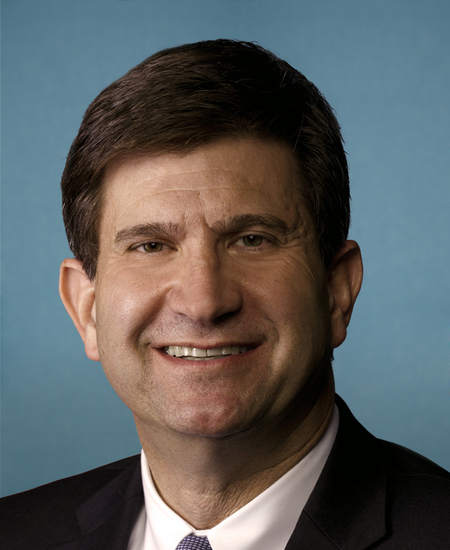
Bradley Scott Schneider, IL

Democrat
“Trump started a war with Iran. The war has gone on for 200 days. Our goals were to stop Iran's nukes, missiles, drones, terror, and human rights abuses. None of that happened. Now we have a new goal to open a strait. We lost 19 troops. Over 800 troops were wounded. Our weapons are low. The Constitution says only Congress can declare war. Trump didn't come to Congress. There were no hearings. There was no debate. No vote. That is not allowed. The President should tell us the plan. This resolution is to make that happen. I want Congress to vote on it.”
76% shorter Analysis
Official Congressional Record

Mr. Speaker, as we have this debate and talk about the lack of strategy of this administration, I am reminded of Sun Tzu in the book, ``The Art of War'' where he wrote: The one who figures on victory at headquarters before even doing battle is the one who has the most strategic factors on his side. He continued, more than 2,000 years ago, saying: The one with many strategic factors in his favor is the one who wins. We all agree that Iran, the regime in Iran, is an intolerable threat to the United States, our Gulf allies, Israel, Europe, and much of the rest of the world. We agree that Iran must never ever have a nuclear weapon. Before President Trump launched the current war with Iran, we had four goals: eliminate Iran's nuclear program; thwart Iran's missiles, rockets, and drone capabilities; dismantle Iran's terror support network; and address the regime's human rights abuses. Two hundred days later, having lost 19 servicemembers with more than 800 wounded and dangerously depleting our weapons stockpiles, Iran is still pursuing its nuclear program. It still has missiles, rockets, and drones. It is still threatening the Strait of Hormuz, the Gulf States, and Israel. It is still supporting its terrorist proxies, oppressing its citizens, and violently suppressing dissent. After 200 days of war, none of the four original goals are realized, and we have added a fifth: reopening the Strait of Hormuz to public shipping. After 200 days, we have had no hearings in this body and no substantive debate. Our Constitution is clear: Our Framers gave only Congress the power to declare war and commit our troops to extended conflict. The President is, indeed, the Commander in Chief, but that authority does not create or erase the role and responsibility of our legislative branch. Before we ask more American servicemembers to risk their lives and the American people to take on more sacrifice, Congress and the American people deserve to know the administration's military objectives and how we intend to achieve them. That is why this War Powers Resolution exists. President Trump has a responsibility to come before Congress, and Congress, this Congress, has a responsibility to hold open hearings, public debate, and a vote. Mr. Speaker, if we allow any President, Republican or Democrat, to take our Nation into an open-ended war without congressional authorization or a basic explanation to the American people, we establish a dangerous precedent that will outlast this conflict and this administration. Mr. Speaker, I urge my colleagues to support this resolution.

Seth Moulton, MA

Democrat
“I want to end the Iran war. It's a disaster. It's unconstitutional. It's illegal. Iran is winning. We are losing. It's making Iran stronger. We are spending money and time fighting Iran. We should spend money and time fighting China and Russia instead. This is a bad plan. We should stop. But Congress won't even talk about it. They won't have hearings. They won't vote. They cancel votes. They are scared to answer to voters. I want a vote. I want a debate. I want members to answer to their voters. I want Congress to do its job. This is the most important job Congress has. Let's do our job.”
79% shorter Analysis
Official Congressional Record

Mr. Speaker, I yield myself the balance of my time. Mr. Speaker, in closing, before my colleague launched into a Westmoreland-like list of targets, which has nothing to do with whether or not we are actually winning this war, he talked about the President having the stomach to go to war, maybe the stomach to end it. I would ask my colleague, who is the chairman of the Committee on Foreign Affairs, when we are going to find the stomach in Congress to just hold a hearing on this war? That shouldn't be a very high bar. Yet, the chairman hasn't reached it. Why is it that the Republicans in Congress will literally cancel votes before they have a vote on the most important responsibility that we have? If the end is truly in sight for this war, then why, as I have detailed on every single measure, is it getting worse and the threat is increasing? Yes, Iran has been a threat for a really long time, and that is why we should have a strategy that ends the threat, not further empowers Iran. Yes, Americans have been killed in the past by Iran. The question is will more Americans be killed in the future? I think we all know, sadly, what that answer is today. Mr. Speaker, the Constitution delegates to Congress no more important responsibility than deciding when to send the best of America, our young Americans, to war--decisions that make our families more or less safe here at home. The unmistakable conclusion of this debate is that Iran is sadly better off today, more empowered today than they were before this began, this unconstitutional, illegal, dumb war that has truly not just failed but backfired. Doubling down with wars escalating follows the precedent set by other forever wars in the Middle East. We haven't even talked about the greatest threat in the world today, which is not Iran, but Xi Jinping in China. As we take more and more assets away from deterring China, away from deterring Russia, which is inching closer and closer to starting a war with NATO in Europe, it is a gift to Putin and Xi Jinping, a gift. This war has been a tactical failure and a strategic disaster. We are not better off than we were before, and that is why we need to bring it to an end. But, most fundamentally, we ought to have the courage or, as my colleague says, the stomach to debate it, to talk about it, to not continually try to put off these votes, but to have the courage to vote on these resolutions for the American people, the constituents that we represent, and then go home and ask them--constituents in Florida, constituents in Massachusetts, and military families all across the world--whether this is worth it, whether a war that we are losing is worth their sacrifice, worth their taxpayer dollars. Let's have the courage to take that vote and then answer to our constituents, because our troops, our families, and the American citizens deserve nothing less. Mr. Speaker, I yield back the balance of my time.

More from issue 144

All 73 items ·
  1. House of Representatives Recognizing Donna Mills 4 statements
  2. House of Representatives Recognizing the Sudanese-American Iowa National Soccer Team Club 3 statements
  3. House of Representatives Remembering Father Vincent Robert Capodanno 2 statements
  4. House of Representatives Pending Retirement 3 statements
  5. House of Representatives Honoring Chris Fisher 4 statements
  6. House of Representatives Land Conveyance, Fort Bragg, Harnett County, North Carolina 4 statements
  7. House of Representatives Advisory Committee on the Records of Congress Sunset Act 4 statements
  8. House of Representatives Gpo Modernization Act of 2026 5 statements
  9. House of Representatives Legislative Branch Agencies Clarification Act 5 statements
  10. House of Representatives Illegal Red Snapper and Tuna Enforcement Act 5 statements
  11. House of Representatives Modernizing Access to Our Public Oceans Act 4 statements
  12. House of Representatives National Wildlife Refuge System Invasive Species Strike Team Act of 2025 4 statements
  13. House of Representatives National Park System Long-Term Lease Investment Act 5 statements
  14. House of Representatives Safe Beaches, Safe Swimmers Act 5 statements
  15. House of Representatives Archie Cavanaugh Migratory Bird Treaty Clarification Act 5 statements
  16. House of Representatives Peter G. Thurland, Sr., Bandstand 4 statements
  17. House of Representatives Transfer of Administrative Jurisdiction over Certain Federal Land in the State of California 4 statements
  18. House of Representatives Stronger Engagement for Indian Health Needs Act of 2025 5 statements
  19. House of Representatives Crow Tribe Water Rights Settlement Amendments Act of 2025 5 statements
  20. House of Representatives National Oceanic and Atmospheric Administration Sexual Harassment and Assault Prevention Improvements Act of 2025 4 statements
  21. House of Representatives Providing for the Equitable Settlement of Certain Indian Land Disputes Regarding Land in Illinois, and for Other Purposes 5 statements
  22. House of Representatives Advancing Water Research and Collaboration Act of 2025 6 statements
  23. House of Representatives Indian Health Service Emergency Claims Parity Act 4 statements
  24. House of Representatives Barbara L. Cubin National Historic Trails Interpretive Center 4 statements
  25. House of Representatives Local Communities & Bird Habitat Stewardship Act of 2026 4 statements
  26. House of Representatives Yuhaaviatam of San Manuel Nation Land Exchange Act 4 statements
  27. House of Representatives Establishment of the General George C. Marshall House as an Affiliated Area 4 statements
  28. House of Representatives National Law Enforcement Officers Remembrance, Support, and Community Outreach Act 4 statements
  29. House of Representatives Chesapeake Bay Watershed Advancement for Training, Education, Restoration, and Science (Waters) Act 6 statements
  30. House of Representatives Northern Nevada Economic Development and Conservation Act of 2026 7 statements
  31. House of Representatives Common Cents Act 6 statements
  32. House of Representatives Guarding Unprotected Aging Retirees from Deception Act of 2026 6 statements
  33. House of Representatives Fostering the Use of Technology to Uphold Regulatory Effectiveness in Supervision Act 8 statements
  34. House of Representatives Whistleblower Protection Act of 2025 3 statements
  35. House of Representatives Directing the President, Pursuant to Section 5(c) of the War Powers Resolution, to Remove United States Armed Forces from Hostilities with Iran 16 statements
  36. House of Representatives Recognizing Trucker Appreciation Week 8 statements
  37. Senate Elections 5 statements
  38. Senate Unanimous Consent Request--S. 5389 (Executive Calendar) 5 statements
  39. Senate 25th Anniversary of the September 11, 2001 Attacks 4 statements