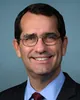
MEMBER OF CONGRESS

Derek Schmidt

Follow by RSS

Derek Schmidt, a Kansas Republican, most often speaks as the bill manager for noncontroversial technical corrections to the U.S. Code, opening nearly every such speech with the same procedural formulas — “I yield myself such time as I may consume,” “I reserve the balance of my time” — and stressing that the bills were prepared by the nonpartisan Office of Law Revision Counsel and change no law’s meaning. On substance, he pushes stronger DOJ enforcement against trade crimes by foreign bad actors — citing specific figures such as “$5.4 billion in counterfeit goods” seized in FY 2024, with China accounting for more than 75 percent — supports the “Keep Nine” amendment fixing the Supreme Court’s size, and backs bipartisan judicial-access measures, framing these as defending institutions rather than attacking opponents. He leans on cross-party cooperation, repeatedly noting bipartisan sponsorship or Senate passage, and rarely attacks the other side personally. His most distinctive habit is filling time with personal anecdote — about twice as often as most members — such as recalling that he has “sat there seven times at counsel table” or that “100 miles isn’t very far to get to the Federal courthouse when you live in parts of my home State of Kansas,” and he spends less time than most on self-description in place of substance.Written by AI from their statements. Updated .

Average grade
A–
89 / 100 over 11 statements
Signal 80 / 100
Relevance 100 / 100
Respect Not scored yet
Clarity 94 / 100
Averaged over the 11 of 19 statements graded so far.

In their own words

Loses points more than most for

Loses points less than most for Praise, blame or attack with no claim, reason or ask in it.Less often than most members.What the tags mean

Statements 19

House of Representatives ·

Proposing an Amendment to the Constitution of the United States to Require That the Supreme Court of the United States Be Composed of Nine Justices

“I want Congress to pass this constitutional amendment to keep the Supreme Court at nine justices. Disagreeing with the Court's rulings is no reason to attack it by changing its size. We should let the American people use the Constitution to set the number of justices at nine.”
Official Congressional Record

I will tell you that sometimes I like how the court rules, behaves, and questions. Sometimes I don’t like it. I have been on the winning end. I have been on the losing end, but neither of those is a justification to attack the institution itself. My friend asks why nine and why would we give up our power? And the answer to that is we are not giving up our power because it is not within our power to do so. We are asking the people of this country, through the process that the Constitution establishes, whether they want to restrict our power and protect their Court at nine. We should say ``yes,’’ and I urge my colleagues to support H.J. Res. 1.

“I support this amendment to keep the Supreme Court at nine justices. If parties keep changing the number of justices to help themselves, it will ruin the Court.”
Official Congressional Record

Mr. Speaker, I have long supported the Keep Nine Amendment because I think it is the right thing to do for our Republic. As has been stated here many times in today’s somewhat jovial but I think very serious debate, turning the Supreme Court into a political football, whose size is expanded first by Republicans, then by Democrats, whoever has the political will and whoever is aggrieved at the moment will undermine that Court’s ability to perform its unique and critical constitutional function. For all of the distress that my friends on the other side have right now in their complaints about the Court, I assure this body those will be magnified manyfold if we allow ourselves to get into a bidding war over the size of the institution across the street. Mr. Speaker, I have sat there seven times at counsel table. I have argued three causes. I have second-chaired four others--

“I want to amend the Constitution to keep the Supreme Court at nine justices. The Court does not just do whatever Donald Trump wants. It has ruled against him many times. Even former Democratic state attorneys general agree with this and support keeping nine justices. This used to be an issue both parties agreed on, and I want their letters added to the official record.”
Official Congressional Record

Mr. Speaker, you will hear from advocates of Court expansion that the Court is a mere rubber stamp for Trump. This is a Court that defied Trump’s efforts to overturn the 2020 election, to deport people without a hearing, to send troops to Chicago, to use emergency powers to impose tariffs, and to revoke birthright citizenship by executive order. Some of my colleagues on both sides may be surprised that I just uttered those words, but those are not my words. Those are the words of three of my former colleagues, three former State Democratic attorneys general, who strongly support the Keep Nine Amendment and disagree with my friends on the other side: Chris Gorman from Kentucky, Steve Rosenthal, and Tony Troy from Virginia. Mr. Speaker, it is sad that until this Congress, this was a bipartisan issue. It wasn’t a Republican issue. It wasn’t a Democratic issue. Back when I served my State as attorney general in 2020, I wrote to the then-sponsors of this measure in this body and expressed my support for it, and it was a Republican from Virginia and a Democrat from Minnesota. Mr. Speaker, I include both of these statements and letters in the Record at this point.

House of Representatives ·

Making Improvements in the Enactment of Title 54, United States Code, into a Positive Law Title and to Correct Related Technical Errors

“I want the House to pass this bill. It fixes technical errors in the laws about the National Park Service. It does not change what any law actually means, but it makes sure the written code is accurate.”
Official Congressional Record

Mr. Speaker, unsurprisingly, H.R. 5182 makes technical corrections and updates to the United States Code. This bill was prepared for the Judiciary Committee by the Office of Law Revision Counsel, a nonpartisan office of the House of Representatives charged with maintaining the official United States Code. In 2014, Congress enacted a positive law restatement of title 54, which pertains to the National Park Service and related programs. After Congress enacts a positive law restatement of a title of the code, a follow-up bill is sometimes necessary to correct technical errors, make conforming amendments, and incorporate additional provisions. H.R. 5182 is such a follow-up bill. The bill does not change the substantive meaning of any law on the books today. It simply helps ensure that the code is up to date, accurate, and accessible. Mr. Speaker, I urge all Members to support this bill, and I reserve the balance of my time.

“I want the House to pass this bill. It fixes minor writing errors in the federal laws about national parks.”
Official Congressional Record

Mr. Speaker, I move to suspend the rules and pass the bill (H.R. 5182) to make improvements in the enactment of title 54, United States Code, into a positive law title and to correct related technical errors, as amended. The Clerk read the title of the bill. The text of the bill is as follows: Sec. 1. Table of contents. Sec. 2. Purpose. Sec. 3. Title 15, United States Code. Sec. 4. Title 16, United States Code. Sec. 5. Title 43, United States Code. Sec. 6. Amendments to Public Law 113-287 and title 54, United States Sec. 7. Transitional and savings provisions. Sec. 8. Repeals. ---------------------------------------------------------------------------------------------------------------- ---------------------------------------------------------------------------------------------------------------- ---------------------------------------------------------------------------------------------------------------- ---------------------------------------------------------------------------------------------------------------- ---------------------------------------------------------------------------------------------------------------- ``Urban Park and Recreation Recovery Act of 1978 title X, Sec. 1004 16 U.S.C. 2503 ---------------------------------------------------------------------------------------------------------------- ``101331. Purposes; definitions.’’. ``200301. Purposes; definitions.’’. ``200501. Purposes; complement to existing Federal programs; ``308301. Purposes.’’. ``311101. Purpose; definitions.’’. ---------------------------------------------------------------------------------------------------------------- ---------------------------------------------------------------------------------------------------------------- Act of May 15, 1896 (ch. 182)..................... 1 16 U.S.C. 411 Act of March 3, 1897 (ch. 372).................... 1 16 U.S.C. 413 Act of August 24, 1912 (ch. 355).................. 1 (last paragraph under 16 U.S.C. 421 Land and Water Conservation Fund Act of 1965 (Pub. title I, Sec. 1(b) 16 U.S.C. 460l-4 L. 88-578)....................................... Public Law 95-344................................. title III, Sec. 301(b) 16 U.S.C. 2301(b) Urban Park and Recreation Recovery Act of 1978 title X, Sec. 1003 16 U.S.C. 2502 (Pub. L. 95-625)................................. National Park System Visitor Facilities Fund Act 1 16 U.S.C. 19gg note (Pub. L. 97-433)................................. Omnibus Parks and Public Land Management Act of div. I, title VIII, Sec. 16 U.S.C. 17o(1) 1996 (Pub. L. 104-333)........................... 814(a)(1) National Underground Railroad Network to Freedom 2(b) 16 U.S.C. 469l(b) Act of 1998 (Pub. L. 105-203).................... Omnibus Public Land Management Act of 2009 (Pub. title VII, Sec. 7302(a) 16 U.S.C. 469n(a) L. 111-11)....................................... ----------------------------------------------------------------------------------------------------------------

House of Representatives ·

Making Revisions in Title 51, United States Code, as Necessary to Keep the Title Current, and to Make Technical Amendments to Improve the United States Code

“I want the House to pass this bill. It updates the written laws on national space programs to include newer laws. It does not actually change how any of these laws work.”
Official Congressional Record

Mr. Speaker, I yield myself such time as I may consume. Mr. Speaker, H.R. 5174 is a ministerial bill that makes technical corrections and updates to the United States Code. This bill was prepared for the Judiciary Committee by the Office of Law Revision Counsel, a nonpartisan office of the House of Representatives charged with maintaining the official United States Code. In 2010, Congress enacted a positive law restatement of title 51, which pertains to national and commercial space programs. Subsequent to the enactment of this restatement, additional laws pertaining to title 51 were enacted. H.R. 5174 incorporates these additional laws into title 51. This bill does not change the substantive meaning of any law on the books today. It simply helps ensure that the code is up to date, accurate, and accessible. Mr. Speaker, I urge all Members to support this bill, and I reserve the balance of my time.

“I am asking the House to pass this bill to organize and update federal space laws without changing what they mean.”
Official Congressional Record

Mr. Speaker, I move to suspend the rules and pass the bill (H.R. 5174) to make revisions in title 51, United States Code, as necessary to keep the title current, and to make technical amendments to improve the United States Code. The Clerk read the title of the bill. The text of the bill is as follows: Sec. 1. Table of contents. Sec. 2. Purposes; restatement does not change meaning or effect of Sec. 3. Revision of title 51, United States Code. Sec. 4. Technical amendments. Sec. 5. Transitional and savings provisions. Sec. 6. Repeals. ``301. Funding.............................................30101’’;.... ``315. Facilities and Infrastructure.........................31501 .... ``317 Through 397...................................................... erved................................................................ ``399. Miscellaneous.......................................39901’’;.... ``409. Aeronautics and Space Technology......................40901 .... ``411 Through 497...................................................... Reserved............................................................. ``499. Miscellaneous.......................................49901’’;.... ``513. Space Resource Commercial Exploration and Utilization.51301 .... ``515. Office of Spaceports..................................51501 .... ``517. Development and Use of Commercial Cargo and Crew Transportation Capabilities...........................................51701’’;.... ``701. Use of Space Launch System or Alternatives......70101’’; and.... ``715. Human Space Flight and Exploration....................71501 .... ``717. Advancing Human Space Exploration...................71701’’..... ``SUBCHAPTER I--GENERAL PROVISIONS ``Sec. ``30101. Prior authorization of appropriations required. ``30102. Working capital fund. ``30103. Baselines and cost controls. ``30104. Reports on estimated costs for certain programs. ``30105. Annual report on program cost and control. ``SUBCHAPTER II--BUDGET PROVISIONS ``30121. General budget documentation requirements. ``30122. Consideration of decadal surveys. ``30123. Two-year budget request with third-year estimate.’’. ``30311. Counterfeit parts.’’. ``30505. Information security. ``30506. Workforce development for minority and underrepresented ``30705. Limitation on international agreements concerning outer space ``Sec. ``31501. Policy and plan. ``31502. Maintenance and upgrade of center facilities. ``Sec. ``40901. Aeronautics research goals. ``40902. Research collaboration. ``40903. Goal for Administration space technology. ``40904. National space technology policy. ``40905. Commercial Reusable Suborbital Research Program. ``49910. Programs to support STEM education. ``49911. Supporting women’s involvement in the fields of aerospace and ``49912. Internship and fellowship opportunities.’’. ``Sec. ``51501. Establishment of Office of Spaceports.’’. ``Chapter 517--DEVELOPMENT AND USE OF COMMERCIAL CARGO AND CREW ``Sec. ``51701. Commercial development of cargo transportation capabilities. ``51702. Commercial development of crew transportation capabilities. ``51703. Commercial Crew Program. ``51704. Policy regarding fair and open competition for space ``51705. Transparency. ``60304. Advisory committee.’’. ``60507. Interagency collaboration implementation approach. ``60508. Transitioning experimental research to operations. ``60509. Decadal Survey missions implementation for Earth observation. ``60510. Instrument testbeds and venture class missions.’’. ``70908. Continuation of the International Space Station. ``70909. Maximum utilization of the International Space Station. ``70910. Operation, maintenance, and maximum utilization of United ``70911. Management of national laboratory. ``70912. Primary objectives of International Space Station program.’’. ``SUBCHAPTER I--GENERAL PROVISIONS ``Sec. ``71501. Definitions. ``SUBCHAPTER II--POLICY, GOALS, AND OBJECTIVES ``71511. Human space flight policy. ``71512. Goals and objectives. ``SUBCHAPTER III--EXPANSION OF HUMAN SPACE FLIGHT BEYOND THE INTERNATIONAL SPACE STATION AND LOW-EARTH ORBIT ``71521. Space Launch System as follow-on launch vehicle to the space ``71522. Multipurpose crew vehicle. ``71523. Utilization of existing workforce and assets in development of ``71524. Launch support and infrastructure modernization program. ``71525. Development of technologies and in-space capabilities for ``SUBCHAPTER IV--SPACE SCIENCE ``71541. Technology development. ``71542. Suborbital research activities. ``71543. In-space servicing. ``71544. Ongoing restoration of radioisotope thermoelectric generator ``71545. Coordinated approach for robotic missions. ``71546. Near-Earth object survey and policy with respect to threats ``SUBCHAPTER I--GENERAL PROVISIONS ``Sec. ``71701. Definitions. ``SUBCHAPTER II--ADVANCING HUMAN DEEP SPACE EXPLORATION ``Part A--Assuring Core Capabilities for Exploration ``71711. Space launch system, Orion, and exploration ground systems. ``Part B--Journey to Mars ``71721. Human exploration roadmap. ``SUBCHAPTER III--ADVANCING SPACE SCIENCE ``71731. Policy on maintaining balanced space science portfolio. ``71732. Mission priorities for planetary science. ``71733. Extrasolar planet exploration strategy. ``71734. Astrobiology strategy. ``71735. Collaboration. ``SUBCHAPTER IV--SPACE TECHNOLOGY ``71741. Space technology infusion. ``71742. Space technology program. ``SUBCHAPTER V--MAXIMIZING EFFICIENCY ``Part A--Administration Information Technology and Cybersecurity ``71751. Information technology governance. ``71752. Information technology strategic plan. ``71753. Information security plan for cybersecurity. ``Part B--Collaboration Among Mission Directorates and Other ``71761. Collaboration among mission directorates. ``71762. Administration launch capabilities collaboration. ``71763. Education and outreach. ``71764. Leveraging commercial satellite servicing capabilities across ``71765. Flight opportunities. ``71766. Space Act Agreements. ``Part A--Administration Information Technology and Cybersecurity ``Part B--Collaboration Among Mission Directorates and Other Matters ------------------------------------------------------------------------ ------------------------------------------------------------------------ National Aeronautics and Space 104............... 31 U.S.C. 1105 Administration Authorization note Act, Fiscal Year 1989 (Public Law 100-685). National Aeronautics and Space 210............... 51 U.S.C. 30103 Administration Authorization note Act, Fiscal Year 1993 (Public Law 102-588). National Aeronautics and Space 201............... 42 U.S.C. 18311 Administration Authorization Act of 2010 (Public Law 111- 267). America COMPETES Reauthorization 202(b)............ 51 U.S.C. note Act of 2010 (Public Law 111- prec. 40901 358). National Defense Authorization 913(a), (b)....... 51 U.S.C. 30701 Act for Fiscal Year 2013 note (Public Law 112-239). Science Appropriations Act, 2013 (1st, 2d provisos 51 U.S.C. 20145 (Public Law 113-6, div. B, under heading note title III). ``’’, at 127 Inspiring the Next Space 3................. 51 U.S.C. note Pioneers, Innovators, prec. 40901 Researchers, and Explorers (INSPIRE) Women Act (Public Law 115-7). National Aeronautics and Space 301(b)............ 51 U.S.C. 50111 Administration Transition note Authorization Act of 2017 (Public Law 115-10). Women in Aerospace Education Act 3................. 51 U.S.C. note (Public Law 115-303). prec. 40901 William M. (Mac) Thornberry 9406.............. 51 U.S.C. note National Defense Authorization prec. 40901 Act for Fiscal Year 2021 (Public Law 116-283). ------------------------------------------------------------------------

House of Representatives ·

Making Improvements in the Enactment of Title 41, United States Code, into a Positive Law Title and to Improve the Code

“I want the House to pass this bill. It fixes minor errors and updates the wording in our laws about government contracts. It does not change what any law actually does.”
Official Congressional Record

Mr. Speaker, I yield myself such time as I may consume. Mr. Speaker, H.R. 5185 was prepared for the Judiciary Committee by the Office of Law Revision Counsel, a nonpartisan office of the House of Representatives charged with maintaining the official United States Code. In 2011, Congress enacted a positive law restatement of title 41, which pertains to public contracts. After Congress enacts a positive law restatement of a title of the code, a follow-up bill is sometimes necessary to correct technical errors, make conforming amendments, and incorporate additional provisions. H.R. 5185 is such a follow-up bill. This bill does not change the substantive meaning of any law on the books today. It simply helps ensure that the code is up to date, accurate, and accessible. Mr. Speaker, I urge all Members to support this bill, and I reserve the balance of my time.

“I am asking the House to pass this bill to update and clean up the language in federal law.”
Official Congressional Record

Mr. Speaker, I move to suspend the rules and pass the bill (H.R. 5185) to make improvements in the enactment of title 41, United States Code, into a positive law title and to improve the Code. The Clerk read the title of the bill. The text of the bill is as follows: Sec. 1. Table of contents. Sec. 2. Purpose. Sec. 3. Title 2, United States Code. Sec. 4. Title 5, United States Code. Sec. 5. Title 6, United States Code. Sec. 6. Title 7, United States Code. Sec. 7. Title 8, United States Code. Sec. 8. Title 10, United States Code. Sec. 9. Title 12, United States Code. Sec. 10. Title 14, United States Code. Sec. 11. Title 15, United States Code. Sec. 12. Title 16, United States Code. Sec. 13. Title 18, United States Code. Sec. 14. Title 19, United States Code. Sec. 15. Title 20, United States Code. Sec. 16. Title 21, United States Code. Sec. 17. Title 22, United States Code. Sec. 18. Title 23, United States Code. Sec. 19. Title 24, United States Code. Sec. 20. Title 25, United States Code. Sec. 21. Title 26, United States Code. Sec. 22. Title 28, United States Code. Sec. 23. Title 29, United States Code. Sec. 24. Title 30, United States Code. Sec. 25. Title 31, United States Code. Sec. 26. Title 33, United States Code. Sec. 27. Title 35, United States Code. Sec. 28. Title 38, United States Code. Sec. 29. Title 40, United States Code. Sec. 30. Title 41, United States Code. Sec. 31. Title 42, United States Code. Sec. 32. Title 43, United States Code. Sec. 33. Title 44, United States Code. Sec. 34. Title 45, United States Code. Sec. 35. Title 46, United States Code. Sec. 36. Title 48, United States Code. Sec. 37. Title 49, United States Code. Sec. 38. Title 50, United States Code. Sec. 39. Title 51, United States Code. Sec. 40. Title 52, United States Code. ``CHAPTER 73--FINALITY OF ADMINISTRATIVE DECISIONS IN DISPUTES ARISING ``Sec. ``7301. Definitions. ``7302. Finality and conclusiveness of decisions. ``7303. Limitation on pleading. ``7304. Limitation on finality of decisions as to questions of law. ``73. Finality of Administrative Decisions in Disputes ``154. Additional definitions. ``SUBCHAPTER IV--REFERENCES TO PROVISIONS FORMERLY CONTAINED IN OTHER ``171. References to provisions formerly contained in the Federal ``172. References to provisions formerly contained in the Office of ``SUBCHAPTER IV--REFERENCES TO PROVISIONS FORMERLY CONTAINED IN OTHER ``3103. Goals for major acquisition programs.’’.

House of Representatives ·

Making Technical Amendments to Update Statutory References to Certain Provisions Classified to Title 2, United States Code, Title 50, United States Code, and Title 52, United States Code, and To...

“I want the House to pass this bill. It fixes technical errors and updates references in federal law to make the code easier to read. It does not change what any law means.”
Official Congressional Record

Mr. Speaker, I yield myself such time as I may consume. Mr. Speaker, H.R. 5210 makes technical corrections and updates to the United States Code. The bill was prepared for the Judiciary Committee by the Office of the Law Revision Counsel, a nonpartisan office of the House of Representatives charged with maintaining the official United States Code. H.R. 5210 makes technical amendments to update statutory references to certain provisions classified to title 2, chapters 44 through 47; of title 50; and of title 52 of the code. These provisions were moved to their present locations in the code in order to improve the organization and readability of the code. Moving these provisions did not change the substantive meaning of any of them. They were simply moved from one place in the code to another. When updating statutory references to these provisions, some technical errors were also identified, which this bill corrects, as well. This bill does not change the meaning of these provisions nor the provisions that reference them. It simply updates references to these provisions to ensure that they are correct. Adopting this bill today will help ensure that the code is up to date, accurate, and accessible. Mr. Speaker, I urge all Members to support this bill, and I reserve the balance of my time.

“I want the House to pass this bill. It fixes cross-references and technical errors in federal law.”
Official Congressional Record

Mr. Speaker, I move to suspend the rules and pass the bill (H.R. 5210) to make technical amendments to update statutory references to certain provisions classified to title 2, United States Code, title 50, United States Code, and title 52, United States Code, and to correct related technical errors. The Clerk read the title of the bill. The text of the bill is as follows: DIVISION A--TECHNICAL AMENDMENTS TO UPDATE STATUTORY REFERENCES TO PROVISIONS CLASSIFIED TO TITLE 2, UNITED STATES CODE, AND TO CORRECT Sec. 101. Title 2, United States Code. Sec. 102. Title 5, United States Code. Sec. 103. Title 39, United States Code. Sec. 104. Title 42, United States Code. Sec. 105. Title 44, United States Code. DIVISION B--TECHNICAL AMENDMENTS TO UPDATE STATUTORY REFERENCES TO PROVISIONS CLASSIFIED TO CHAPTERS 44, 45, 46, AND 47 OF TITLE 50, Sec. 201. Title 3, United States Code. Sec. 202. Title 5, United States Code. Sec. 203. Title 6, United States Code. Sec. 204. Title 8, United States Code. Sec. 205. Title 10, United States Code. Sec. 206. Title 12, United States Code. Sec. 207. Title 15, United States Code. Sec. 208. Title 18, United States Code. Sec. 209. Title 18 Appendix, United States Code. Sec. 210. Title 19, United States Code. Sec. 211. Title 21, United States Code. Sec. 212. Title 22, United States Code. Sec. 213. Title 28, United States Code. Sec. 214. Title 31, United States Code. Sec. 215. Title 41, United States Code. Sec. 216. Title 42, United States Code. Sec. 217. Title 44, United States Code. Sec. 218. Title 50, United States Code. DIVISION C--TECHNICAL AMENDMENTS TO UPDATE STATUTORY REFERENCES TO PROVISIONS CLASSIFIED TO TITLE 52, UNITED STATES CODE, AND TO CORRECT Sec. 301. Title 2, United States Code. Sec. 302. Title 3, United States Code. Sec. 303. Title 5, United States Code. Sec. 304. Title 6, United States Code. Sec. 305. Title 10, United States Code. Sec. 306. Title 18, United States Code. Sec. 307. Title 20, United States Code. Sec. 308. Title 22, United States Code. Sec. 309. Title 26, United States Code. Sec. 310. Title 28, United States Code. Sec. 311. Title 29, United States Code. Sec. 312. Title 31, United States Code. Sec. 313. Title 36, United States Code. Sec. 314. Title 39, United States Code. Sec. 315. Title 42, United States Code. Sec. 316. Title 47, United States Code. Sec. 317. Title 48, United States Code. Sec. 318. Title 50, United States Code. Sec. 319. Title 52, United States Code. DIVISION A--TECHNICAL AMENDMENTS TO UPDATE STATUTORY REFERENCES TO PROVISIONS CLASSIFIED TO TITLE 2, UNITED STATES CODE, AND TO CORRECT DIVISION B--TECHNICAL AMENDMENTS TO UPDATE STATUTORY REFERENCES TO PROVISIONS CLASSIFIED TO CHAPTERS 44, 45, 46, AND 47 OF TITLE 50, DIVISION C--TECHNICAL AMENDMENTS TO UPDATE STATUTORY REFERENCES TO PROVISIONS CLASSIFIED TO TITLE 52, UNITED STATES CODE, AND TO CORRECT

House of Representatives ·

Amending Chapters 4, 10, and 131 of Title 5, United States Code, as Necessary to Keep Those Chapters Current and to Correct Related Technical Errors

“I want the House to pass this bill. It fixes technical errors and updates parts of federal law to include changes Congress already passed. It does not change what any of the laws actually do.”
Official Congressional Record

Mr. Speaker, I yield myself such time as I may consume. Mr. Speaker, H.R. 4465 makes technical corrections and updates to the United States Code. The bill was prepared for the Judiciary Committee by the Office of the Law Revision Counsel, a nonpartisan office of the House of Representatives charged with maintaining the official United States Code. In 2022, Congress enacted a positive law restatement of certain laws that were previously contained in the appendix to title 5 of the code. That restatement had a cutoff date of October 19, 2021, meaning that changes to the affected laws made after that date and before the enactment of the 2022 restatement were not included in the restatement. Congress enacted several changes to title 5 between the 2021 cutoff date and the enactment of the 2022 restatement. H.R. 4465 accounts for these changes by updating the 2022 restatement to include them. This bill does not change the substantive meaning of any laws on the books. It is simply about Congress finishing its work and incorporating these changes into title 5. Adopting this bill today will help ensure that the code is up to date, accurate, and accessible. Mr. Speaker, I urge all Members to support this bill, and I reserve the balance of my time.

“I want the House to pass this bill. It updates federal laws on government ethics and oversight to fix technical errors.”
Official Congressional Record

Mr. Speaker, I move to suspend the rules and pass the bill (H.R. 4465) to amend chapters 4, 10, and 131 of title 5, United States Code, as necessary to keep those chapters current and to correct related technical errors. The Clerk read the title of the bill. The text of the bill is as follows: Sec. 1. Table of contents. Sec. 2. Purpose; effect on existing law. Sec. 3. Amendments to chapters 4, 10, and 131 of title 5, United States Sec. 4. Subsequent amendments. Sec. 5. Conforming amendments. Sec. 6. Transitional and savings provisions.

House of Representatives ·

Protecting American Industry and Labor from International Trade Crimes Act of 2026

“I want everyone to vote for this bill.”
  • Speech on a bill

    Signal 19 of 100

    Much of this statement went to praise, blame, greetings, routine procedure or general stories rather than reasons, requests or specific points.

    See full analysis
Official Congressional Record

Mr. Speaker, I encourage everyone to support H.R. 1869, and I yield back the balance of my time. The SPEAKER pro tempore (Mr. Williams of Texas). The question is on the motion offered by the gentleman from Kansas (Mr. Schmidt) that the House suspend the rules and pass the bill, H.R. 1869, as amended. The question was taken; and (two-thirds being in the affirmative) the rules were suspended and the bill, as amended, was passed. A motion to reconsider was laid on the table.

“I want the House to pass this bill. Foreign criminals, mostly from China, break our trade laws through fraud, fake goods, and forced labor. This bill gives the Department of Justice a dedicated team to investigate and prosecute these trade crimes.”
Official Congressional Record

Mr. Speaker, I yield myself such time as I may consume. Mr. Speaker, U.S. trade policy is a vital tool to protect American businesses and workers, ensure American competitiveness, and achieve our foreign policy objectives. However, smart trade policy, one that puts American workers and businesses first, means nothing if we cannot enforce it. Today, criminal enterprises and bad actors, predominantly based in China, are breaking U.S. trade laws with impunity. This activity is showing up in three ways: financial fraud, counterfeiting, and forced labor. Over the past decade, law enforcement has identified hundreds of instances of trade fraud, most of which originated in China. Not only has that fraud deprived us of antidumping and countervailing duties, but it has seriously undermined our trade policy. In just one year, in FY 2024, U.S. authorities seized over $5.4 billion in counterfeit goods, with China accounting for more than 75 percent of those seizures. Those seizures reflect billions of dollars stolen from U.S. businesses and workers, which undermines the trade policies designed to protect them. In the past 4 years, law enforcement has identified almost $1 billion in goods mined, produced, or manufactured, wholly or in part, in the Xinjiang Uyghur Autonomous Region. These goods carry significant risk of having been produced by forced labor and are illegal to import into the United States. We must do more to punish the criminals who are breaking our trade laws and inflicting serious harm to our economy to the tune of billions of dollars every year. Securing the integrity of our trade is how we stop the bleeding and put American workers and families first. H.R. 1869 will set up the structure needed at the Department of Justice to go after criminals who perpetrate trade crimes. These crimes include trade fraud, tariff and duty evasion, illegal smuggling, trade-based money laundering, trafficking in counterfeit goods, and more. This bill will give DOJ’s criminal division the resources to dedicate specialized personnel to investigate and prosecute the perpetrators of these crimes. The importance of these issues to all Americans is clear from the broad bipartisan group of Members sponsoring this bill. I thank all of the sponsors for their hard work and particularly the Select Committee on the Chinese Communist Party, which played a vital and significant role in drafting and advancing this legislation. I also thank the members of the Judiciary Committee for their bipartisan efforts on this bill. We may have significant policy differences on the Judiciary Committee, but I am glad we can work across party lines to advance trade policies that protect Americans. I urge all of my colleagues to support H.R. 1869, and I reserve the balance of my time.

“I want the House to pass this bill. It helps the Department of Justice go after trade crimes.”
Official Congressional Record

Mr. Speaker, I move to suspend the rules and pass the bill (H.R. 1869) to strengthen the Department of Justices enforcement against trade-related crimes, as amended. The Clerk read the title of the bill. The text of the bill is as follows:

House of Representatives ·

Local Access to Courts Act

“I want my colleagues to vote for this bill. It will make it easier for people in southern California and south Texas to use the courts.”
Official Congressional Record

Mr. Speaker, this legislation can make a positive difference for people accessing justice in southern California and in south Texas, and I encourage all of my colleagues to support it. I yield back the balance of my time.

“I want the House to pass this bill. It lets federal courts meet in College Station, Texas, and El Centro, California. This means people will not have to travel over 100 miles just to go to court.”
Official Congressional Record

Mr. Speaker, I yield myself such time as I may consume. Mr. Speaker, local access to Federal courts is critical to ensuring the rights of the people are protected. Under current law, the Southern District of Texas is divided into seven districts. The Houston Division comprises 13 counties but is only authorized to hold court in Houston. The Southern District of California comprises two counties, and the Court is only authorized to be held in the city of San Diego. Both of these judicial districts have experienced significant population growth in recent years, and their organization means that far too many Americans have to travel long distances for their day in court. In both regions, Americans may have to travel as far as 100 miles or more just to reach the Federal courthouse. These distances place an unnecessary burden on those who need to access both the civil and criminal justice systems. I might say, Mr. Speaker, while I strongly support this legislation, 100 miles isn’t very far to get to the Federal courthouse when you live in parts of my home State of Kansas. The Local Access to Courts Act would help to alleviate the burden by adding an additional place in both judicial districts where the Southern District of Texas and the Southern District of California may hold court. In the Southern District of Texas, S. 32 would add College Station to the list of places where court may be held. In the Southern District of California, this bill would add El Centro to the list of places where court may be held. S. 32 would increase accessibility to our Federal courts for victims, jurors, civil parties, counsel, and the general public by sparing them from the burden of a multihour drive just to get to the nearest Federal courthouse. S. 32 passed the Senate by unanimous consent, and I am glad to see that same bipartisan support in the House. I urge all of my colleagues to support this bill. Mr. Speaker, I reserve the balance of my time.

“I am asking the House to pass this bill to add new locations where federal court can be held in Texas and California.”
Official Congressional Record

Mr. Speaker, I move to suspend the rules and pass the bill (S. 32) to clarify where court may be held for certain district courts in Texas and California. The Clerk read the title of the bill. The text of the bill is as follows: