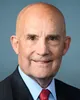
Keith Self, a Texas Republican, focuses most of his floor time on military matters, pushing an amendment to codify chaplain protections and religious-liberty language into the defense bill, and he regularly uses statements to honor service-academy appointees from his district. He generally lays out his case with specific reasons—citing existing law like the Religious Freedom Restoration Act, demographic figures on religious diversity, and the bill’s practical scope—and takes care to preempt objections, stating plainly what his amendment does and does not do. His one habit that stands out most against other members is filling time with procedural talk; a large share of his remarks is given to formal opening and closing formulas, reciting lists of names, and repeated phrasings like “Again, I say” or “I could go on,” rather than new substance, and when challenged he tends to restate his own position rather than engage the specific objection.Written by AI from their statements. Updated .
Average grade
B
The average grade of 3 analysed statements.
76 / 100 over 3 statements
Signal55 / 100
Relevance100 / 100
Reasoning100 / 100
RespectNot scored yet
Clarity100 / 100
Averaged over the 3 of 3 statements graded so far.
In their own words
Loses points more than most for
Throat-clearing: announcing what you are about to say, or the House’s routine business.1.7 times as often as most members.What the tags mean →×1.7
“I do not understand why Democrats oppose my amendment. Military chaplains will still help service members connect with leaders of their own religions, including the 31 faiths the military recognizes.”
“Mr. Chair, I am not sure, other than the statements against this amendment, what the opposition my colleagues on the other side of the aisle have from what I said. I failed to hear exactly what their opposition is, other than their statements of opposition to the amendment itself. Again, I say, chaplains will continue to connect servicemembers of differing faiths to chaplains representing their respective faiths and equip them with tools to meet their specific needs. There are now 31 faiths recognized by the Department of War, to include Muslims, Jews, Bahai, Sikh, agnostics, and I could go on. Again, I fail to understand the difference between what my colleague said in specifics with what I said. Mr. Chair, I yield back the balance of my time.”
Mr. Chair, I am not sure, other than the statements against this amendment, what the opposition my colleagues on the other side of the aisle have from what I said. I failed to hear exactly what their opposition is, other than their statements of opposition to the amendment itself. Again, I say, chaplains will continue to connect servicemembers of differing faiths to chaplains representing their respective faiths and equip them with tools to meet their specific needs. There are now 31 faiths recognized by the Department of War, to include Muslims, Jews, Bahai, Sikh, agnostics, and I could go on. Again, I fail to understand the difference between what my colleague said in specifics with what I said. Mr. Chair, I yield back the balance of my time.
“I want the House to add my amendment to this defense bill. It protects the religious freedom of military chaplains so they can serve troops without fear of punishment. It also punishes anyone who retaliates against chaplains for following their faith.”
“Mr. Chair, I yield myself such time as I may consume. Mr. Chair, I rise today in support of my amendment, which would attach the Military Chaplains Modernization Act of 2026 to the NDAA. It is supported by the Armed Forces Chaplains Board. This is not simply a chaplain protection bill. This is a military readiness, religious liberty, and command support bill. This bill builds upon the truth that has been affirmed by the Supreme Court that the First Amendment rights of our military chaplains are not suspended at the doors of the Pentagon. Our chaplains serve on the front lines, providing for the moral and spiritual well-being of our troops. The Department of War needs statutory clarity. Despite existing protections in the First Amendment, the Religious Freedom Restoration Act, RFRA, and section 533 of the FY 2013 NDAA, chaplains continue to face obstacles for simply ministering according to their faith. These sections in title 10 were last updated in 1956 when polls showed that 90 percent of America identified as Christian. The United States is far more religiously diverse now. This is why the Religious Freedom Restoration Act unanimously passed to protect religious freedom, and mainly religious minorities, in 1993. It is high time that title 10 was revised to reflect the diverse faith needs of our servicemembers, while also providing protections for the diverse chaplains that serve them. The chaplain’s ability to freely exercise their religious duties is not only constitutionally protected but is essential to forming the conscience of the warfighter. It is what helps restrain the soldier from committing atrocities while also providing a sense of purpose when facing down death’s door. Faith plays an essential role in forming and feeding the spirit of warfighters with unwavering integrity. This legislation does not create new rights. It simply codifies existing practices and protections across all service branches, which will ensure consistency for military chaplains of all faiths. It also recognizes the breadth of chaplains’ roles. They are not just religious officiants. They are the commanders’ adviser on ethics, spiritual readiness, morale, and even suicide prevention. This does not mean they replace other entities which provide advice or function. Rather, it ensures that chaplains, as spiritual advisers, are given a seat at the table. Let me be clear: This amendment does not empower chaplains to impose a particular belief. Instead, it protects them from violations of conscience and ensures they can facilitate spiritual care for all faiths. In fact, the amendment also protects servicemembers’ ability to access the spiritual care specific to their needs and faith tradition. Chaplains will continue to connect servicemembers of differing faiths to chaplains representing their respective faiths and equip them with tools to meet their specific needs. This bill respects and maintains the pluralistic approach of the military chaplaincy program. It also introduces real accountability under the Uniform Code of Military Justice for retaliation or censorship of a chaplain for acting according to their beliefs. This standard is essential to restoring trust. In 1942, President Franklin D. Roosevelt acknowledged the importance of the chaplaincy by vowing to never fail to provide for the spiritual needs of our officers and men. Mr. Chair, in order for military chaplains to serve our troops effectively, we must give them the legal protection to do so without fear or compromise. Mr. Chair, I urge my colleagues to support the inclusion of the Military Chaplains Modernization Act in the NDAA, and I reserve the balance of my time.”
Mr. Chair, I yield myself such time as I may consume. Mr. Chair, I rise today in support of my amendment, which would attach the Military Chaplains Modernization Act of 2026 to the NDAA. It is supported by the Armed Forces Chaplains Board. This is not simply a chaplain protection bill. This is a military readiness, religious liberty, and command support bill. This bill builds upon the truth that has been affirmed by the Supreme Court that the First Amendment rights of our military chaplains are not suspended at the doors of the Pentagon. Our chaplains serve on the front lines, providing for the moral and spiritual well-being of our troops. The Department of War needs statutory clarity. Despite existing protections in the First Amendment, the Religious Freedom Restoration Act, RFRA, and section 533 of the FY 2013 NDAA, chaplains continue to face obstacles for simply ministering according to their faith. These sections in title 10 were last updated in 1956 when polls showed that 90 percent of America identified as Christian. The United States is far more religiously diverse now. This is why the Religious Freedom Restoration Act unanimously passed to protect religious freedom, and mainly religious minorities, in 1993. It is high time that title 10 was revised to reflect the diverse faith needs of our servicemembers, while also providing protections for the diverse chaplains that serve them. The chaplain’s ability to freely exercise their religious duties is not only constitutionally protected but is essential to forming the conscience of the warfighter. It is what helps restrain the soldier from committing atrocities while also providing a sense of purpose when facing down death’s door. Faith plays an essential role in forming and feeding the spirit of warfighters with unwavering integrity. This legislation does not create new rights. It simply codifies existing practices and protections across all service branches, which will ensure consistency for military chaplains of all faiths. It also recognizes the breadth of chaplains’ roles. They are not just religious officiants. They are the commanders’ adviser on ethics, spiritual readiness, morale, and even suicide prevention. This does not mean they replace other entities which provide advice or function. Rather, it ensures that chaplains, as spiritual advisers, are given a seat at the table. Let me be clear: This amendment does not empower chaplains to impose a particular belief. Instead, it protects them from violations of conscience and ensures they can facilitate spiritual care for all faiths. In fact, the amendment also protects servicemembers’ ability to access the spiritual care specific to their needs and faith tradition. Chaplains will continue to connect servicemembers of differing faiths to chaplains representing their respective faiths and equip them with tools to meet their specific needs. This bill respects and maintains the pluralistic approach of the military chaplaincy program. It also introduces real accountability under the Uniform Code of Military Justice for retaliation or censorship of a chaplain for acting according to their beliefs. This standard is essential to restoring trust. In 1942, President Franklin D. Roosevelt acknowledged the importance of the chaplaincy by vowing to never fail to provide for the spiritual needs of our officers and men. Mr. Chair, in order for military chaplains to serve our troops effectively, we must give them the legal protection to do so without fear or compromise. Mr. Chair, I urge my colleagues to support the inclusion of the Military Chaplains Modernization Act in the NDAA, and I reserve the balance of my time.
“I want to honor 27 students from my district who were accepted into U.S. military service academies. I am adding their names and hometowns to the record.”
“Madam Speaker, I rise today to salute our servicemembers of tomorrow, the service academy-bound students of the Third Congressional District of Texas. This district of Texas is home to some of the best and brightest young men and women, and it is always an honor to appoint stellar student-athletes to our Nation’s service academies. I am confident that they are ready to join the premier service academies and ultimately serve with the best in the United States military. This year, Texas’ Third Congressional District is going to send seven cadets to the United States Military Academy; five midshipmen to the United States Naval Academy, six cadets to the United States Air Force Academy, six midshipmen to the United States Merchant Marine Academy, and three candidates to the United States Air Force Academy Preparatory School. To these 24 appointees and three preparatory candidates: I say God bless you, and God bless America. I salute you. Madam Speaker, I include in the Record the 27 names and respective hometowns.”
Madam Speaker, I rise today to salute our servicemembers of tomorrow, the service academy-bound students of the Third Congressional District of Texas. This district of Texas is home to some of the best and brightest young men and women, and it is always an honor to appoint stellar student-athletes to our Nation’s service academies. I am confident that they are ready to join the premier service academies and ultimately serve with the best in the United States military. This year, Texas’ Third Congressional District is going to send seven cadets to the United States Military Academy; five midshipmen to the United States Naval Academy, six cadets to the United States Air Force Academy, six midshipmen to the United States Merchant Marine Academy, and three candidates to the United States Air Force Academy Preparatory School. To these 24 appointees and three preparatory candidates: I say God bless you, and God bless America. I salute you. Madam Speaker, I include in the Record the 27 names and respective hometowns.