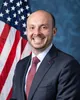
MEMBER OF CONGRESS

Andrew R. Garbarino

Follow by RSS

Garbarino’s floor time is devoted almost entirely to steering bipartisan homeland security and transportation security bills through suspension votes, typically as the sponsor or manager of narrow DHS and TSA measures such as fentanyl performance metrics, security-fee funding, and airport screening pilots. His statements follow a fixed procedural template—opening with formulas like “I yield myself such time as I may consume” and closing by yielding back the balance of his time—and he fills much of his speaking time with procedural talk and thanks or congratulations to bill sponsors far more often than most members. When he does reach substance, he describes what a bill requires and cites reports or figures such as a 2025 GAO report or the size of the passenger security fee, though he often states a predicted benefit (“will help ease the burdens families face”) without giving a measure or condition by which it could be checked, and he makes forward-looking commitments without dates or named actors. He frames bills as bipartisan, thanks colleagues on both sides of the aisle, and rarely uses heated or emotional language; New York concerns surface occasionally, notably in his defense of urban security grants for his state.Written by AI from their statements. Updated .

Average grade
B
79 / 100 over 16 statements
Signal 61 / 100
Relevance 100 / 100
Respect Not scored yet
Clarity 93 / 100
Loses points more than most for Throat-clearing: announcing what you are about to say, or the House’s routine business.2.1 times as often as most members.What the tags mean ×2.1 Thanks and tributes.1.8 times as often as most members.What the tags mean ×1.8 Loses points less than most for Praise, blame or attack with no claim, reason or ask in it.Less often than most members.What the tags mean Averaged over the 16 of 27 statements graded so far.

Statements 27

House of Representatives ·

Homeland Security Capabilities Preservation Reporting Act of 2026

“I support this bill. Cities can lose federal anti-terrorism grants when risk levels change each year. This bill requires regular reports to Congress on whether those cities can still protect themselves after losing that money.”
Official Congressional Record

Mr. Speaker, I yield myself such time as I may consume. Mr. Speaker, I rise in support of H.R. 8874, the Homeland Security Capabilities Preservation Reporting Act of 2026. This legislation requires DHS to provide a report to Congress every 3 years on the Homeland Security capabilities of urban areas that have previously received funding through the Urban Area Security Initiative, or UASI. The FEMA Grant Programs Directorate provides preparedness funding to assist States, localities, urban areas, and Tribal and territorial governments and strengthen the Nation’s ability to prevent, protect against, respond to, and recover from terrorist attacks, major disasters, and other emergencies. Every year, FEMA determines eligible high-risk urban areas for UASI funding through analysis of relative risk of terrorism experienced by urban areas in the United States. As relative terrorism risk undertaken by urban area jurisdictions changes every year, this can sometimes lead to urban areas that were once eligible for UASI funding in one year no longer being eligible in future years. This legislation will provide consistent information to Congress on the ability of urban areas at risk of terrorism threats to maintain their Homeland Security capabilities. I encourage my colleagues to support this bill, and I reserve the balance of my time.

“I want the House to pass this bill. It requires regular reports on security funding for cities that lose federal anti-terrorism grants.”
Official Congressional Record

Mr. Speaker, I move to suspend the rules and pass the bill (H.R. 8874) to amend the James M. Inhofe National Defense Authorization Act for Fiscal Year 2023 to require recurring reports on the transition of jurisdictions no longer eligible for Urban Area Security Initiative funding, and for other purposes. The Clerk read the title of the bill. The text of the bill is as follows:

House of Representatives ·

Improving Travel for Military Members Act

“I want the House to pass this bill. It lets airport security speed up screening for active-duty military members and their families.”
Official Congressional Record

Mr. Speaker, I yield myself such time as I may consume. I rise in support of H.R. 9328, the Improving Travel for Military Members Act. The Improving Travel for Military Members Act will allow the TSA Administrator to establish a 3-year pilot program to expedite access to security screening for traveling Active-Duty military personnel and their accompanying family members. If established, this pilot program will focus on airports closest to military installations with large Active-Duty populations, which will help to ease travel for the men and women bravely serving our Nation. I want to thank Representative Biggs for her leadership and encourage my colleagues to support the bill. Mr. Speaker, I reserve the balance of my time.

“I want the House to pass this bill to make travel easier for active-duty military members and their families.”
Official Congressional Record

Mr. Speaker, I move to suspend the rules and pass the bill (H.R. 9328) to improve travel for active-duty personnel and accompanying family, and for other purposes, as amended. The Clerk read the title of the bill. The text of the bill is as follows:

House of Representatives ·

Spending Aviation Fees for Equipment, Guaranteeing Upgraded and Advanced Risk Detection and Safety Act of 2026

“I want the House to pass this bill. The government takes fees from airline passengers, but much of that money is not spent on airport security. This bill makes sure that money goes directly to airport security equipment and the TSA to keep travelers safe.”
Official Congressional Record

Mr. Speaker, I yield myself the balance of my time. As you heard from my colleague from Colorado, $4.5 billion was brought in last year under the 9/11 Passenger Security Fee. What passengers don’t know is that the first $1.6 billion last year was diverted to something else other than passenger security. This bill would say the first $750 million of that passenger security fee would go directly to equipment, and then the balance of that money would go to the TSA discretionary fund, which actually would allow the TSA to get access to this money. Last year, the TSA discretionary fund didn’t have access to this money until the first $1.85 billion was spent. Now, they are going to get access, if this bill becomes law, after the first $750 million is spent on security equipment to make our traveling public safe. Mr. Speaker, I urge my colleagues to support H.R. 8770, and I yield back the balance of my time. The SPEAKER pro tempore (Mr. Babin). The question is on the motion offered by the gentleman from New York (Mr. Garbarino) that the House suspend the rules and pass the bill, H.R. 8770, as amended. The question was taken; and (two-thirds being in the affirmative) the rules were suspended and the bill, as amended, was passed. A motion to reconsider was laid on the table.

“I want the House to pass this bill. It makes sure the security fees that airline passengers pay are actually used for airport security. This money will buy better bomb-detection tools and technology to keep travelers safe.”
Official Congressional Record

Mr. Speaker, I yield myself such time as I may consume. Mr. Speaker, I rise in support of H.R. 8770, the SAFEGUARDS Act. This legislation establishes a sense of Congress that 9/11 passenger security fee revenue should be put toward TSA security screening purposes following the end of the current fee diversion at the end of fiscal year 2027. Additionally, this bill directs funds collected from this fee to modernize and sustain explosive detection systems and technology at TSA security checkpoints beginning in fiscal year 2028. The SAFEGUARDS Act will strengthen aviation security by ensuring passenger security fee revenue is used for its intended purpose: providing additional resources to protect the traveling public. I thank Representative Strong for his leadership, and I look forward to continuing our engagement on both sides of the aisle and with our colleagues on the Appropriations Committee to ensure that this bill improves deployment timelines for critical aviation security technology without any unintended consequences for the TSA workforce or any other TSA operations. Mr. Speaker, I urge my colleagues to support this bill, and I reserve the balance of my time.

“I want the House to pass this bill. It provides money to improve security at airports.”
Official Congressional Record

Mr. Speaker, I move to suspend the rules and pass the bill (H.R. 8770) to amend title 49, United States Code, to establish funds for investments in aviation security, and for other purposes, as amended. The Clerk read the title of the bill. The text of the bill is as follows: