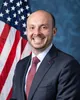
Garbarino’s floor time is devoted almost entirely to steering bipartisan homeland security and transportation security bills through suspension votes, typically as the sponsor or manager of narrow DHS and TSA measures such as fentanyl performance metrics, security-fee funding, and airport screening pilots. His statements follow a fixed procedural template—opening with formulas like “I yield myself such time as I may consume” and closing by yielding back the balance of his time—and he fills much of his speaking time with procedural talk and thanks or congratulations to bill sponsors far more often than most members. When he does reach substance, he describes what a bill requires and cites reports or figures such as a 2025 GAO report or the size of the passenger security fee, though he often states a predicted benefit (“will help ease the burdens families face”) without giving a measure or condition by which it could be checked, and he makes forward-looking commitments without dates or named actors. He frames bills as bipartisan, thanks colleagues on both sides of the aisle, and rarely uses heated or emotional language; New York concerns surface occasionally, notably in his defense of urban security grants for his state.Written by AI from their statements. Updated .
Average grade
B
The average grade of 16 analysed statements. 8 more were analysed but were too short to grade.
79 / 100 over 16 statements
Signal61 / 100
Relevance100 / 100
Reasoning85 / 100
RespectNot scored yet
Clarity93 / 100
Averaged over the 16 of 27 statements graded so far.
In their own words
Loses points more than most for
Throat-clearing: announcing what you are about to say, or the House’s routine business.2.1 times as often as most members.What the tags mean →×2.1
“Madam Speaker, I yield myself the balance of my time. Madam Speaker, I urge my colleagues to support H.R. 7574. I congratulate Mr. Evans on this fine piece of legislation, and I yield back the balance of my time.”
Official Congressional Record
Madam Speaker, I yield myself the balance of my time. Madam Speaker, I urge my colleagues to support H.R. 7574. I congratulate Mr. Evans on this fine piece of legislation, and I yield back the balance of my time.
“I want the House to pass this bill. It makes the Department of Homeland Security reorganize its outreach offices. This will stop them from doing the same work twice and help them share information better with police and local partners.”
“Madam Speaker, I yield myself such time as I may consume. I rise in support of H.R. 7574, the ELO Realignment and Strategic Engagement Reform Act of 2026. The Department of Homeland Security’s Engagement, Liaison, and Outreach, or ELO, Office operates as a separate office within the Office of Intelligence and Analysis. Despite their similar functions, ELO operates separately from I&A’s Partner Engagement directorate, which facilitates information flow and access for State, local, Tribal, and territorial partners. The ELO Realignment and Strategic Engagement Reform Act will require the DHS Secretary to develop a comprehensive plan to reorganize the ELO office and realign it with the work of I&A’s Partner Engagement directorate to streamline operations and eliminate redundancies. This plan must specifically address ways to improve coordination with law enforcement agencies, centralize points of contact, and enhance information sharing. Madam Speaker, I thank Representative Evans for his leadership. I urge my colleagues to support this bill, and I reserve the balance of my time.”
Official Congressional Record
Madam Speaker, I yield myself such time as I may consume. I rise in support of H.R. 7574, the ELO Realignment and Strategic Engagement Reform Act of 2026. The Department of Homeland Security’s Engagement, Liaison, and Outreach, or ELO, Office operates as a separate office within the Office of Intelligence and Analysis. Despite their similar functions, ELO operates separately from I&A’s Partner Engagement directorate, which facilitates information flow and access for State, local, Tribal, and territorial partners. The ELO Realignment and Strategic Engagement Reform Act will require the DHS Secretary to develop a comprehensive plan to reorganize the ELO office and realign it with the work of I&A’s Partner Engagement directorate to streamline operations and eliminate redundancies. This plan must specifically address ways to improve coordination with law enforcement agencies, centralize points of contact, and enhance information sharing. Madam Speaker, I thank Representative Evans for his leadership. I urge my colleagues to support this bill, and I reserve the balance of my time.
“I want the House to pass this bill. It requires the Department of Homeland Security to reorganize its outreach and liaison office.”
“Madam Speaker, I move to suspend the rules and pass the bill (H.R. 7574) to provide for the reorganization and realignment of the Engagement, Liaison, and Outreach Office of the Department of Homeland Security, and for other purposes. The Clerk read the title of the bill. The text of the bill is as follows:”
Official Congressional Record
Madam Speaker, I move to suspend the rules and pass the bill (H.R. 7574) to provide for the reorganization and realignment of the Engagement, Liaison, and Outreach Office of the Department of Homeland Security, and for other purposes. The Clerk read the title of the bill. The text of the bill is as follows:
“I want the House to pass this bill. It is good legislation.”
“Madam Speaker, I yield myself the balance of my time. Madam Speaker, I congratulate and thank Mr. Walkinshaw for his hard work on this bill. It is a great piece of legislation. I encourage my colleagues to support H.R. 8535, and I yield back the balance of my time. The SPEAKER pro tempore (Ms. Van Duyne). The question is on the motion offered by the gentleman from New York (Mr. Garbarino) that the House suspend the rules and pass the bill, H.R. 8535, as amended. The question was taken; and (two-thirds being in the affirmative) the rules were suspended and the bill, as amended, was passed. The title of the bill was amended so as to read: ``A bill To direct the Secretary of Homeland Security to develop performance metrics relating to the detection, deterrence, and seizure of illicit fentanyl, and for other purposes.’’. A motion to reconsider was laid on the table.”
Official Congressional Record
Madam Speaker, I yield myself the balance of my time. Madam Speaker, I congratulate and thank Mr. Walkinshaw for his hard work on this bill. It is a great piece of legislation. I encourage my colleagues to support H.R. 8535, and I yield back the balance of my time. The SPEAKER pro tempore (Ms. Van Duyne). The question is on the motion offered by the gentleman from New York (Mr. Garbarino) that the House suspend the rules and pass the bill, H.R. 8535, as amended. The question was taken; and (two-thirds being in the affirmative) the rules were suspended and the bill, as amended, was passed. The title of the bill was amended so as to read: ``A bill To direct the Secretary of Homeland Security to develop performance metrics relating to the detection, deterrence, and seizure of illicit fentanyl, and for other purposes.’’. A motion to reconsider was laid on the table.
“I support this bill. It requires the Department of Homeland Security to track how well it stops illegal fentanyl and makes its agencies share information with each other.”
“Mr. Speaker, I yield myself such time as I may consume. Mr. Speaker, I rise in support of H.R. 8535, the Measuring Illicit Fentanyl Trafficking Act. This legislation requires the Secretary of Homeland Security to develop performance metrics relating to detection, deterrence, and seizure of illicit fentanyl for the Department of Homeland Security and each of its components. Additionally, this bill requires each relevant DHS component to share information related to the detection, deterrence, and seizure of fentanyl with each other, as well as identify any barriers to sharing information and data. The fiscal year 2023 National Defense Authorization Act required DHS to establish a program to collect data and develop measures to assess the effectiveness of efforts to detect and deter illicit fentanyl. It also required the Government Accountability Office to audit the program. A September 2025 GAO report analyzed the Department’s efforts to combat fentanyl trafficking, with findings that DHS had not yet established the program, that CBP was not provided adequate information from across DHS components that would inform the program, and that DHS had not developed performance goals and metrics to track them. This legislation will support current DHS efforts to implement these requirements and combat the flow of illicit fentanyl into the United States. Madam Speaker, I encourage my colleagues to support this bill, and I reserve the balance of my time.”
Official Congressional Record
Mr. Speaker, I yield myself such time as I may consume. Mr. Speaker, I rise in support of H.R. 8535, the Measuring Illicit Fentanyl Trafficking Act. This legislation requires the Secretary of Homeland Security to develop performance metrics relating to detection, deterrence, and seizure of illicit fentanyl for the Department of Homeland Security and each of its components. Additionally, this bill requires each relevant DHS component to share information related to the detection, deterrence, and seizure of fentanyl with each other, as well as identify any barriers to sharing information and data. The fiscal year 2023 National Defense Authorization Act required DHS to establish a program to collect data and develop measures to assess the effectiveness of efforts to detect and deter illicit fentanyl. It also required the Government Accountability Office to audit the program. A September 2025 GAO report analyzed the Department’s efforts to combat fentanyl trafficking, with findings that DHS had not yet established the program, that CBP was not provided adequate information from across DHS components that would inform the program, and that DHS had not developed performance goals and metrics to track them. This legislation will support current DHS efforts to implement these requirements and combat the flow of illicit fentanyl into the United States. Madam Speaker, I encourage my colleagues to support this bill, and I reserve the balance of my time.
“I want the House to pass this bill. It requires the Department of Homeland Security to track how well it stops and seizes illegal fentanyl.”
“Mr. Speaker, I move to suspend the rules and pass the bill (H.R. 8535) to direct the Secretary of Homeland Security to develop performance metrics relating to the detection, deterrence, and seizure of fentanyl, as amended. The Clerk read the title of the bill. The text of the bill is as follows:”
Official Congressional Record
Mr. Speaker, I move to suspend the rules and pass the bill (H.R. 8535) to direct the Secretary of Homeland Security to develop performance metrics relating to the detection, deterrence, and seizure of fentanyl, as amended. The Clerk read the title of the bill. The text of the bill is as follows:
“Mr. Speaker, I yield myself the balance of my time. Mr. Speaker, I congratulate Mr. Van Epps. This is his first piece of legislation that will be passing in the House. I urge my colleagues to support H.R. 8168, and I yield back the balance of my time.”
Mr. Speaker, I yield myself the balance of my time. Mr. Speaker, I congratulate Mr. Van Epps. This is his first piece of legislation that will be passing in the House. I urge my colleagues to support H.R. 8168, and I yield back the balance of my time.
“I want the House to pass this bill. It requires a report on terrorist groups operating in countries that are major U.S. allies outside of NATO. These allies get special military benefits, but we need better watch over them to make sure we know what terrorist threats exist there.”
“Mr. Speaker, I yield myself such time as I may consume. Mr. Speaker, I rise in support of H.R. 8168, the Major Non-NATO Ally Terror Threat Assessment Act. The Major Non-NATO Ally Terror Threat Assessment Act requires the Secretary of Homeland Security, in consultation with the Secretary of State and the Director of National Intelligence, to submit a report to Congress assessing terrorism threats from designated terrorist organizations operating in countries designated by the United States as a major non-NATO ally. Major non-NATO allies benefit from expedited procedures in the foreign military sales process, and this status also makes them desirable for foreign military financing. Major non-NATO allies are also eligible for enhanced defense research collaboration and the positioning of U.S. defense equipment. Over time, there has been inconsistent oversight of the major non- NATO allies program, and today there are situations where U.S. designated terrorist organizations are present or operating in countries that have also been designated major non-NATO allies. This legislation will strengthen oversight of the program to ensure the United States has an adequate threat picture when it comes to terrorist activity in designated major non-NATO allies. Mr. Speaker, I thank Representative Van Epps for his leadership and encourage my colleagues to support this bill. Mr. Speaker, I reserve the balance of my time.”
Official Congressional Record
Mr. Speaker, I yield myself such time as I may consume. Mr. Speaker, I rise in support of H.R. 8168, the Major Non-NATO Ally Terror Threat Assessment Act. The Major Non-NATO Ally Terror Threat Assessment Act requires the Secretary of Homeland Security, in consultation with the Secretary of State and the Director of National Intelligence, to submit a report to Congress assessing terrorism threats from designated terrorist organizations operating in countries designated by the United States as a major non-NATO ally. Major non-NATO allies benefit from expedited procedures in the foreign military sales process, and this status also makes them desirable for foreign military financing. Major non-NATO allies are also eligible for enhanced defense research collaboration and the positioning of U.S. defense equipment. Over time, there has been inconsistent oversight of the major non- NATO allies program, and today there are situations where U.S. designated terrorist organizations are present or operating in countries that have also been designated major non-NATO allies. This legislation will strengthen oversight of the program to ensure the United States has an adequate threat picture when it comes to terrorist activity in designated major non-NATO allies. Mr. Speaker, I thank Representative Van Epps for his leadership and encourage my colleagues to support this bill. Mr. Speaker, I reserve the balance of my time.
“I want the House to pass this bill. It requires a report on terrorist threats to the United States coming from countries that are major allies outside of NATO.”
“Mr. Speaker, I move to suspend the rules and pass the bill (H.R. 8168) to require an assessment of terrorism threats to the United States posed by foreign terrorist organizations and Specially Designated Global Terrorists present in countries that are major non- NATO allies, and for other purposes. The Clerk read the title of the bill. The text of the bill is as follows:”
Official Congressional Record
Mr. Speaker, I move to suspend the rules and pass the bill (H.R. 8168) to require an assessment of terrorism threats to the United States posed by foreign terrorist organizations and Specially Designated Global Terrorists present in countries that are major non- NATO allies, and for other purposes. The Clerk read the title of the bill. The text of the bill is as follows:
“I want the House to pass this bill. It sets up faster airport security lanes for families traveling with children under twelve.”
“Mr. Speaker, I yield myself such time as I may consume. Mr. Speaker, I rise in support of H.R. 8897, the Improving Travel for American Families Act. This bill allows the TSA Administrator to establish a 2-year pilot program to expedite access and implement alternative screening lanes for passengers and accompanying children under the age of 12. If established, this pilot program would be prioritized at airports with high volumes of family travelers, as well as at airports that have the space to accommodate additional screening lanes. This legislation will help ease the burdens families face when traveling with young children and improve the overall passenger experience. Mr. Speaker, I thank Representative Mackenzie for his leadership and urge my colleagues to support this bill. Mr. Speaker, I reserve the balance of my time.”
Official Congressional Record
Mr. Speaker, I yield myself such time as I may consume. Mr. Speaker, I rise in support of H.R. 8897, the Improving Travel for American Families Act. This bill allows the TSA Administrator to establish a 2-year pilot program to expedite access and implement alternative screening lanes for passengers and accompanying children under the age of 12. If established, this pilot program would be prioritized at airports with high volumes of family travelers, as well as at airports that have the space to accommodate additional screening lanes. This legislation will help ease the burdens families face when traveling with young children and improve the overall passenger experience. Mr. Speaker, I thank Representative Mackenzie for his leadership and urge my colleagues to support this bill. Mr. Speaker, I reserve the balance of my time.
“Mr. Speaker, I move to suspend the rules and pass the bill (H.R. 8897) to improve travel for American families, and for other purposes, as amended. The Clerk read the title of the bill. The text of the bill is as follows:”
Official Congressional Record
Mr. Speaker, I move to suspend the rules and pass the bill (H.R. 8897) to improve travel for American families, and for other purposes, as amended. The Clerk read the title of the bill. The text of the bill is as follows:
“Mr. Speaker, I yield myself the balance of my time to close. Mr. Speaker, I thank Representative Kennedy and congratulate him on his hard work. Nobody knows how to remove snow quite like those Buffalo Bills fans, especially on game day. Mr. Speaker, I urge my colleagues to support H.R. 3106, and I yield back the balance of my time.”
Mr. Speaker, I yield myself the balance of my time to close. Mr. Speaker, I thank Representative Kennedy and congratulate him on his hard work. Nobody knows how to remove snow quite like those Buffalo Bills fans, especially on game day. Mr. Speaker, I urge my colleagues to support H.R. 3106, and I yield back the balance of my time.
“I want the House to pass this bill. It requires the Department of Homeland Security to run a practice exercise on responding to a terrorist attack during extreme cold weather. This will help our country prepare for attacks that happen during major winter storms.”
“Mr. Speaker, I yield myself such time as I may consume. Mr. Speaker, I rise in support of H.R. 3106, the Weatherizing Infrastructure in the North and Terrorism Emergency Readiness Act of 2025. This legislation requires the Secretary of Homeland Security, acting through appropriate offices and components of DHS to develop and conduct an exercise featuring the participation of Federal, State, local, Tribal, territorial agencies, and private-sector stakeholders focusing on a collective response to terrorism that includes the management of the cascading effects on critical infrastructure that results from the occurrence of a terrorist attack during an extreme cold weather event. DHS must then provide an after-action report to Congress consisting of initial findings, plans to incorporate any lessons learned into future DHS operations, and any proposed legislative changes informed by this exercise. This legislation will help strengthen the United States’ ability to respond to terrorist threats, especially when they might coincide with extreme weather events. Mr. Speaker, I encourage my colleagues to support this bill, and I reserve the balance of my time.”
Official Congressional Record
Mr. Speaker, I yield myself such time as I may consume. Mr. Speaker, I rise in support of H.R. 3106, the Weatherizing Infrastructure in the North and Terrorism Emergency Readiness Act of 2025. This legislation requires the Secretary of Homeland Security, acting through appropriate offices and components of DHS to develop and conduct an exercise featuring the participation of Federal, State, local, Tribal, territorial agencies, and private-sector stakeholders focusing on a collective response to terrorism that includes the management of the cascading effects on critical infrastructure that results from the occurrence of a terrorist attack during an extreme cold weather event. DHS must then provide an after-action report to Congress consisting of initial findings, plans to incorporate any lessons learned into future DHS operations, and any proposed legislative changes informed by this exercise. This legislation will help strengthen the United States’ ability to respond to terrorist threats, especially when they might coincide with extreme weather events. Mr. Speaker, I encourage my colleagues to support this bill, and I reserve the balance of my time.
“I want the House to pass this bill. It makes the Department of Homeland Security practice responding to a terrorist attack during extreme cold weather.”
“Mr. Speaker, I move to suspend the rules and pass the bill (H.R. 3106) to require the Secretary of Homeland Security to conduct a collective response to a terrorism exercise that includes the management of cascading effects on critical infrastructure during times of extreme cold weather, and for other purposes. The Clerk read the title of the bill. The text of the bill is as follows:”
Official Congressional Record
Mr. Speaker, I move to suspend the rules and pass the bill (H.R. 3106) to require the Secretary of Homeland Security to conduct a collective response to a terrorism exercise that includes the management of cascading effects on critical infrastructure during times of extreme cold weather, and for other purposes. The Clerk read the title of the bill. The text of the bill is as follows:
“Mr. Speaker, I urge my colleagues to support H.R. 9388, and I yield back the balance of my time. The SPEAKER pro tempore (Mr. Strong). The question is on the motion offered by the gentleman from New York (Mr. Garbarino) that the House suspend the rules and pass the bill, H.R. 9388. The question was taken; and (two-thirds being in the affirmative) the rules were suspended and the bill was passed. A motion to reconsider was laid on the table.”
Mr. Speaker, I urge my colleagues to support H.R. 9388, and I yield back the balance of my time. The SPEAKER pro tempore (Mr. Strong). The question is on the motion offered by the gentleman from New York (Mr. Garbarino) that the House suspend the rules and pass the bill, H.R. 9388. The question was taken; and (two-thirds being in the affirmative) the rules were suspended and the bill was passed. A motion to reconsider was laid on the table.
“I want the House to pass this bill. It extends a program that lets international travelers skip a second security screening when catching connecting flights in the United States, as long as their first airport met our security rules.”
“Mr. Speaker, I yield myself such time as I may consume. Mr. Speaker, I rise in support of H.R. 9388, the One-Stop Pilot Program Extension Act. This legislation extends the one-stop security pilot program for an additional 4 years. The one-stop security pilot program is operated by TSA and aims to streamline travel for passengers returning to the United States from international travel who have domestic connections. Under the usual screening process, passengers coming from outside the United States undergo inspections by Customs and Border Protection, collect their checked bags, and exit the sterile area of the airport. Under the one-stop security screening process, passengers undergo security screening at their departure airport and fly to a one-stop participating airport where they are cleared by CBP, but they can be routed straight to the sterile area of the airport instead. In doing so, passengers are not required to reenter through TSA screening, as they have already been screened at their departure airport using the same standards and technologies required by TSA. If additional airports were to join this pilot program, passengers would be able to continue on their journey with greater ease and efficiency once they return to the United States. I thank Representative Gimenez, the chairman of our committee’s Transportation and Maritime Security Subcommittee, for his leadership. Mr. Speaker, I urge my colleagues to support this bill, and I reserve the balance of my time.”
Official Congressional Record
Mr. Speaker, I yield myself such time as I may consume. Mr. Speaker, I rise in support of H.R. 9388, the One-Stop Pilot Program Extension Act. This legislation extends the one-stop security pilot program for an additional 4 years. The one-stop security pilot program is operated by TSA and aims to streamline travel for passengers returning to the United States from international travel who have domestic connections. Under the usual screening process, passengers coming from outside the United States undergo inspections by Customs and Border Protection, collect their checked bags, and exit the sterile area of the airport. Under the one-stop security screening process, passengers undergo security screening at their departure airport and fly to a one-stop participating airport where they are cleared by CBP, but they can be routed straight to the sterile area of the airport instead. In doing so, passengers are not required to reenter through TSA screening, as they have already been screened at their departure airport using the same standards and technologies required by TSA. If additional airports were to join this pilot program, passengers would be able to continue on their journey with greater ease and efficiency once they return to the United States. I thank Representative Gimenez, the chairman of our committee’s Transportation and Maritime Security Subcommittee, for his leadership. Mr. Speaker, I urge my colleagues to support this bill, and I reserve the balance of my time.
“I want the House to pass this bill. It extends a program that lets passengers flying into the United States catch connecting flights without going through airport security again.”
“Mr. Speaker, I move to suspend the rules and pass the bill (H.R. 9388) to amend title 49, United States Code, to authorize an extension of a program to permit screened passengers and their property arriving on direct flights or flight segments originating at certain foreign last point of departure airports to continue on additional flights or flight segments originating in the United States without additional screening, and for other purposes. The Clerk read the title of the bill. The text of the bill is as follows:”
Official Congressional Record
Mr. Speaker, I move to suspend the rules and pass the bill (H.R. 9388) to amend title 49, United States Code, to authorize an extension of a program to permit screened passengers and their property arriving on direct flights or flight segments originating at certain foreign last point of departure airports to continue on additional flights or flight segments originating in the United States without additional screening, and for other purposes. The Clerk read the title of the bill. The text of the bill is as follows:
“I want the House to pass this bill. It extends a pilot program that lets the TSA do security screening outside main airport terminals and get paid back for it. It also expands the program from 8 locations to 14 through 2031.”
“Mr. Speaker, I yield myself such time as I may consume. Mr. Speaker, I rise in support of H.R. 9391, the Reimbursable Screening Services Program Extension Act of 2026. First established in 2019, the Reimbursable Screening Services Program is a pilot program that allows screening services to be conducted outside the primary passenger terminal screening area. This pilot program has helped provide TSA with reliable streams of revenue while at the same time maintaining a safe and efficient screening environment. This bill extends the Reimbursable Screening Services Program through fiscal year 2031 and increases the number of allowable participating entities from 8 to 14. The Reimbursable Screening Services Program Extension Act provides increased certainty for this pilot program to ensure it can continue to develop while Congress assesses its long-term viability. Mr. Speaker, I thank the gentlewoman from New Jersey, Representative Pou, for cosponsoring this important legislation. I urge my colleagues to support this bill, and I reserve the balance of my time.”
Official Congressional Record
Mr. Speaker, I yield myself such time as I may consume. Mr. Speaker, I rise in support of H.R. 9391, the Reimbursable Screening Services Program Extension Act of 2026. First established in 2019, the Reimbursable Screening Services Program is a pilot program that allows screening services to be conducted outside the primary passenger terminal screening area. This pilot program has helped provide TSA with reliable streams of revenue while at the same time maintaining a safe and efficient screening environment. This bill extends the Reimbursable Screening Services Program through fiscal year 2031 and increases the number of allowable participating entities from 8 to 14. The Reimbursable Screening Services Program Extension Act provides increased certainty for this pilot program to ensure it can continue to develop while Congress assesses its long-term viability. Mr. Speaker, I thank the gentlewoman from New Jersey, Representative Pou, for cosponsoring this important legislation. I urge my colleagues to support this bill, and I reserve the balance of my time.
“I am asking the House to pass this bill to extend and expand a program that lets TSA get paid back for extra airport screening services.”
“Mr. Speaker, I move to suspend the rules and pass the bill (H.R. 9391) to authorize an extension and expansion of the Reimbursable Screening Services Program of the Transportation Security Administration, and for other purposes, as amended. The Clerk read the title of the bill. The text of the bill is as follows:”
Official Congressional Record
Mr. Speaker, I move to suspend the rules and pass the bill (H.R. 9391) to authorize an extension and expansion of the Reimbursable Screening Services Program of the Transportation Security Administration, and for other purposes, as amended. The Clerk read the title of the bill. The text of the bill is as follows:
“I want the House to pass this bill. Cities need security grants to stop terrorism, and Congress needs regular updates on how this money is handled.”
“Mr. Speaker, I yield myself the balance of my time. I also applaud the gentleman from Louisiana (Mr. Carter) for his leadership on this piece of legislation. As a Member from New York, I have seen firsthand the benefits and the need for UASI grants. I think it is very important that Congress be kept informed of decisions being made when it comes to these grants. I urge my colleagues to support this bill, H.R. 8874, and I yield back the balance of my time.”
Mr. Speaker, I yield myself the balance of my time. I also applaud the gentleman from Louisiana (Mr. Carter) for his leadership on this piece of legislation. As a Member from New York, I have seen firsthand the benefits and the need for UASI grants. I think it is very important that Congress be kept informed of decisions being made when it comes to these grants. I urge my colleagues to support this bill, H.R. 8874, and I yield back the balance of my time.