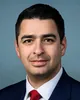
MEMBER OF CONGRESS

Gabe Evans

Follow by RSS

Gabe Evans mostly speaks in support of his own or bipartisan bills on law enforcement, fentanyl, energy costs, and aviation security, often tying them to his years as a Denver-area police officer and to his Colorado district. He usually explains what a bill does in concrete terms and gives figures (overdose death counts, fee revenue), but frequently opens with extended greetings and pleasantries—thanking chairs and honoring individuals—far more than most members, and often shifts to crediting Republican leadership or attacking Denver Democrats’ public safety record rather than addressing the bill at hand. He gives reasons for his positions more often than he leaves claims unsupported, and rarely fills time with procedural talk.Written by AI from their statements. Updated .

Average grade
B+
82 / 100 over 5 statements
Signal 69 / 100
Relevance 93 / 100
Respect Not scored yet
Clarity 90 / 100
Averaged over the 5 of 5 statements graded so far.

In their own words

Loses points more than most for

Statements 5

House of Representatives ·

Stop Pills That Kill Act

“I want Congress to pass this bill to stop fentanyl deaths. In my home state of Colorado, overdose deaths are rising because of weak drug laws. This bill increases prison time for drug dealers and cracks down on the machines used to make fake pills.”
Official Congressional Record

Mr. Speaker, I thank the gentleman from Kentucky for yielding. Mr. Speaker, I am proud to rise today in strong support of my bill to help combat the epidemic of fentanyl deaths that have been driven by the proliferation of counterfeit pills. My bill, the Stop Pills That Kill Act, is commonsense legislation that will help save American lives by cracking down on criminals who traffic poison disguised as prescription drugs. Under Republican leadership, the United States has thankfully seen a steep decline in monthly synthetic opioid deaths, driven by policies that strengthen border security and target cartels and drug dealers. Unfortunately, my State of Colorado has seen the exact opposite trend, with an average overdose rate of about 800 deaths per month at the end of 2024 increasing to 1,000 deaths now. Because Colorado’s trends have not matched the Nation and have, in fact, gone the other direction, my State has, unfortunately, seen more than 1,600 tragic and preventable excess overdose deaths. I was a cop in the Denver area for over a decade. I know that this figure isn’t just a tragic coincidence. It is a direct result of failed policies. While I was working to keep communities in Colorado safe from the poison that is fentanyl, Denver Democrats chose repeatedly to push soft-on-crime policies that lessened criminal sentencing for drug offenses while refusing to take a hard line on fentanyl. The Stop Pills That Kill Act counteracts these deadly policies by doing three simple things: It closes a sentencing loophole that allows poison peddlers off with a slap on the wrist. It implements serialization requirements for pill presses and their critical components. And it makes it illegal to manufacture, distribute, or import pill presses with the intent to illicitly produce a controlled substance. I will remind my colleagues that every 15 days under the previous administration we lost the same number of Americans to drug overdose deaths that we lost in the entirety of the September 11 terrorist attacks. I was a cop for 10 years, and I was a soldier for 12. I deployed to a combat zone as part of the global war on terror, and that statistic speaks volumes. We must remember the impacts that fentanyl has had on hundreds of thousands of American families. During the legislative process, two bills were folded into mine, the Fight Illicit Pill Presses Act, led by Representative Hageman, and the PRESS Act led by Representative McDowell. I thank both of them for their work, but I want to particularly recognize my friend, Mr. McDowell, who tragically lost his own brother to fentanyl nearly 10 years ago. Representative McDowell’s dedication to fighting this crisis is a fitting honor to his brother’s legacy. Mr. Speaker, I urge my colleagues to join me in supporting this critically important, commonsense bill.

House of Representatives ·

Ratepayer Protection Act

“I want the House to pass this bill. It makes large data centers pay for the power grid upgrades they need, instead of passing those costs on to families and small businesses. We need more energy for technology so we do not have to rely on China to store our data, but regular Americans should not have to pay higher electric bills for it.”
Official Congressional Record

Mr. Speaker, I thank the chairman for yielding me time. Mr. Speaker, I rise today in support of my bipartisan bill with Representative Castor, the Ratepayer Protection Act. America is in a period of incredible growth. Manufacturing jobs are returning to our shores. We are investing in American energy again. We are leading the charge for technological innovation. With that growth, our demand for energy is also skyrocketing, and some people have very understandable reservations and questions about data centers. The future, however, is binary: Either we build out our power systems to meet that demand, or we become dependent on other countries, like Communist China, for our daily needs, to include digital infrastructure that stores Americans’ consumer data, financial data, healthcare data, and personal data. Hardworking Coloradans in my district do want economic growth, and they do not want the Chinese Communist Party handling their sensitive information. They want responsible development practices, but they see the need for massive investments in our energy systems and wonder who is going to pay for it. This bill answers that question very clearly. Large-load data centers must cover the full costs of any system upgrades they require, not families or small businesses. We cannot accelerate this growth on the backs of Americans who are working hard to pay their electric bills at the end of the month. The Ratepayer Protection Act also gives States and local communities a voice to implement these principles and protect community members from rising utility bills. This bill passed unanimously in the Energy and Commerce Committee. It is common sense. It keeps costs low for Americans and helps us build the energy backbone required to compete and win in the AI race and to keep Americans’ digital information here in the United States, not in China. Madam Speaker, I am grateful it is being considered today. I urge my colleagues to support this bill.

House of Representatives ·

Deondra Dixon Include Project Act of 2025

“I want the House to pass this bill. It formally protects a government research project on Down syndrome and the health problems that come with it. The government has not spent enough money on Down syndrome, and these citizens deserve our support.”
  • Speech on a bill

    Signal 29 of 100

    Much of this statement went to praise, blame, greetings, routine procedure or general stories rather than reasons, requests or specific points.

    See full analysis
Official Congressional Record

Speaker, I rise today in strong support of the Deondra Dixon INCLUDE Project Act of 2025. I was incredibly proud to support this bill as it made it’s way through the legislative process in the Energy and Commerce Committee, and I am looking forward to it passing with bipartisan support on the House floor. This legislation provides statutory authority to a project that the NIH has already been carrying out for nearly a decade to investigate the co-occuring conditions that impact Americans with Down Syndrome and their quality-of-life needs. For far too long, federal investment into Down Syndrome has paced behind need. Individuals with Down Syndrome are among our most precious vulnerable citizens--they deserve this nation’s support. I also want to recognize the efforts of a fellow Coloradan who was instrumental in advancing this bill: Michelle Sie Whitten. As President and CEO of the Global Down Syndrome Foundation, Michelle has been a titan of advocacy in the Down Syndrome world. As the mother of a child with Down Syndrome, she has harnessed her love for the folks in this community and channeled it into action--raising millions of dollars for research and serving as a voice for those with Down Syndrome. It is safe to say that we would not be here voting on this bill if not for her tireless work and effort. I want to personally thank Michelle for her leadership and once again reiterate my support for this bill.

House of Representatives ·

Elo Realignment and Strategic Engagement Reform Act of 2026

“I want the House to pass this bill. It reorganizes parts of the Department of Homeland Security to help federal, state, and local police share intelligence more easily.”
Official Congressional Record

Madam Speaker, I thank the chairman for yielding me time. I also thank my bipartisan partner on this, Representative Goldman, for his efforts on this bill. Madam Speaker, I rise today to urge my colleagues to support the bipartisan bill, the ELO Realignment and Strategic Engagement Reform Act. This bill consolidates the functions of two existing Department of Homeland Security offices tasked with public safety coordination into one centralized point of contact. DHS’ Office of Intelligence and Analysis, also known as I&A, is the only entity in the U.S. intelligence community responsible for delivering intelligence directly to State and local law enforcement agencies. As a former cop for over a decade in the Denver metro area, I know there is nothing more critical to law enforcement operations than open communication between local, State, and Federal agencies. Information sharing between the men and women on the front lines and Federal intelligence counterparts ensures that bad actors, often tied to international criminal organizations like cartels and terrorist groups, are removed from our streets as quickly as possible. From my own experience, I know that State and local law enforcement often face national and international threats: terrorists, cartels, cyberattacks, and foreign enemy regimes. This bill supports State and local law enforcement when they encounter those national or those international threats. Unfortunately, in my home State of Colorado, Denver Democrats are often more concerned about finding ways to weaken law enforcement operations and attacking our brave officers rather than prioritizing public safety. Defund-the-police antics create public safety conflicts and confusion for law enforcement officers who are trying to serve and protect their communities. This bill ensures that State and local agencies can easily and frequently access the resources they require from their Federal partners when they are facing threats that require Federal backing. By reorganizing the ELO Office and realigning its essential functions within I&A’s partner engagement directorate, this bill streamlines coordination between law enforcement agencies, enhances information- sharing mechanisms, and reduces duplicative actions. This ensures responsible stewardship of taxpayer dollars, and it makes sure that State and local law enforcement agencies have the information that they need when they are facing those national or international threats. Time and again, we wait for tragedies to remind us that we have to incentivize interagency collaboration. This bill takes the fight to the streets, and it makes sure that we are preventively getting these resources to our State and local law enforcement agencies, because no single law enforcement agency can effectively address the full spectrum of threats without that combined resource. Madam Speaker, I strongly urge support for this bipartisan piece of legislation and support for the millions of State and local law enforcement officers across our country.

House of Representatives ·

Spending Aviation Fees for Equipment, Guaranteeing Upgraded and Advanced Risk Detection and Safety Act of 2026

“I want Congress to pass this bill. It makes sure the security fee on plane tickets goes straight to airport security and better screening tools instead of other things.”
Official Congressional Record

Mr. Speaker, today I rise in support of the SAFEGUARDS Act of which I am a proud original cosponsor. As my colleagues mentioned, this bill ensures that all revenue collected through the 9/11 Passenger Security Fee are invested back into aviation and airport security consistent with the fee’s original intent. Just last year, this $5.60 fee on your plane ticket brought in over $4.5 billion from U.S. passengers. The upcoming 25th anniversary of September 11 reminds us how important it is to use those resources to strengthen our national security systems today to prevent future tragedies tomorrow. My district also borders Denver International Airport. Thousands of airport, airline, and TSA employees in that airport are my constituents--the third busiest in the Nation. To keep them and all U.S. passengers safe, it is critical that TSA receives every dollar possible to properly update security screening equipment and stop emerging threats. Mr. Speaker, I urge my colleagues to join me in supporting this bipartisan bill.