
Protect College Sports Act of 2026

The Senate debated the Protect College Sports Act of 2026, which would set national rules for college athletes being paid, addressing issues around athlete compensation, protections for colleges, women’s sports, and Olympic sports. Senator Young, speaking for the bill, said current confusing rules on paying athletes harm schools and student-athletes and urged passage, citing support from universities in Indiana. The rest of the floor time was taken up with statements on other matters unrelated to this bill, including NIH funding, artificial intelligence, a resolution on the Iran war, federal workers’ collective bargaining rights, wildfire and climate resolutions, a fisheries bycatch bill, and vaccine policy.Written by AI from the debate. Updated .

Official text (opens in a new tab)

5 statements

David McCormick, PA

Republican
“We need to double the budget for the National Institutes of Health over the next five years. Government medical research saves lives, helps our economy, and keeps us ahead of China. We also need to fix how the agency works. It should stop spending money on politics, cut administrative waste, and be more open about who is getting paid.”
  • Speech on a bill

    Relevance 0 of 100

    None of this speech addressed the bill under debate and what it would change.

    See full analysis
Official Congressional Record

Mr. President, 2 years ago, Baby KJ was born with a rare, often fatal genetic disorder, and today he is walking and talking. How? Researchers at Children’s Hospital of Philadelphia and the University of Pennsylvania--funded by the National Institutes of Health--saved his life with the world’s first personalized gene-editing therapy. And, today, CHOP seeks the next miracle--the next miracle cure--at its Morgan Center for Research & Innovation, which I visited last week. Now, these breakthroughs are possible because NIH funds foundational science that saves lives and lowers the cost of disease. Federal research and private enterprise have made American medicine the envy of the world, and AI is accelerating that discovery like never before. And, yet, at this most exciting moment in medical history, I fear we will surrender our lead to China through underinvestment and mismanagement. This summer, the White House rightly called for a new golden age of American science. Reaching that critical goal takes more Federal R&D investment and long-overdue reform. Now, we as Conservatives should recognize that basic research--like national security--is a public good that private capital rarely funds, and government fills the gap with funding long-term, high-risk work. I know those of us who believe deeply in fiscal discipline may hear a call for more Federal R&D spending and ask: Why--why, especially at a time of enormous deficit and debt? And that is the right question. The Federal Government should not spend more simply for the sake of spending more. But funding basic research saves lives. It lowers the cost of disease, it creates new industries, and it strengthens America’s competitiveness. And if we do this right, this investment will more than pay for itself. And nowhere--nowhere--is that case more clear than in medical science. The Federal Government spends $7 trillion a year. Yet, less than 1 percent of that goes to NIH research, and that sliver delivers outsized returns. NIH’s Diabetes Prevention Program, for example, cut type 2 diabetes by 58 percent. NIH-supported eye disease research halved legal blindness from wet macular degeneration, saving roughly $28.5 billion. And CAR T-cell therapy, pioneered at Penn with NIH support, reengineered patients’ T cells to attack cancer-producing, decade-long remissions and replacing years and years of costly treatments. The list goes on and on. And, nationally, every NIH dollar also generates $2.50 in economic activity. In Pennsylvania, for example, NIH research sustains over 21,000 jobs and generates more than $5 billion annually. Now, earlier this year, NIH Director Jay Bhattacharya and I saw how researchers in Pittsburgh and Philadelphia are using artificial intelligence to detect cancer, to speed drug recovery, and to make surgery far more precise--amazing--amazing to see what is happening. And, yet, America’s global leadership is slipping. China is closing the gap. They have increased R&D spending from 36 percent of what we spend in the United States to parity in 2024. And, meanwhile, we are underinvesting in discovery. Federal R&D fell from 1.9 percent of GDP in 1964 to 0.6 percent of GDP in 2024. And since 2003, the NIH budget has shrunk by more than 10 percent, adjusted for inflation. Sadly, we have also let politics intrude on science. The Biden administration NIH, for example, gave CHOP--the Children’s Hospital of Philadelphia--$155,000 to develop training on ``structural racism’’ and ``intersectional microaggressions.’’ Such initiatives abuse taxpayer money, and they undermine the public trust. Finally, NIH has become opaque and bureaucratic. Nearly 1 in 3 grant dollars goes to overhead. Taxpayers can’t easily see researchers’ financial ties to industry, and young scientists--young scientists with some of the biggest, boldest ideas--they often have to wait until the age of 42 to receive major funding from NIH. Each of these failures has a fix. First, rather than cut NIH by 40 percent, as OMB proposed last year, we should double the $48 billion budget within 5 years. Now, I understand these are big numbers, but if these dollars yield discoveries that trim our $5.3 trillion health bill by just 1 percent, they will more than pay for themselves. And, more importantly, they will demonstrate that this AI revolution, it truly helps everyone. Second, we must prioritize merit-based science. This administration rightly reassessed grants lacking merit, and it canceled nearly 1,400 midstream--many over diversity, equity, and inclusion language that was in their proposals. Now, while some of these grants deserve to be canceled, some were legitimate research with buzzwords that were inserted to get approval from the Biden administration. On half of those grants alone, taxpayers had already spent $1.3 billion for work that will never be finished. So rather than waste that investment, we should let those researchers revise their applications for legitimate research and keep working. And that is why last week, I led five Senate Republican colleagues in a letter, urging the administration to do just that. Third, we must demand accountability. We must replace NIH’s costly overhead with one that rewards efficiency, makes institutions compete for infrastructure dollars, and gives the smaller research centers a fair shot at receiving those grants. I will soon introduce the Sunshine for Researchers Act to require federally funded researchers to disclose their industry ties. And my bipartisan NIH Mentorship Modernization Act, introduced with Senator Coons, would help retain these amazing great, young scientists. At this critical--critical--moment, incrementalism is our greatest enemy. America was built by pilgrims and pioneers who dared to push beyond the known. We must summon that spirit again by investing boldly, by prioritizing science, and by reforming relentlessly. And if we dare--if we dare--KJ’s story can be the beginning of a new golden age of American science that burns bright for decades to come. I yield the floor.

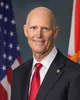
Todd Young, IN

Republican
“I want the Senate to pass this bill to set clear national rules for college sports. Right now, confusing rules about paying athletes harm schools and student-athletes. This bill protects athletes, colleges, women's sports, and Olympic sports, and it is supported by universities in my home state.”
  • Speech on a bill

    Signal 30 of 100

    Much of this statement went to praise, blame, greetings, routine procedure or general stories rather than reasons, requests or specific points.

    See full analysis
Official Congressional Record

Mr. President, as you well know, we are debating the Protect College Sports Act--legislation about the future of college sports--but I wouldn’t be doing my job as a U.S. Senator from Indiana if I didn’t point out that the Hoosier State happens to be the capital of the college football world right now. In one of the greatest seasons in the history of all college sports, the Indiana Hoosiers went undefeated last year and won the national championship. IU is back with a top-five team again this year and has a chance for another deep playoff run. And joining IU in the top five is the Notre Dame Fighting Irish, who also look really good this season. Whether it be in Bloomington or South Bend, we are hoping the championship trophy stays in the great State of Indiana this year. This support for these two teams shows that Hoosiers love college sports, and we want to continue rooting for our favorite schools and athletes for generations to come, but the future of college sports is at a crossroads right now. Congressional action is necessary to ensure that the NIL landscape is built on clear and fair rules and that it provides protections for both student-athletes and universities and ensures the longevity of not only college football and men’s basketball but Olympic and women’s sports as well. Without a Federal framework, the legal and operational uncertainty around this space will only cause our academic institutions and student-athletes to suffer. However, as with any legislation Congress contemplates, we have to do our due diligence to ensure it will work as intended. In addition to the many Hoosiers that are or will become student- athletes, I have a diverse group of engaged stakeholders on this issue based in Indiana, including the NCAA, USA Track & Field, USA Gymnastics, USA Diving, and, of course, top-tier universities. Throughout this process, I have stayed in close contact with these schools and organizations to make sure the legislation will work for them. I have also pushed reforms to this bill as it has gone through the process to ensure the interests of all Indiana colleges and universities, including our two Big Ten schools, are well represented. I am pleased that this final bill is supported by Indiana, Purdue, Ball State, Indiana State, and numerous other colleges and universities across Indiana. Getting to the finish line on a major piece of legislation like this isn’t easy, and it requires a lot of work. I am particularly grateful to Chairman Cruz and Ranking Member Cantwell for their collaborative approach and willingness to make changes to the bill to address concerns raised by the Big Ten. I know the Presiding Officer and so many other colleagues lent their voice and their labors to this effort, and I am most appreciative for all the breakthroughs for which they are responsible. I am supporting this legislation because I believe it is the right approach to protect the future of college sports. I believe it is the right approach. So I urge my colleagues to support the Protect College Sports Act and strengthen this uniquely American institution. I suggest the absence of a quorum.

Rick Scott, FL

Republican
“I object to this resolution. It blames the Palisades fire on climate change, which lets California officials avoid blame for their own mistakes. Mayor Bass and Governor Newsom failed to prepare for this fire and cut fire department budgets. We are investigating what happened, and I will not let them use climate change as an excuse.”
  • Speech on a bill

    Relevance 4 of 100

    Only 4% of this speech directly addressed the bill under debate.

    See full analysis
Official Congressional Record

Mr. President, reserving the right to object, first off, I want to say that I respect my colleague’s concern about the environment. Since I have been in the Senate, he has been very consistent about his concern about what we all should be doing for the environment, and I think we ought to take it very seriously--whatever we can do to protect our environment. But, today, I rise to object, to oppose this resolution. I have been to the Palisades. I have walked through the destruction. I saw the homes that were destroyed. I met with the people who lost everything. I talked to victims--including Spencer Pratt--and heard firsthand what they experienced and what they are still going through. We are talking about families who lost their homes, their possessions, their communities--in some cases, their loved ones. Today, those victims are still looking for answers. Mr. President, 12 people lost their lives in the Palisades fire, including vulnerable seniors. As chairman of the Senate Committee on Aging, I felt a duty to make sure those families got some answers. I held a hearing to hear directly from survivors and understand what happened to seniors and other vulnerable Americans who were trying to prepare, evacuate, and recover. I have also been working with Senator Ron Johnson to get to the bottom of what happened through our work on the Permanent Subcommittee on Investigations. Senator Johnson and I launched an investigation--a congressional investigation--because the victims deserve answers and accountability. We are looking at what happened before, during, and after the fire. We are looking at wildfire prevention and mitigation. We are looking at water and infrastructure. We are looking at staffing and preparedness. We are looking at evacuation plans and communications. We are looking at the decisions made by State and local officials. One thing is clear to everyone: California had serious leadership failures. Here is what we do know. In the months leading up to the fire, Mayor Karen Bass cut the Los Angeles Fire Department budget by $17.6 million. One month before the fire, the L.A. fire chief wrote in a memo that the budget cuts had ``severely limited the department’s capacity to prepare for, train for, and respond to large-scale emergencies, including wildfires.’’ Mayor Bass tried to deflect blame by terminating that fire chief. Three days before the fire, Mayor Bass traveled to Ghana, despite warnings of an imminent, life-threatening wind event in Los Angeles. We know that Gavin Newsom has done nothing. He has done everything he can, though, to escape responsibility for the fire. Yet court documents and testimony show that Governor Newsom could and should have closed the Topanga State Park after the Lachman fire in accordance with his own State guidelines. People were still out there hiking while there were underground embers burning. Fire crews were turned away by park officials. None of the State’s predeployed fire crews or trucks in southern California were sent to the Pacific Palisades, even despite the fire just days earlier. The bottom line: Karen Bass and Governor Newsom were responsible for leading their governments through this crisis. They were responsible for preparing for it, and they failed. The people in the Palisades deserve to know what went wrong and why their communities were not better protected. Senator Johnson and I are going to keep asking those questions. Our staff has sent request after request for documents and information. We have gotten delay after delay from California and Los Angeles agencies in providing the information we need. Let me be clear, we are not going to give up. We are not going to let bureaucratic delays prevent us from getting the answers for these families. We are going to keep requesting the documents. We are going to keep asking the questions. We are going to keep following the facts, wherever they lead. So here is my problem: I don’t think it is appropriate for a resolution that comes to the Senate and basically, essentially, tries to tell those victims that all of those failures--failure after failure--can be covered up with the vague excuse of climate change. And, clearly, we all know that we have got to take our own advice, take care of our environment, and deal with anything that our environment might be doing. The correct response is not to spend more money when we already are $43 trillion in debt. It is an insult to the victims who are still waiting for accountability. It is an insult to the intelligence of every American who can plainly see that Mayor Bass and Governor Newsom failed. They failed these people. Now, in Florida, we know what responsible wildlife management looks like because I led these efforts as Governor of Florida. We know you just can’t wait for a wildfire to start and then hope you can put it out. We made prescribed burning an important part of wildfire management strategy. You have to manage forests. You have to use prescribed fire responsibly. You have to make sure firefighters have the resources and infrastructure they need before disaster strikes. And you have to hold leaders accountable when they fail. That is real wilderness prevention. We can’t write it off as climate change. That doesn’t address any of these issues. It just lets the politicians in California pass the buck and escape responsibility. The victims of the Palisades fire don’t need Washington passing another resolution telling them what caused their suffering. They know. They need answers. They need to know what will be done to make sure this never happens again. Senator Johnson and I will continue our investigation because the victims deserve nothing less. We owe it to the 12 people who lost their lives. We owe it to everyone who lost their homes. We owe it to every American who expects their government to be prepared when disaster strikes. So we are going to keep fighting for the truth. We are going to keep demanding records. We are going to keep demanding accountability. We are not going to give up until we get all the answers. We are not going to let the California officials responsible for these wildfires say climate change caused this as an excuse. So, again, I appreciate my colleague’s concern about the environment. I agree with him that we have got to be very focused on how we can protect our environment, but, unfortunately, I object to this resolution.

Dan Sullivan, AK

Republican
“I want the Senate to pass my bill right now to protect Alaska's fish. Our salmon numbers have dropped sharply, and families cannot catch the food they need. This bill stops commercial boats from catching and wasting other fish by accident. It requires better fishing gear, protects the ocean floor, and shares more fishing data with the public.”
  • Speech on a bill

    Relevance 7 of 100

    Only 6% of this speech directly addressed the bill under debate.

    See full analysis
Official Congressional Record

Madam President, I rise today to pass my legislation, the Bycatch Reduction Act, which is the most comprehensive trawl bycatch reduction legislation ever to come before the U.S. Senate, ever to come before the Congress. And we have made good progress on this bill. We have been working on it for, heck, in some ways many years. I am going to talk about this. We had a great vote in the Commerce Committee last week, and I see my good friend Senator Markey from Massachusetts, whom I have worked on a number of fisheries issues with--being a Massachusetts Senator and an Alaska Senator--is on the floor today. So I am hoping he is going to actually speak in support of this bill and pass it with me. This bill has already passed all the Republicans in the Senate, who have approved it. So this is really important for my constituents. For generations, Alaskans have depended on our oceans, our rivers, and our abundant fish resources that sustain all of us, especially salmon. From subsistence harvesters in our Native villages to commercial fishermen in our coastal communities to recreational fishermen across our State, Alaskans depend on healthy fisheries. For Alaska Native communities, our fish, especially salmon, are deeply connected to culture, tradition, heritage, and a way of life that reaches back thousands of years. Our salmon provide food, food security, jobs, culture. They support families and entire communities, and they are a source of deep spiritual connection. My wife Julie’s family had a fish camp on the Yukon River for generations--generations. My daughters have all been raised in the summers on that river--every summer, my wife, my family, my in-laws, my daughters, a deep spiritual connection. Yet Alaska’s salmon runs, in particular, are facing enormous challenges. Our fisheries, in general, are facing enormous challenges. We have seen and continue to see huge fluctuations in salmon, crab, halibut, and other species that Alaskans depend on. We know the ocean is changing. It is an issue Senator Markey has raised a lot. We have ocean acidification issues. We know these conditions will continue to change. We also know that fishing activity, particularly bycatch, and contact between fishing gear, trawl gear, and sensitive sea floor habitats affect the health and productivity of marine ecosystem. So what are we going to do about this? For years, Alaskans across our State, everywhere--coastal communities, interior communities, villages--have been asking for action. Fishery managers have asked for more data to make informed decisions. Subsistence harvesters have asked for greater transparency. Communities have asked for greater accountability. And fishermen have asked for the tools and technology they need to reduce trawl bycatch. It is a huge issue in my State. I have talked about this bill on the Senate floor a lot. This was an issue--a bill inspired by my wife Julie, as I have already mentioned her--it was part of my Alaska Salmon Task Force Act. What does this focus on? It is focused on bringing the best minds together--a bill that I got over the goal line, passed into law in 2022--to say: What is going on with our salmon runs? Why do we have really strong salmon runs in places like Bristol Bay, with their sockeye runs, and very weak king salmon runs on the Yukon River and the Kuskokwim River? So what we did in this bill is we brought the best minds in Alaska-- State, Federal, Tribal, indigenous, university, fishermen, community members--to come together and say: What is happening? Why is it happening? And what is the pathway to get to what every Alaskan wants: stronger healthy salmon runs on all our rivers, across all species? So we did this. Alaskans coming together--this body coming together-- produced this very important report, the Alaska Salmon Task Force Act. NOAA Fisheries helped. The Alaska Department of Fish and Game helped. But, most importantly, we set up task forces with regard to Tribal members on the Yukon, on the Kuskokwim to make sure we had their input. This was Alaskans coming together. It is not easy to get consensus--not easy to get consensus on issues such as fisheries and salmon--but we did that. And this laid out several different recommendations on moving forward to get to the goal we all want--a roadmap back to strong, healthy salmon runs. This is an issue I have been working on for years, and one of the recommendations was to reduce trawl bycatch. There are other recommendations that we are working on--ocean acidification and many others--but this was a big one. So we worked on this bill, again, with dozens and dozens of Alaskans. This legislation honors the call for action that so many Alaskans have made and our Alaska Salmon Task Force Act has as well. The Bycatch Reduction Act is designed to do that, and it has a robust toolkit with several clear objectives. First, it establishes for the North Pacific Fishery Management Council standards and monitoring requirements and action and timelines to take action to reduce trawl gear contact with the sea floor and protect important marine habitats. Essentially, it requires proven tools, such as mandating certain technologies like salmon excluders on trawl vessels, to, again, reduce salmon bycatch. It invests in science and technology to continue to work on better understanding ocean conditions. It creates new gear testing facilities. It reauthorizes NOAA’s Bycatch Reduction Engineering Program that I have been focused on during my whole time here in the Senate. It reconstitutes the Alaska Salmon Research Task Force, with Alaskans and our indigenous experts with Tribal and traditional knowledge, as a bycatch task force overseeing NOAA’s activities as they relate to trawl bycatch. Alaskans overseeing NOAA is very important for our stakeholders. This legislation also strengthens transparency and accountability for trawling on the North Pacific Fishery Council. It requires NOAA to make observer coverage requirements and bycatch information more accessible to the public and easier to understand. It expands opportunities for Alaskans, fishermen, and other stakeholders to participate in the council process. It raises the issue and starts looking again at the issue of conflicts of interest on the council. These provisions are not ideas that came out of a Washington, DC, office; they came from Alaskans. As I mentioned, this bill--the most comprehensive bycatch-reduction bill ever--builds on the work that hundreds of Alaskans did on our salmon task force to get to the goal we all want: stronger, healthier salmon runs across our State, across rivers, across species, especially given that we are seeing the devastating declines in salmon on the Yukon River and across the western interior of Alaska that have led to fishery closures, subsistence shortages, and families not being able to fish. As I mentioned, my wife’s family keeps a fish camp on the Yukon River. We have watched those smokehouses, including ours, sit idle for years. It is heartbreaking. It is really heartbreaking to witness these families, their culture, the people who live along our great rivers not being able to put up fish every year, and they have been doing so for thousands of years. So this is an important first step. It is because of the task force and hundreds of conversations with Alaskans for years now that we need to take action. The Bycatch Reduction Act puts the recommendations here into action. Again, we had a very strong vote last week in the Commerce Committee. I think every Senator but four voted for my bill. I explained it, and we saw how important it was because the bill uses science, technology, innovation, accountability, and action to help support reducing trawl bycatch and strengthen subsistence traditions, sport fishing in Alaska. It is about giving fishermen the tools to reduce bycatch, and it protects fisheries and fish stocks that depend on them. It is about making sure Alaskans have access to the data and transparency they need to participate meaningfully in the management of our fisheries, and it safeguards the long-term sustainability, particularly of our salmon, that so many Alaskans depend on. I want to thank the countless Alaskans who have been working with me and my team for years now on these issues. We have sought and fought to reduce bycatch in many, many other ways, but this bill is a really, really important step. So I am hopeful that my colleagues are going to now pass it with me, and we will move it over to the House and get it passed and signed into law. Madam President, notwithstanding rule XXII, I ask unanimous consent that the Commerce, Science, and Transportation Committee be discharged from further consideration of S. 4938 and that the Senate proceed to its immediate consideration; further, that the Sullivan substitute, which is at the desk, be agreed to; that the bill, as amended, be considered read a third time and passed; and that the motion to reconsider be considered made and laid upon the table.

Dan Sullivan, AK

Republican
“I want the Senate to pass my bill to reduce extra fish caught by accident in the North Pacific. It does not affect Massachusetts, but I am willing to work with Senator Markey on changes to address his concerns.”
  • Speech on a bill

    Relevance 0 of 100

    None of this speech addressed the bill under debate and what it would change.

    See full analysis
Official Congressional Record

Madam President, I am disappointed in my good friend Senator Markey of Massachusetts. He and I have worked on, actually, a lot of fisheries issues together. He is right; Massachusetts and the State of Alaska have important fisheries interests. This one, fortunately, doesn’t impact Massachusetts at all; it is solely confined to the North Pacific area. So I am a little disappointed that he is not moving forward. I want to thank all of my Republican colleagues who cleared my Bycatch Reduction Act, and we are going to keep working on it. I certainly will continue working on it with Senator Markey. Like I said, we have worked together on a number of fisheries issues over the years, and we are going to continue to work on hitting the bycatch issue with a multifaceted approach, as we have already done. One of the things we have gotten done here in the Senate, in both the Biden and Trump administrations, is to dramatically ban the importation of all Russian trawl-caught fish and now Chinese trawl-caught fish. That really helps with regard to the bycatch issue. We have been very focused on increasing the annual appropriations for the Bycatch Reduction Engineering Program that I have led on a number of times. I have even defended in court our Alaska halibut fishermen against Seattle-based Amendment 80 trawlers in a lawsuit and won that case with them. We are going to continue this work, building on the work from the legislation we passed for the roadmap to get back stronger salmon runs in Alaska and stronger fisheries with regard to salmon runs across species, across rivers, across the States, but this bill is a really important part of that, so I will continue to work this. If the Senator from Massachusetts and his staff have edits and amendments, I don’t think it is going to impact Massachusetts at all, to be honest, but we will work with them because we are very focused. My constituents are very focused to finally see action on trawl-bycatch reduction, and this bill is the bill with action and timelines, and we are going to get it over the goal line. We are going to get it over the goal line. I yield the floor.

Discussion

No comments yet

See the full discussion

Comment rules

More from issue 151

  1. Senate Legislative Session 8 statements
  2. Senate Protect College Sports Act of 2026 8 statements
  3. Senate New Mexico Land Grant-Mercedes Historical or Traditional Use Cooperation and Coordination Act 2 statements
  4. Senate Protect College Sports Act of 2026 15 statements
  5. Senate Statements on Introduced Bills and Joint Resolutions 2 statements