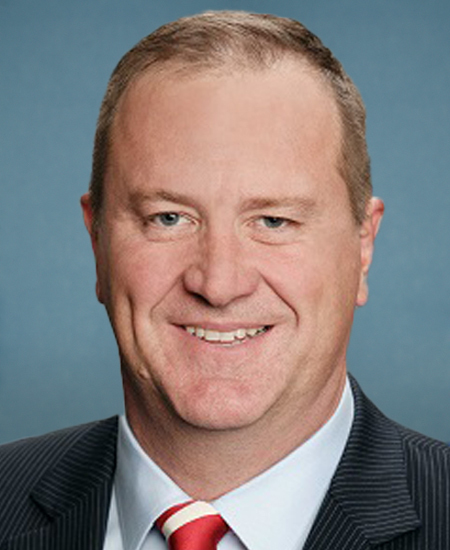
Eric Schmitt, MO
“College sports are broken. The rules don't work anymore. Lawsuits ruined the rules. The NCAA can't do anything. It's a mess. Revenue sharing doesn't work. Agents take too much money. Players transfer too much. Graduation rates are down. This bill fixes it. It lets the NCAA make rules again. It sets limits. It helps women's sports. It has support from everyone. I want the Senate to pass this bill.”
“I want the Senate to take up and pass this bill to protect college sports. Lawsuits have left college sports with no enforceable rules. Athletes are transferring constantly, graduation rates are falling, and some agents are taking unfair cuts of players' money. Without rules, schools will soon run out of money to pay for women's and Olympic sports. This bill gives the NCAA legal protection to enforce basic rules, like limiting players to five years of play and one free transfer. It also sets caps on player pay while still letting athletes sign endorsement deals, and it protects money for women's sports.”
“Mr. President, well, game time--we are about ready to take up a bill, potentially, that deals with a situation that I think should be and is near and dear to the hearts of all our constituents. And this is not a partisan issue. This is about a uniquely American institution: college sports. College sports are at a tipping point, in a place that they have never been before, because over the last decade or so, and in the course of litigation, no rules can be enforced. Now, I would freely admit that the old system had its challenges, too--the idea that athletes couldn't be compensated for their name, image, and likeness. I think that was wrong. That has been rectified. But what we have now is a system that is unstable and threatens, in particular, women's sports and Olympic sports in the long-term. For a very, very long time, the business model, effectively, of college athletics was college football subsidized all of the other nonrevenue sports. Basketball is, essentially, a break-even proposition for the most part. Maybe it makes a little money. But all of those other sports and the 500,000 student-athletes in this country that have an opportunity to compete, to learn what it is like to have that kind of commitment, that grit; who show up on time, persevere, build relationships with people from different backgrounds-- you know, I had the opportunity to play in college and throughout my life before that, and what is left of that is the Congressional baseball team, I guess. But when you are on a team, you want to win, and you want to win with your teammates. For me, I didn't care where they came from, what their race was, what their religion was. We were a team. There are a lot of really, really important leadership lessons that come from that. And that is a risk. Now, some might say: The stands are full; you know, revenues are robust. All those things are true, but the reality is we have entered into this new phase with something missing: a governing body that can establish and enforce rules. That is at the heart of what the Protect College Sports Act is all about. It is to grant limited antitrust exemption status for a governing body, the NCAA, to enforce rules; meaning, 5 years of eligibility. I think most people think it is nuts that you have 27-year-olds right now competing with 17-year-olds. I think most people think it is nuts that you might have somebody transfer four times. Well, guess what. Graduation rates are plummeting. I personally think that if you are the second-string quarterback at the University of Arkansas or somewhere else and you get an opportunity to play at Louisville or wherever, that you should be able to move one time. But the chaos--if you talk to people, any coaches, and even players, by the way, who testified, this is not a good situation. It is completely unstable. People are making decisions based on tweets and injunctions that may come down on a Friday afternoon. You have seen it over the last couple of weeks: people who went professional coming back to compete on a team where somebody had spent--you know, they are 18 years old and spent the fall camp getting ready for the season and may be displaced. None of those problems--none of those problems--are going to go away. I think we are in a rare moment here in this Chamber where we are at a time for choosing--no more roundtables, no more hypotheticals. This is what we get paid to do: to try to solve hard problems. What is unique about this is it doesn't fall into traditional partisan categories. There is no real ``red jersey, blue jersey'' on this thing. This is identifying what the problem is and working together to find a solution. There are a lot of components of this bill. I want to go through some of them. There are going to be a few other speakers. But this would provide one national standard for NIL. You have kind of a patchwork right now, State by State. Let me be clear, when this bill--or, hopefully, this bill passes, and a student-athlete will still be able to go get an NIL deal. Arch Manning or whoever, Austin Simmons, the great quarterback at the University of Missouri--they can still get their deal from Nike. Nothing in this bill prohibits that. And while we are talking about it--because I am sure you are going to hear some criticisms from some people who are going to use some pretty--well, I will let them speak for themselves the language they are going to use about this. The reality is, through the course of litigation, there is something called the House settlement. The House settlement established a revenue-sharing system with a cap of what is essentially $21.5 million right now. OK, there are some football teams right now, which shall remain nameless, that have a football roster valued at over $40 million. How is this happening? Because that cap doesn't mean anything. Nobody can enforce anything. They are working around the cap. So what this bill would do is set in statute that cap plus a retention pool number of $22.5 million and a $5 million number that doesn't count against the cap if it goes to women's sports. So if anybody tells you we are taking money out of the system, we are not. Actually, we are ensuring that this marketplace still exists but with guardrails, with some stability, with some certainty. The idea that somebody could, you know--this is a semester-by- semester thing. The roster turnover that we have seen, for fans, is a challenging thing. For players, they should have the ability to move but not every year. If you ask somebody what is their honest opinion about this, it is ridiculous. At the end of the day, if you are losing money on your football program or all of your money is going to your football program, you are not going to subsidize women's tennis anymore or even baseball. Men's baseball doesn't generate revenue for 99 percent of the programs that are out there. So the menu will shrink. The opportunities for those 500,000 student- athletes--whatever their color is--that will shrink. That number will shrink if we don't do something. If you would have asked me a few years ago about whether Congress should get involved in this, I would have been very, very skeptical. I am a fan, first and foremost, as I come to this. And I have tried to look at this as a lawyer, look at this as a lawmaker, look at this as a fan: What are the solutions that are necessary? And what we are doing here is something that this body--this Congress--is the only entity on the planet could do--nobody else. The conferences can try to enforce their own rules. They did it with some success recently with the pro situation in the SEC, in the Big Ten. But if this stuff is challenged, they have no legal ability, because of our antitrust laws, to actually enforce these rules. So we are giving that limited antitrust protection to enforce eligibility in 5 years, to enforce the one-time transfer. I think that is important, that ability to enforce those rules. The athletes--let's talk about the student-athletes for a second. Not only has that market been established--that is where it is right now. Now, I will tell you that maybe the one group that doesn't like this is the sports agents--the rich sports agents who wear Gucci suits and alligator shoes. They may not like this because there are no rules for agents right now. An agent can charge 30 percent on an 18-year-old, and, in some instances that I have heard of, they are lifetime earnings. That is nuts. The percentage an agent gets in the NFL is in the single digits-- the low single digits. People are being taken advantage of. A buddy in the classroom might get you a better deal if you go to Wisconsin. Well, guess what. It wasn't a better situation. Maybe you didn't end up there. Maybe you ended up with less money. That agent or your friend or the ``hanger-oner,'' he doesn't care; he got his cut. So this bill establishes rules for agents to get rid of scammers and the fraudsters from taking advantage of our student-athletes. And as I mentioned, you can still get your own NIL deal outside of the rev share and number, but it has to be for legitimate business purpose. There are examples after examples, but that is not actually the case right now, which is why you have this influx. And if you think for a moment Western Kentucky can compete with Ohio State in the long term, you are fooling yourself. Even, honestly, schools within the Power Four--within those particular conferences, it creates a great disparity. What fans really want is parity. This helps establish that. It helps create a structure by which teams can compete. It restores structure to that transfer portal. I think the thing that probably most people see--I have learned a lot of what is going on behind the scenes. But what people see, front and center, is probably the transfers where an entire defense is gone or an entire offense is gone. I am talking a lot about football just because it is football season and that is what most people see. It is the second most popular sport in this country. And while I am talking about that, it is worth mentioning that the bill, for the first time, provides the option--the option for conferences to pool their media rights. It is totally voluntarily. The SEC and the Big Ten don't want to do it. It is never going to happen. But college football is about $4 billion all in. The NBA has half the audience. It is $8 billion all in. Part of the reason for that is they are negotiating one unified rights deal. This would allow the conferences to have a unified rights deal if they want to, and that additional revenue--the billions and billions and billions more--can be used to protect women's sports and Olympic sports that are at risk. If you talk to anybody that actually knows this stuff, they will tell you that those opportunities are going to be limited. They are still going to have to comply with title IX, but they will do a one-for-one reduction in sports. So I mentioned that you have got the rev share pool, you have got the retention pool, you have got the money--the $5 million that doesn't count against that cap, if it is for women's sports. I think that is really important. There are a lot of different components with this bill that I have talked to a ton of colleagues on both sides of the aisle about. This is not a perfect bill. I probably have never voted for a perfect bill. I have filed perfect bills. I have filed a lot of perfect bills, but voting on perfect bills is a different matter. So there are going to be things--there are some things in this bill that I don't like actually. But, on balance, the time has come for the U.S. Senate to do something that it actually rarely does, which is to meet the moment. We are in a moment. This has the endorsement of every conference, all the schools, the NFL Players Association, student-athletes that have come here, legendary coaches who have seen the changes, HBCUs, the SWAC conference, the SEC, the Big Ten, all of them. They all recognize that there is a choice now, a binary choice, which is to do something to correct the major issues and provide stability so that we can continue to enjoy college athletics, which like I said, what we get to enjoy on Saturday afternoon or whenever a game is being played--I have two daughters, I think it is great what is happening with women's sports--that doesn't happen anywhere else in the world. It is a uniquely American institution. We can do that, or we can find some reason to not support it. We can grandstand and try to pretend that you are advocating for somebody that is being left out of this, but the truth is this bill will solve a ton of problems that are so obvious you would have to be not paying attention or not want to notice. And so I think that college athletes are protected; our sports that fans love are protected. It has become--college sports have become, in some ways, a professional league. I don't think it has been stripped of loyalty, continuity, the meaningful relationships of fans and their teams. This bill reestablishes that while still giving student-athletes a lot of options. I also wanted to say something about what sports mean to our constituents. I would say culturally, we do a lot of things up here that back home people wonder what are you talking about, what are you doing. This is a cultural issue. This is something that our folks back home do care about, and I think they want to know, they want to know when we see it, when everybody sees the challenges and the chaos that we can work together to get something done. I think at the heart of it, the restoring faith that this body can act in a way that takes a lot of different viewpoints from a lot of different groups and individuals and gets you to a place where a piece of legislation like this can get across the finish line. I want to thank--look, the bill is before you, but Senator Cantwell from the State of Washington has done a ton of great work on this; Senator Cruz from Texas. The three of us have spent a lot of time talking to a lot of people, getting input, making changes, trying to make the bill better. And I just don't think we can pretend inaction is a satisfying answer here. So we are all going to have an opportunity to vote on this, to proceed to this bill, and I hope that we do it. We are going to get one shot at this. We are going to get one shot. And I don't know--I am not Nostradamus. Nobody in here is. I don't know that we ever will again any time soon. I don't know what is going to happen whenever. I don't know if we are going to move on to other things, but we have got a moment here, like I said, that we can meet and actually do something. You know, if you want to put it--let me take a step back. I think this vote, this bill will define the trajectory of college athletics for decades, and that doesn't happen every day that we are confronted with those kinds of issues with a solution in front of us that has been worked on in a bipartisan way to try to solve these issues to protect an American institution--college sports. I yield the floor.”
Mr. President, well, game time--we are about ready to take up a bill, potentially, that deals with a situation that I think should be and is near and dear to the hearts of all our constituents. And this is not a partisan issue. This is about a uniquely American institution: college sports. College sports are at a tipping point, in a place that they have never been before, because over the last decade or so, and in the course of litigation, no rules can be enforced. Now, I would freely admit that the old system had its challenges, too--the idea that athletes couldn't be compensated for their name, image, and likeness. I think that was wrong. That has been rectified. But what we have now is a system that is unstable and threatens, in particular, women's sports and Olympic sports in the long-term. For a very, very long time, the business model, effectively, of college athletics was college football subsidized all of the other nonrevenue sports. Basketball is, essentially, a break-even proposition for the most part. Maybe it makes a little money. But all of those other sports and the 500,000 student-athletes in this country that have an opportunity to compete, to learn what it is like to have that kind of commitment, that grit; who show up on time, persevere, build relationships with people from different backgrounds-- you know, I had the opportunity to play in college and throughout my life before that, and what is left of that is the Congressional baseball team, I guess. But when you are on a team, you want to win, and you want to win with your teammates. For me, I didn't care where they came from, what their race was, what their religion was. We were a team. There are a lot of really, really important leadership lessons that come from that. And that is a risk. Now, some might say: The stands are full; you know, revenues are robust. All those things are true, but the reality is we have entered into this new phase with something missing: a governing body that can establish and enforce rules. That is at the heart of what the Protect College Sports Act is all about. It is to grant limited antitrust exemption status for a governing body, the NCAA, to enforce rules; meaning, 5 years of eligibility. I think most people think it is nuts that you have 27-year-olds right now competing with 17-year-olds. I think most people think it is nuts that you might have somebody transfer four times. Well, guess what. Graduation rates are plummeting. I personally think that if you are the second-string quarterback at the University of Arkansas or somewhere else and you get an opportunity to play at Louisville or wherever, that you should be able to move one time. But the chaos--if you talk to people, any coaches, and even players, by the way, who testified, this is not a good situation. It is completely unstable. People are making decisions based on tweets and injunctions that may come down on a Friday afternoon. You have seen it over the last couple of weeks: people who went professional coming back to compete on a team where somebody had spent--you know, they are 18 years old and spent the fall camp getting ready for the season and may be displaced. None of those problems--none of those problems--are going to go away. I think we are in a rare moment here in this Chamber where we are at a time for choosing--no more roundtables, no more hypotheticals. This is what we get paid to do: to try to solve hard problems. What is unique about this is it doesn't fall into traditional partisan categories. There is no real ``red jersey, blue jersey'' on this thing. This is identifying what the problem is and working together to find a solution. There are a lot of components of this bill. I want to go through some of them. There are going to be a few other speakers. But this would provide one national standard for NIL. You have kind of a patchwork right now, State by State. Let me be clear, when this bill--or, hopefully, this bill passes, and a student-athlete will still be able to go get an NIL deal. Arch Manning or whoever, Austin Simmons, the great quarterback at the University of Missouri--they can still get their deal from Nike. Nothing in this bill prohibits that. And while we are talking about it--because I am sure you are going to hear some criticisms from some people who are going to use some pretty--well, I will let them speak for themselves the language they are going to use about this. The reality is, through the course of litigation, there is something called the House settlement. The House settlement established a revenue-sharing system with a cap of what is essentially $21.5 million right now. OK, there are some football teams right now, which shall remain nameless, that have a football roster valued at over $40 million. How is this happening? Because that cap doesn't mean anything. Nobody can enforce anything. They are working around the cap. So what this bill would do is set in statute that cap plus a retention pool number of $22.5 million and a $5 million number that doesn't count against the cap if it goes to women's sports. So if anybody tells you we are taking money out of the system, we are not. Actually, we are ensuring that this marketplace still exists but with guardrails, with some stability, with some certainty. The idea that somebody could, you know--this is a semester-by- semester thing. The roster turnover that we have seen, for fans, is a challenging thing. For players, they should have the ability to move but not every year. If you ask somebody what is their honest opinion about this, it is ridiculous. At the end of the day, if you are losing money on your football program or all of your money is going to your football program, you are not going to subsidize women's tennis anymore or even baseball. Men's baseball doesn't generate revenue for 99 percent of the programs that are out there. So the menu will shrink. The opportunities for those 500,000 student- athletes--whatever their color is--that will shrink. That number will shrink if we don't do something. If you would have asked me a few years ago about whether Congress should get involved in this, I would have been very, very skeptical. I am a fan, first and foremost, as I come to this. And I have tried to look at this as a lawyer, look at this as a lawmaker, look at this as a fan: What are the solutions that are necessary? And what we are doing here is something that this body--this Congress--is the only entity on the planet could do--nobody else. The conferences can try to enforce their own rules. They did it with some success recently with the pro situation in the SEC, in the Big Ten. But if this stuff is challenged, they have no legal ability, because of our antitrust laws, to actually enforce these rules. So we are giving that limited antitrust protection to enforce eligibility in 5 years, to enforce the one-time transfer. I think that is important, that ability to enforce those rules. The athletes--let's talk about the student-athletes for a second. Not only has that market been established--that is where it is right now. Now, I will tell you that maybe the one group that doesn't like this is the sports agents--the rich sports agents who wear Gucci suits and alligator shoes. They may not like this because there are no rules for agents right now. An agent can charge 30 percent on an 18-year-old, and, in some instances that I have heard of, they are lifetime earnings. That is nuts. The percentage an agent gets in the NFL is in the single digits-- the low single digits. People are being taken advantage of. A buddy in the classroom might get you a better deal if you go to Wisconsin. Well, guess what. It wasn't a better situation. Maybe you didn't end up there. Maybe you ended up with less money. That agent or your friend or the ``hanger-oner,'' he doesn't care; he got his cut. So this bill establishes rules for agents to get rid of scammers and the fraudsters from taking advantage of our student-athletes. And as I mentioned, you can still get your own NIL deal outside of the rev share and number, but it has to be for legitimate business purpose. There are examples after examples, but that is not actually the case right now, which is why you have this influx. And if you think for a moment Western Kentucky can compete with Ohio State in the long term, you are fooling yourself. Even, honestly, schools within the Power Four--within those particular conferences, it creates a great disparity. What fans really want is parity. This helps establish that. It helps create a structure by which teams can compete. It restores structure to that transfer portal. I think the thing that probably most people see--I have learned a lot of what is going on behind the scenes. But what people see, front and center, is probably the transfers where an entire defense is gone or an entire offense is gone. I am talking a lot about football just because it is football season and that is what most people see. It is the second most popular sport in this country. And while I am talking about that, it is worth mentioning that the bill, for the first time, provides the option--the option for conferences to pool their media rights. It is totally voluntarily. The SEC and the Big Ten don't want to do it. It is never going to happen. But college football is about $4 billion all in. The NBA has half the audience. It is $8 billion all in. Part of the reason for that is they are negotiating one unified rights deal. This would allow the conferences to have a unified rights deal if they want to, and that additional revenue--the billions and billions and billions more--can be used to protect women's sports and Olympic sports that are at risk. If you talk to anybody that actually knows this stuff, they will tell you that those opportunities are going to be limited. They are still going to have to comply with title IX, but they will do a one-for-one reduction in sports. So I mentioned that you have got the rev share pool, you have got the retention pool, you have got the money--the $5 million that doesn't count against that cap, if it is for women's sports. I think that is really important. There are a lot of different components with this bill that I have talked to a ton of colleagues on both sides of the aisle about. This is not a perfect bill. I probably have never voted for a perfect bill. I have filed perfect bills. I have filed a lot of perfect bills, but voting on perfect bills is a different matter. So there are going to be things--there are some things in this bill that I don't like actually. But, on balance, the time has come for the U.S. Senate to do something that it actually rarely does, which is to meet the moment. We are in a moment. This has the endorsement of every conference, all the schools, the NFL Players Association, student-athletes that have come here, legendary coaches who have seen the changes, HBCUs, the SWAC conference, the SEC, the Big Ten, all of them. They all recognize that there is a choice now, a binary choice, which is to do something to correct the major issues and provide stability so that we can continue to enjoy college athletics, which like I said, what we get to enjoy on Saturday afternoon or whenever a game is being played--I have two daughters, I think it is great what is happening with women's sports--that doesn't happen anywhere else in the world. It is a uniquely American institution. We can do that, or we can find some reason to not support it. We can grandstand and try to pretend that you are advocating for somebody that is being left out of this, but the truth is this bill will solve a ton of problems that are so obvious you would have to be not paying attention or not want to notice. And so I think that college athletes are protected; our sports that fans love are protected. It has become--college sports have become, in some ways, a professional league. I don't think it has been stripped of loyalty, continuity, the meaningful relationships of fans and their teams. This bill reestablishes that while still giving student-athletes a lot of options. I also wanted to say something about what sports mean to our constituents. I would say culturally, we do a lot of things up here that back home people wonder what are you talking about, what are you doing. This is a cultural issue. This is something that our folks back home do care about, and I think they want to know, they want to know when we see it, when everybody sees the challenges and the chaos that we can work together to get something done. I think at the heart of it, the restoring faith that this body can act in a way that takes a lot of different viewpoints from a lot of different groups and individuals and gets you to a place where a piece of legislation like this can get across the finish line. I want to thank--look, the bill is before you, but Senator Cantwell from the State of Washington has done a ton of great work on this; Senator Cruz from Texas. The three of us have spent a lot of time talking to a lot of people, getting input, making changes, trying to make the bill better. And I just don't think we can pretend inaction is a satisfying answer here. So we are all going to have an opportunity to vote on this, to proceed to this bill, and I hope that we do it. We are going to get one shot at this. We are going to get one shot. And I don't know--I am not Nostradamus. Nobody in here is. I don't know that we ever will again any time soon. I don't know what is going to happen whenever. I don't know if we are going to move on to other things, but we have got a moment here, like I said, that we can meet and actually do something. You know, if you want to put it--let me take a step back. I think this vote, this bill will define the trajectory of college athletics for decades, and that doesn't happen every day that we are confronted with those kinds of issues with a solution in front of us that has been worked on in a bipartisan way to try to solve these issues to protect an American institution--college sports. I yield the floor.