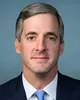
Brad Knott, a Republican representing North Carolina’s 13th District, devotes much of his floor time to ceremonial tributes to people and groups from his district, including two separate speeches celebrating a Johnston County Little League softball championship and a lengthy birthday tribute to a constituent, and he fills these speeches with greetings and pleasantries far more often than most members. On policy, he pushes for scaling back federal regulation: he introduced a bill letting parties challenge agency stop-work orders quickly in federal court, and he backed legislation to ease rules on community banks, citing the decline from more than 14,000 community banks in 1980 to roughly 4,000 today. His arguments follow standard Republican themes about the administrative state and Dodd-Frank, and he generally supports his claims with examples and figures, though some assertions, such as attributing the bank decline wholly to regulation, come without supporting evidence. He does not attack opponents personally and rarely engages in direct back-and-forth debate in these statements.Written by AI from their statements. Updated .
Average grade
B
The average grade of 5 analysed statements.
75 / 100 over 5 statements
Signal71 / 100
Relevance100 / 100
Reasoning58 / 100
RespectNot scored yet
Clarity97 / 100
Averaged over the 5 of 5 statements graded so far.
In their own words
Loses points more than most for
Greetings and pleasantries.2.8 times as often as most members.What the tags mean →×2.8
“I want to congratulate the girls' softball team from Archer Lodge, North Carolina. They won the Little League Softball World Series. It is the first World Series title for Johnston County.”
“Mr. Speaker, it is my privilege to recognize and salute the Little League Softball World Series champions from my district, specifically in Johnston County, North Carolina. Recently, they won a rigorous contest to become champions, making all of North Carolina’s 13th Congressional District proud. These are North Carolina girls, and they are all from around the Archer Lodge community. Many of them are classmates, neighbors, friends, and family. In this season, they worked, competed, and improved together. On August 8, they took the field against Kentucky in the championship game of the Little League Softball World Series, and they did not just win. They won convincingly. Pitcher Anna-Lynn Clark threw a complete-game shutout. Additionally, in the first inning, second baseman Sophie Catarrozzoli injured her ankle, and she displayed unbelievable resilience. Not only did the team continue, they continued with excellence. They rallied. They dug in, and they recorded their second straight shutout of the tournament for the World Series crown, the first in Johnston County’s history. Again, I congratulate these champions, their coaches, and the Archer Lodge community. All of North Carolina was watching, and we are proud of them.”
Official Congressional Record
Mr. Speaker, it is my privilege to recognize and salute the Little League Softball World Series champions from my district, specifically in Johnston County, North Carolina. Recently, they won a rigorous contest to become champions, making all of North Carolina’s 13th Congressional District proud. These are North Carolina girls, and they are all from around the Archer Lodge community. Many of them are classmates, neighbors, friends, and family. In this season, they worked, competed, and improved together. On August 8, they took the field against Kentucky in the championship game of the Little League Softball World Series, and they did not just win. They won convincingly. Pitcher Anna-Lynn Clark threw a complete-game shutout. Additionally, in the first inning, second baseman Sophie Catarrozzoli injured her ankle, and she displayed unbelievable resilience. Not only did the team continue, they continued with excellence. They rallied. They dug in, and they recorded their second straight shutout of the tournament for the World Series crown, the first in Johnston County’s history. Again, I congratulate these champions, their coaches, and the Archer Lodge community. All of North Carolina was watching, and we are proud of them.
“I want to wish Barbara Hinton a happy 90th birthday. She taught school and served her church in North Carolina for decades.”
“Mr. Speaker, it is my high privilege to rise today in order to pay a well-earned tribute to a special lady from eastern North Carolina: Ms. Barbara Hinton. Ms. Barbara Hinton will celebrate her 90th birthday in just a few days. Ms. Hinton is one of those people who has been a force for good and a source of profound blessings to many people throughout eastern North Carolina and beyond. I am proud to represent her in Congress and rest assured that everyone in the 13th Congressional District of North Carolina is proud of her also. Mr. Speaker, Barbara’s life is one that is built on a firm foundation. The simple and profound ingredients in her life have enabled her to serve, to teach, and to love many people in her 90 years on this Earth. Important to Ms. Hinton’s story, she is a lifelong North Carolinian, and while life was not always easy for her, from an early age, Barbara saw the Lord’s faithfulness. She learned the values of deep faith, hard work, and good stewardship that would remain with her for her entire life. Barbara married her high school sweetheart, Mr. Jimmy Hinton, and their relationship would last more than 70 years on this Earth. Together they served their country while Jimmy was in the Air Force. Together they served their community. They served their family, and they served their church. The two of them had a far-reaching and long- lasting impact. Barbara earned her degree in elementary education from Atlantic Christian College and went on to teach in the Wayne County School System. She did this for an astounding 32 years. After retiring, she, of course, was not finished. She spent 27 more years teaching preschool at her church. Across nearly six decades in the classroom, Barbara has touched thousands and thousands of children and families across eastern North Carolina. For over 68 years, Barbara has served Princeton United Methodist Church as a lay leader, a speaker, a choir member, a Sunday school teacher, and leader of the ladies ministry sharing her love of Christ with everyone she meets. She raised a family there. She built a legacy there. Her faith and service will compound for years to come. In short, Mr. Speaker, and perhaps most relevantly, Barbara Hinton has lived out the words of Psalm 121, which says, in part: ``I lift up my eyes to the mountains, where will my help come from? My help surely comes from the Lord.’’ Through the Lord’s work and grace, Ms. Barbara has been a mighty force for good for her nearly 90 years on Earth. Mr. Speaker, on behalf of my district, I say a collective happy birthday to Ms. Barbara. We are grateful for her.”
Mr. Speaker, it is my high privilege to rise today in order to pay a well-earned tribute to a special lady from eastern North Carolina: Ms. Barbara Hinton. Ms. Barbara Hinton will celebrate her 90th birthday in just a few days. Ms. Hinton is one of those people who has been a force for good and a source of profound blessings to many people throughout eastern North Carolina and beyond. I am proud to represent her in Congress and rest assured that everyone in the 13th Congressional District of North Carolina is proud of her also. Mr. Speaker, Barbara’s life is one that is built on a firm foundation. The simple and profound ingredients in her life have enabled her to serve, to teach, and to love many people in her 90 years on this Earth. Important to Ms. Hinton’s story, she is a lifelong North Carolinian, and while life was not always easy for her, from an early age, Barbara saw the Lord’s faithfulness. She learned the values of deep faith, hard work, and good stewardship that would remain with her for her entire life. Barbara married her high school sweetheart, Mr. Jimmy Hinton, and their relationship would last more than 70 years on this Earth. Together they served their country while Jimmy was in the Air Force. Together they served their community. They served their family, and they served their church. The two of them had a far-reaching and long- lasting impact. Barbara earned her degree in elementary education from Atlantic Christian College and went on to teach in the Wayne County School System. She did this for an astounding 32 years. After retiring, she, of course, was not finished. She spent 27 more years teaching preschool at her church. Across nearly six decades in the classroom, Barbara has touched thousands and thousands of children and families across eastern North Carolina. For over 68 years, Barbara has served Princeton United Methodist Church as a lay leader, a speaker, a choir member, a Sunday school teacher, and leader of the ladies ministry sharing her love of Christ with everyone she meets. She raised a family there. She built a legacy there. Her faith and service will compound for years to come. In short, Mr. Speaker, and perhaps most relevantly, Barbara Hinton has lived out the words of Psalm 121, which says, in part: ``I lift up my eyes to the mountains, where will my help come from? My help surely comes from the Lord.’’ Through the Lord’s work and grace, Ms. Barbara has been a mighty force for good for her nearly 90 years on Earth. Mr. Speaker, on behalf of my district, I say a collective happy birthday to Ms. Barbara. We are grateful for her.
“I want to congratulate the girls' softball team from Johnston County, North Carolina. They won the Little League Softball World Series.”
“Mr. Speaker, it is my privilege to recognize and salute the Little League Softball World Series Champions from Johnston County, North Carolina, today. Earlier this month, they won a rigorous contest to become the champions, making all of North Carolina’s 13th Congressional District proud. The team is out of Clayton, North Carolina, and all of these girls and their coaches are from the greater Johnston County area. Many of them are classmates, neighbors, friends, and family. For the entire season, they worked, competed, and improved together. On August 8, they took the field against Kentucky in the championship game of the Little League World Series. They did not just win. They won in dominant fashion. Pitcher Anna-Lynn Clark threw a complete game and also completed a shutout. The team’s defense allowed one Kentucky runner to reach scoring position for the entire game. The final score was 2-0. This was, remarkably, their second straight shutout of the tournament. But the scoreboard is not the whole story. In the first inning of that championship game, the girls from Johnston County lost their starting second baseman to a serious injury. Her team did not fold. They rallied around her, dug in, and secured the victory. Mr. Speaker, I congratulate these champions, their families, their coaches, and the greater Archer Lodge community. All of North Carolina is proud of them.”
Official Congressional Record
Mr. Speaker, it is my privilege to recognize and salute the Little League Softball World Series Champions from Johnston County, North Carolina, today. Earlier this month, they won a rigorous contest to become the champions, making all of North Carolina’s 13th Congressional District proud. The team is out of Clayton, North Carolina, and all of these girls and their coaches are from the greater Johnston County area. Many of them are classmates, neighbors, friends, and family. For the entire season, they worked, competed, and improved together. On August 8, they took the field against Kentucky in the championship game of the Little League World Series. They did not just win. They won in dominant fashion. Pitcher Anna-Lynn Clark threw a complete game and also completed a shutout. The team’s defense allowed one Kentucky runner to reach scoring position for the entire game. The final score was 2-0. This was, remarkably, their second straight shutout of the tournament. But the scoreboard is not the whole story. In the first inning of that championship game, the girls from Johnston County lost their starting second baseman to a serious injury. Her team did not fold. They rallied around her, dug in, and secured the victory. Mr. Speaker, I congratulate these champions, their families, their coaches, and the greater Archer Lodge community. All of North Carolina is proud of them.
“I want the House to pass this bill. Too many federal banking rules are hurting small local banks and forcing them to close or merge with big banks. This bill cuts back on those rules so small banks can stay open and lend money to everyday Americans.”
“Mr. Speaker, I rise today in strong support of H.R. 6955, the Main Street Capital Access Act. For the vast majority of our Nation’s history, community banks were the primary artery into progress for all Americans. That reality is being threatened today by sloppy and ineffective policies that originate right here in Washington, D.C. Whether it is the Dodd-Frank regulatory structure or the millions of rules and regulations that are in existence today, community banks have been choked out by these all-encompassing regulations. With administrative costs rising every year, local banks simply cannot afford to operate. We can see this most clearly in 1980 where there were more than 14,000 community banks in the United States. Now because of the regulatory structure of the current market, there are roughly 4,000 community banks. This stifles lending, reduces competition, and makes it harder for Americans, especially in rural communities, to access capital. Put plainly, the current regulatory climate punishes community banks, and it benefits larger international banks. My home State of North Carolina has long had a proud history of vibrant community banks. Today, there are very few exceptions to this, but there are really only two choices for community banks in today’s market if they want to survive. That is to grow large enough to be acquired or to merge with another institution. Whether it was Wachovia, First Citizens, BB&T, or Bank of America, each of these began in North Carolina as a local community bank before growing and becoming a key player in our economy through a merge or an acquisition. It is time to restore a market that welcomes and protects community banks, a market that encourages competition, and most importantly, one that serves the American citizen. H.R. 6955 does just that. Mr. Speaker, I thank Chairman Hill for his important work on this legislation, and I strongly urge my colleagues to support this bill today.”
Mr. Speaker, I rise today in strong support of H.R. 6955, the Main Street Capital Access Act. For the vast majority of our Nation’s history, community banks were the primary artery into progress for all Americans. That reality is being threatened today by sloppy and ineffective policies that originate right here in Washington, D.C. Whether it is the Dodd-Frank regulatory structure or the millions of rules and regulations that are in existence today, community banks have been choked out by these all-encompassing regulations. With administrative costs rising every year, local banks simply cannot afford to operate. We can see this most clearly in 1980 where there were more than 14,000 community banks in the United States. Now because of the regulatory structure of the current market, there are roughly 4,000 community banks. This stifles lending, reduces competition, and makes it harder for Americans, especially in rural communities, to access capital. Put plainly, the current regulatory climate punishes community banks, and it benefits larger international banks. My home State of North Carolina has long had a proud history of vibrant community banks. Today, there are very few exceptions to this, but there are really only two choices for community banks in today’s market if they want to survive. That is to grow large enough to be acquired or to merge with another institution. Whether it was Wachovia, First Citizens, BB&T, or Bank of America, each of these began in North Carolina as a local community bank before growing and becoming a key player in our economy through a merge or an acquisition. It is time to restore a market that welcomes and protects community banks, a market that encourages competition, and most importantly, one that serves the American citizen. H.R. 6955 does just that. Mr. Speaker, I thank Chairman Hill for his important work on this legislation, and I strongly urge my colleagues to support this bill today.
“I want Congress to pass my bill to limit the power of federal agencies. Right now, agencies can stop people from working and act as their own judges. My bill lets citizens quickly take these disputes to a real court instead.”
“Mr. Speaker, the Federal Government has been too big, powerful, and unaccountable to the American people for far too long. This is most clear in our Federal agencies, which have spent years acting as the investigator, prosecutor, and judge simultaneously and all without any accountability. Put plainly: If a Federal agency wishes to stop a particular project or activity, it may do so at any time without regard to the cost that such actions incur on the parties who are being stopped. All leverage and power rests with the regulator, and there is no real recourse for the regulated. This week, I introduced the Limiting Excessive Government Obstruction Act, also known as the LEGO Act, to stop this overreach. My bill is part of a broader effort to rein in the administrative state, to protect constitutional rights, and to eliminate the Federal bureaucracy that burdens so many Americans through restricting the creative genius that comes from real liberty. Right now, administrative enforcement cases start and end inside the very agencies that write and enforce the rules. Government officials decide both who to target and then sit as judges over those very people. Very few, except for specialized and expensive lawyers right here in Washington, D.C., have any idea of how to navigate a challenge to an agency action that halts a project. As an example, let’s say a farmer is visited by the EPA and instructed to stop farming, simply because the EPA alleges that the farmer is violating a specific rule. Right now, the farmer cannot challenge the order to stop farming in a court of law down the street from his home. He cannot continue farming. His only recourse is to file a challenge here in Washington before a ``judge’’ that is funded by the EPA. Before the challenge can be dismissed, the farmer must exhaust all administrative remedies before the EPA to show that the EPA overstepped its bounds. Not only is this unfair, but it can take years and cost millions of dollars. That is not how our government is supposed to work. Whether a farmer on their land or a local municipality building a bridge in a small town, we do not work at the mercy of a Federal agency or a nameless Federal bureaucrat. My bill changes this broken system by giving the regulated party the power to proceed quickly when stopped by a governing agency. To continue with my example, a farmer is stopped by the EPA for farming the exact same way that he has farmed for decades. Rather than having to wait on the EPA’s timeline, my bill empowers the farmer to pursue the agency order in an Article III court in front of a jury of his peers and then continue on with their livelihood. There, the farmer can seek to dismiss the regulatory effort simply by showing reasonable compliance with the law and/or the subject regulation. The effects of this bill are all favorable: Regulated parties will no longer be bound by the whims of the regulators. Harmless and sound economic activity cannot be stopped by a whim. More certainty in economic activity and projects will increase efficiency and lower costs. The bill will compel the regulating agencies to focus only on unreasonable activity. The farmers, contractors, builders, and States will develop many more ways to design, build, and advance in a compliant and reasonable manner. Lastly and perhaps most importantly, it will restore the balance needed between the regulator and the regulated. If unreasonable activity is occurring, the government should be forced to prove it in an independent court, rather than a regulated party being forced to prove the government acted unreasonably in an agency forum. Mr. Speaker, the economic miracle that we have enjoyed in the United States was never achieved by a centrally controlled planning and regulatory force. The miracle of the United States’ economy was conceived by private individuals and entities who had the freedom to build, experiment, farm, and progress in a system rooted in freedom. When the government can stop free people on a whim without any consideration of the cost, we will solidify the decline that so many of us in this country feel today. Mr. Speaker, the American people deserve a government that works for, not against, them. It is time that we rein in the bureaucracy and eliminate excessive regulatory burdens imposed by our Federal Government. I urge my colleagues to support this legislation.”
Mr. Speaker, the Federal Government has been too big, powerful, and unaccountable to the American people for far too long. This is most clear in our Federal agencies, which have spent years acting as the investigator, prosecutor, and judge simultaneously and all without any accountability. Put plainly: If a Federal agency wishes to stop a particular project or activity, it may do so at any time without regard to the cost that such actions incur on the parties who are being stopped. All leverage and power rests with the regulator, and there is no real recourse for the regulated. This week, I introduced the Limiting Excessive Government Obstruction Act, also known as the LEGO Act, to stop this overreach. My bill is part of a broader effort to rein in the administrative state, to protect constitutional rights, and to eliminate the Federal bureaucracy that burdens so many Americans through restricting the creative genius that comes from real liberty. Right now, administrative enforcement cases start and end inside the very agencies that write and enforce the rules. Government officials decide both who to target and then sit as judges over those very people. Very few, except for specialized and expensive lawyers right here in Washington, D.C., have any idea of how to navigate a challenge to an agency action that halts a project. As an example, let’s say a farmer is visited by the EPA and instructed to stop farming, simply because the EPA alleges that the farmer is violating a specific rule. Right now, the farmer cannot challenge the order to stop farming in a court of law down the street from his home. He cannot continue farming. His only recourse is to file a challenge here in Washington before a ``judge’’ that is funded by the EPA. Before the challenge can be dismissed, the farmer must exhaust all administrative remedies before the EPA to show that the EPA overstepped its bounds. Not only is this unfair, but it can take years and cost millions of dollars. That is not how our government is supposed to work. Whether a farmer on their land or a local municipality building a bridge in a small town, we do not work at the mercy of a Federal agency or a nameless Federal bureaucrat. My bill changes this broken system by giving the regulated party the power to proceed quickly when stopped by a governing agency. To continue with my example, a farmer is stopped by the EPA for farming the exact same way that he has farmed for decades. Rather than having to wait on the EPA’s timeline, my bill empowers the farmer to pursue the agency order in an Article III court in front of a jury of his peers and then continue on with their livelihood. There, the farmer can seek to dismiss the regulatory effort simply by showing reasonable compliance with the law and/or the subject regulation. The effects of this bill are all favorable: Regulated parties will no longer be bound by the whims of the regulators. Harmless and sound economic activity cannot be stopped by a whim. More certainty in economic activity and projects will increase efficiency and lower costs. The bill will compel the regulating agencies to focus only on unreasonable activity. The farmers, contractors, builders, and States will develop many more ways to design, build, and advance in a compliant and reasonable manner. Lastly and perhaps most importantly, it will restore the balance needed between the regulator and the regulated. If unreasonable activity is occurring, the government should be forced to prove it in an independent court, rather than a regulated party being forced to prove the government acted unreasonably in an agency forum. Mr. Speaker, the economic miracle that we have enjoyed in the United States was never achieved by a centrally controlled planning and regulatory force. The miracle of the United States’ economy was conceived by private individuals and entities who had the freedom to build, experiment, farm, and progress in a system rooted in freedom. When the government can stop free people on a whim without any consideration of the cost, we will solidify the decline that so many of us in this country feel today. Mr. Speaker, the American people deserve a government that works for, not against, them. It is time that we rein in the bureaucracy and eliminate excessive regulatory burdens imposed by our Federal Government. I urge my colleagues to support this legislation.