What they said. What they meant.

Plain-language translations from Congress.

Recent debates

8 latest debates

Providing for Consideration of H.R. 9576, National Fraud Enforcement Division Act of 2026; Providing for Consideration of H.R. 10326, Preventing Rip-Offs and Obtaining Oversight of Funds Act...

Official Congressional Record (opens in a new tab)

Michelle Fischbach, MN

Republican
“Let's talk about this bill. You have 30 minutes to speak. I will also speak.”
68% shorter Analysis
Official Congressional Record

Mr. Speaker, for the purpose of debate only, I yield the customary 30 minutes to the gentleman from Massachusetts (Mr. McGovern), pending which I yield myself such time as I may consume. During consideration of this resolution, all time yielded is for the purpose of debate only.

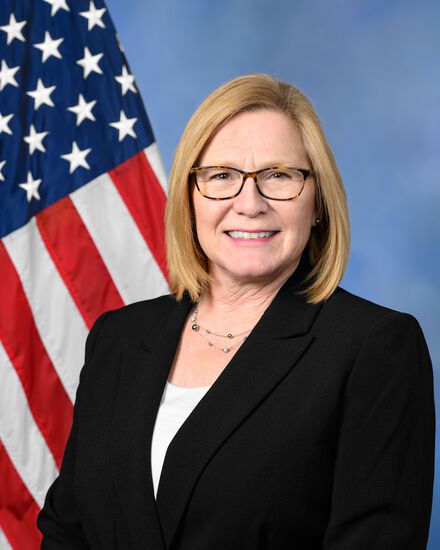
Michelle Fischbach, MN

Republican
“I support this rule. I want these bills passed. These bills do two things. They stop California's rules that would disrupt ports. And they stop fraud in government programs. A lot of fraud happened in Minnesota. Bad people stole a lot of money. They stole money meant for children and families. Some people even died because of this fraud. State officials in Minnesota hid the data from federal investigators. They didn't want anyone to know about the fraud. We need to stop this. These bills will help. They give federal investigators more power to find and stop fraud. States can't hide the data anymore. They have to hand it over to investigators. I want to stop the fraud.”
86% shorter Analysis
Official Congressional Record

Mr. Speaker, I yield myself such time as I may consume. Mr. Speaker, we are here to debate the rule that provides for consideration of five measures: H.J. Res. 210, the CRA relating to California State nonroad engine pollution control standards and ocean- going vessels at-berth; H.J. Res. 213, the CRA relating to California State nonroad engine pollution control standards and commercial harbor craft regulations; H.R. 9576, the National Fraud Enforcement Division Act of 2026; H.R. 10326, the PROOF Act; and a motion that the House concur in the Senate amendments to H.R. 5334, the Lindsey O. Graham Sanctioning Russia and Iran Act of 2026. The rule provides for consideration of H.J. Res. 210 and H.J. Res. 213 under closed rules, with 1 hour of debate each, equally divided and controlled by the chair and ranking member of the Energy and Commerce Committee or their designees, and provides each one motion to recommit. Additionally, the rule provides for consideration of H.R. 9576 and H.R. 10326 under closed rules, with 1 hour of debate equally divided and controlled by the chairs and ranking members of the Judiciary Committee or their designees and provides each one motion to recommit. The rule also makes in order a motion offered by the chair of the Committee on Foreign Affairs that the House concur in the Senate amendments to H.R. 5334. The rule provides for 1 hour of debate on the motion, equally divided and controlled by the chair and ranking member of the Foreign Affairs Committee or their designees. Mr. Speaker, I rise today in support of this rule, which accomplishes two vital needs: Protecting American economic integrity and stopping domestic fraud. By passing sanctions legislation, we strengthen our national security posturing against foreign aggression, and by passing H.J. Res. 210 and H.J. Res. 213, we are stopping California's radical maritime mandates from interrupting supply chains at our ports and driving up the cost of everyday goods for consumers. However, keeping America safe and prosperous also means addressing a domestic threat: the scale of fraud in our country. For 4 years under the previous administration, weak leadership, poor oversight, and open border policies turned public programs into piggy banks for bad actors, cartels, and organized criminal rings. Nowhere has this rot been more devastating than in my home State of Minnesota, where fraud is now estimated at a staggering $9 billion. We saw the tip of the iceberg with the infamous Feeding our Future scam, the largest pandemic-era fraud in the Nation, where 70 individuals and counting have been charged for stealing $250 million intended to feed hungry children and help vulnerable families. However, the rot did not stop there. Those same circles of corruption have infected other State-run, federally funded programs. Federal prosecutors recently unveiled the Minnesota Health Care Fraud Takedown, charging 15 individuals in connection with over $90 million in loss across childcare, Medicare, and autism care programs. In one of the scams involving autism care, bad actors paid illegal kickbacks to parents, gave false diagnoses, and billed over $46 million for services that were never actually provided, robbing the actual children with autism of the care that they needed. In another program meant to help adults with brain injuries live independently in their own homes, bad actors bought housing assets, stole Medicaid beneficiary information, and collected millions in unrendered services. In one tragic case, a Medicaid recipient was found deceased a day after scammers submitted claims for 24-hour care he never received. This is the brutal reality of unchecked fraud. When scammers rob Federal programs, vulnerable people suffer, and in the worst case, lives are lost. Yet, when Federal authorities attempt to uncover this rot, State bureaucracies resist. They withhold critical data and protect bad actors instead of defending the public trust. When Federal agencies asked Minnesota State leadership for attendance records and program data to investigate suspected childcare and SNAP fraud, State officials repeatedly refused to cooperate. If you refuse to look at the evidence and hand it over to Federal investigators, you are either grossly incompetent or knowingly complicit. That is why the legislation before us today ends this culture of obstruction and gives Federal law enforcement the tools to find, prosecute, and eradicate fraud. The National Fraud Enforcement Division Act codifies the Department of Justice's special fraud division. This legislation gives Federal law enforcement a permanent, dedicated mandate to target, investigate, and dismantle complex international and domestic fraud networks. The PROOF Act directly addresses the State-level stonewalling we have witnessed in Minnesota and across the country. It standardizes Federal access to State program data, including Medicaid, SNAP, TANF, childcare, and emergency relief funds during legitimate fraud investigations. The States will no longer be allowed to hide or conceal records while billions of dollars are funneled away from families. Importantly, the bill includes strict privacy protections to ensure law-abiding citizens' personal information remains safe during these investigations. The American people are sick and tired of watching criminals steal their hard-earned tax dollars. The fraud ends now. We have a duty to secure these programs, protect vulnerable families, and restore public trust. Mr. Speaker, I reserve the balance of my time.
Michelle Fischbach, MN

Republican
“I want to blame the other side. Fraud is bad. I want to help people who need programs. I also want to help taxpayers. They both get hurt by fraud. We need to stop fraud.”
62% shorter Analysis
Official Congressional Record

Mr. Speaker, it is unfortunate the other side does not recognize the cost of fraud. It costs us taxpayer dollars, hard- earned tax dollars. Stopping fraud helps everyone. It helps the American people save tax dollars and then potentially we will not have to tax them as much. It also helps those children and those people counting on those programs that are being robbed blind by fraudsters. Stopping it is critical, and it is important to every American citizen. Mr. Speaker, I yield 1 minute to the gentleman from Minnesota (Mr. Finstad).

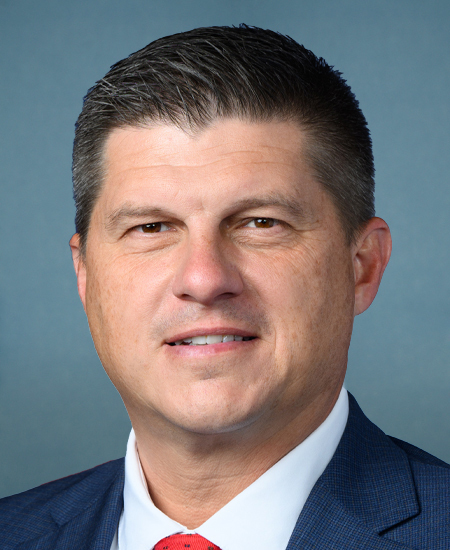
Brad Finstad, MN

Republican
“I want to support my bill. My state has lots of fraud. I blame the governor of Minnesota. I want to praise the former president and the Department of Justice. They are trying to stop fraud. I want to make that permanent. We need a permanent part of the Department of Justice to stop fraud. This will help everyone. I want a 'yes' vote.”
66% shorter Analysis
Official Congressional Record

Mr. Speaker, I thank my colleague from Minnesota for yielding. Mr. Speaker, I rise today in support of the rule and my bill, H.R. 9576, the National Fraud Enforcement Division Act of 2026. My home State of Minnesota has become far too familiar with the fraud, waste, and abuse running rampant throughout our State and country. While we have seen the systematic failure of Tim Walz and his administration, the Trump administration has stepped up, working to investigate these matters and safeguard Americans' hard-earned taxpayer dollars. The Department of Justice has taken decisive action, especially, establishing the National Fraud Enforcement Division to investigate and prosecute those who steal or fraudulently misuse taxpayer dollars. My legislation will make this division permanent within the Department of Justice and will appoint an Assistant Attorney General for national fraud enforcement, who will head the National Fraud Enforcement Division and perform duties laid out by the Attorney General. It is high time to put an end to the fraud plaguing this country by establishing this permanent framework to strengthen our Federal fraud prosecution efforts. Mr. Speaker, I urge a ``yes'' vote.

Harriet M. Hageman, WY

Republican
“I support this rule. It will let the House vote on bills to fight fraud and reduce regulation. This rule includes two Congressional Review Act resolutions. I want to thank the members who proposed them. The Congressional Review Act is a good tool to stop bad rules. The Republican majority has used it 24 times. The two resolutions will stop two more California Clean Air Act waivers. The Clean Air Act gives California a waiver. But California is abusing this. Other states adopt California standards. Manufacturers follow California standards for the whole country. This forces Wyoming to follow California law. That is bad for consumers. We stopped five waivers last year. I want to stop two more now. I want the House to pass this rule and the other bills.”
64% shorter Analysis
Official Congressional Record

Mr. Speaker, I rise today in support of House Resolution 1530. If we pass this rule, the House will vote on legislation to continue to root out rampant fraud and deliver crucial deregulation to the benefit of the American consumer. Notably, this rule covers two Congressional Review Act joint resolutions offered by Representatives Gallagher and Fong, and I thank them for their leadership on this issue. The Congressional Review Act allows Congress to terminate bad regulations, a vital check over the ever-growing administrative state. Under this Republican majority, we have used the CRA 24 times to achieve a truly bold deregulatory agenda. The two joint resolutions this rule tees up are part of this strategy. If this rule passes, the House will be able to terminate two more California Clean Air Act waivers approved by the EPA. The Clean Air Act, which codifies Federal jurisdiction over emissions, preempts all State emission standards. California, however, is not preempted. It can develop its own emissions standards and request a waiver that the EPA must approve, subject to limited disqualifying conditions. California is abusing this State waiver process in a manner with national policy implications that harm consumers. First, section 177 of the Clean Air Act allows other States to adopt these California standards, which 17 States and the District of Columbia have done. Second, because California is one of the largest State-based economies, vehicle manufacturers abide by their overly stringent standards, as it would not be economical to make certain vehicles for the California market and others for the Wyoming market. This subjects Wyoming to California law, undermining our State authorities and Federal law to subject us to climate lunacy policies with devastating consequences for consumer choice, safety, and prices. Congress took a bold step in negating five of these existing waivers last year, and by passing this rule, we can get to work on two more. I would also note that there are four other CRA joint resolutions pending, one of which I have cosponsored, that Congress must act upon to meet the moment. Mr. Speaker, I urge all of my colleagues to support House Resolution 1530 and the underlying legislation.

Daniel Meuser, PA

Republican
“I want to talk about the rule for the fraud bills. The other side talks about pardons. That is just an excuse to avoid fighting fraud. They did nothing about fraud before. They let billions of dollars in fraud happen. The fraud task force found $245 billion in fraud. There is hospice fraud. There is fraud in Los Angeles and Philadelphia and Minneapolis. The other side didn't do anything. My side is fighting fraud. We have a bill for an overpayment czar. I want my colleagues to vote for the rule. I want the House to pass the fraud bills.”
76% shorter Analysis
Official Congressional Record

Mr. Speaker, I thank the gentlewoman, Michelle Fischbach, for her leadership here. Wow, we have heard gaslighting on this floor before, but here, somehow or another, pardons have anything to do with fighting fraud? That is the excuse to not help us fight fraud, which, of course, nothing was done before. By the way, Mr. Speaker, I don't recall hearing about Hunter Biden and others receiving pardons from their father, and also pardons given to those who weren't even accused of crimes but could be one day. I don't remember any of that being raised. I rise in support of this rule, which would allow the House to consider two important pieces of legislation that improve the Federal Government's ability to combat taxpayer fraud. You would think that this would be something that would be bipartisan, combating taxpayer fraud, which is in excess of $254 billion that we have uncovered so far. If we have to do it on our own, we will, Mr. Speaker, because that is what we are about. We are about straightening things out, correcting all the wrongs, particularly the last 4 years. This is a big part of it. The Task Force to Eliminate Fraud has uncovered, as I said, $245 billion in taxpayer fraud. We have seen it in Los Angeles. I heard this morning in a CMS meeting that the level of hospice fraud that existed was in the multibillions. By the way, the 900 or so hospices that were shut down, not one of them called to complain that they were being shut down, that they couldn't serve their so-called providers anymore. Guess what. This is under the jurisdiction of Democrat leadership that this is all occurring. Nothing was done on fraud for 4 years during the Biden administration, during the Pelosi reign, during the time when these gentlemen and others had the gavels. What kind of nonsense is this? We are calling on pardons as a reason not to be going after fraud? By the way, I have constituents having fraud committed on them. We have fraud in Philadelphia. We have fraud in Minneapolis, the learning center. Has anybody come out on the other side and denounced that, Mr. Speaker? This is outrageous. My Republican colleagues and I have been fighting taxpayer fraud as a top priority. We have introduced legislation to establish an overpayment czar to help State-level fraud prevention. We have supported commonsense reform. Mr. Speaker, I urge my colleagues to support this rule.

Michelle Fischbach, MN

Republican
“I don't want to talk about the other speaker's topic. I want to talk about fraud. People steal government money. I don't like that. I want taxpayers to spend more money. More money for my fraud fighting program. The government needs more power to go after the people who steal government money. I want to make sure people who steal government money get punished. The government needs to do more to catch the people who steal government money. I want you to vote for this rule. Then the government can spend more money on fraud fighting programs.”
73% shorter Analysis
Official Congressional Record

Mr. Speaker, I yield myself the balance of my time. Mr. Speaker, when fraud is exposed, there are several ways people respond. They can attack it and cover it up, minimize it, or like we have seen today, just simply talk about something else over and over. For years, State officials tasked with managing Federal funds minimized fraud, looked the other way, and allowed Federal taxpayers' dollars to be stolen. I do hear about the fraud and the theft every single day from people. As this fraud has come to light, House Republicans have led the charge to root out waste, fraud, and abuse from our Federal programs. We passed the Pandemic Unemployment Fraud Enforcement Act, the Stop Child Care Scams Act, the Fraud Prevention and Accountability Act, and we passed the Stop Fraudulent Payments Act. I have personally fought this fight on the House Oversight Committee, waiving on to get answers from State officials about how billion-dollar fraud networks were allowed to operate unchecked in Minnesota. I have introduced legislation to protect whistleblowers who expose corruption from retaliation and legislation to stop benefit dollars meant to help vulnerable families at home from being sent overseas. While executive branch actions and temporary task forces provide important support, they are not enough on their own. Congress must step up and deliver permanent solutions that ensure future State and Federal administrations properly oversee Federal funds. That is why the bills before us today under this rule are so critical. By passing the National Fraud Enforcement Division Act, we codify a permanent, dedicated division with the Department of Justice to ensure investigating and prosecuting fraud remains a long-term priority. Through the PROOF Act, we fix the bottleneck in these investigations by removing State-level resistance and mandating data sharing so Federal agents can clean up Federal programs. We have shown we will not allow State officials to ignore basic enforcement checks. Every single dollar stolen by fraudsters is a dollar taken away from vulnerable families. Mr. Speaker, I urge my colleagues to vote ``yes'' on this rule. The material previously referred to by Mr. McGovern is as follows: An Amendment To H. Res. 1530 Offered By Mr. McGovern of Massachusetts