Analysis · beta
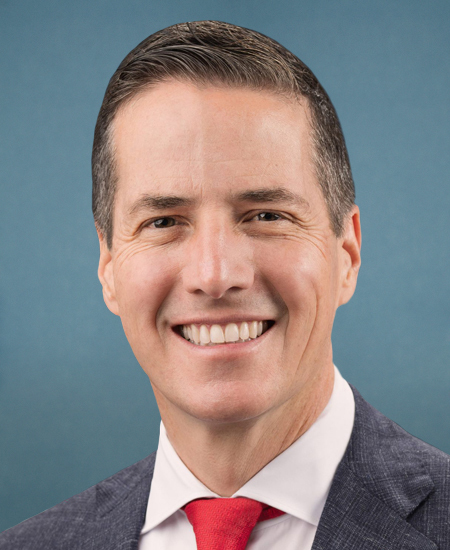
Bernie Moreno
Not analysed yet
A requested analysis is usually ready within half an hour; come back to this page or reload it.
Madam President, like for you, although you are newer, there are probably a lot of things you thought about that the U.S. Senate does or doesn't do, and there is probably a process of exploration: How does all of this actually work? And in my 18 months of sitting where the Presiding Officer is, I have really taken the time to learn, not just what the procedures of the Senate are but trying to actually understand: What were our Founders thinking when they created these processes? So for the people in the Gallery and the people watching at home, what we are actually supposed to be doing right now is debating as to whether we should confirm Matthew Byrne to be a judge in Ohio. Yet, I guarantee you, there hasn't been a single word about whether Matthew Byrne is fit to be a Federal judge or not. And, I will tell you, he absolutely is--because one of the things that we have done as a collective body is abandoned the principles of how this place is supposed to work. We have a vote at 2:15 p.m. today that is a cloture on the motion to proceed. I am sure everybody in the Gallery knows exactly what that means. I am sure they don't. What our Founders intended was that, when legislation was to be considered in the U.S. Senate, that there would be a robust debate as to whether a bill should be considered or not. And those of you watching on C-SPAN are just seeing me. What you are not seeing is what the people in the Gallery are seeing, which is that I am the only one in the Chamber. I have never heard of a debate that existed when nobody was present to have said debate. So it is not really a motion to end debate because debate has actually never started. So in the most ironic twist, what we are going to vote on at 2:15 today is whether we should consider this bill or not. And if the answer is that we are not, it says we should continue to debate this bill. But we have never started debating it publicly so the American people get to hear both sides of this argument, not a 30- second sound bite on X or a 45-second interview on CNN or FOX News, but an actual thoughtful debate and exchange of ideas. We cannot have a republic if we don't follow the principles of that republic, and those principles mean that we strengthen our institutions; we follow the process as outlined. What I am asking my colleagues to vote for at 2:15 p.m. is to say: Yes, we should consider this bill. It doesn't mean you should pass it. It doesn't mean you support it. But we should end the debate as to whether we should even consider it. That is the entirety of the vote. From there, our process--that is right there in that book, Madam President, the one behind the Bible--says there are 30 hours of robust debate. And I have been waiting for 18 months to hear robust debate in this Chamber. Instead, what we get is sound bite after sound bite after sound bite--speeches that were written by staff that are read in this Chamber for the idea that you can clip it for social media. That is not what the American people deserve, nor is it what they want. But when you have been here too long, I am here to tell you, all of that becomes normal. You get to the point where it is just normal to do things a certain way. People come in and out of committee hearings, don't listen to the witnesses. They go to some meetings, not others. They are semibriefed; they are not briefed. Why don't we just go back to the original intent of this place? Let's vote yes on the motion to proceed to end debate--by the way, which never started--and then have 30 hours. Senators here can come to the floor. People in the Gallery, people at home can hear an actual debate. If, for example, you think that the Clarity Act doesn't go far enough for law enforcement, let's hear one point of view, and let's hear the other side give an alternative point of view--not because you have written down talking points, but actual arguments that come from a position of knowledge. If you think the ethics provision is too weak, let's hear the arguments from both sides. Let's give the American people the opportunity to hear this debate. And if at the end of that, there isn't 60 votes to end the debate, then the bill dies. But if there is enough debate that has been heard, we say: OK, now it is time to actually get on the bill and actually pass it or start the process of passing it. There is an amendment process that can exist where people can offer ideas. But here is what I will tell the Presiding Officer because I am certain, in your background, your No. 1 issue in life wasn't digital assets. You did a lot of other amazing things in your career and life and really helped people. So the idea behind that is to really understand it to know what the issues are. But here is what we do agree on, Republicans and Democrats: This industry does need regulation. There is no regulation today for the digital assets industry. The industry is begging for regulation. Think about how crazy that is. Typically industries are like: Yeah, you know what? Leave us alone. We don't want the government in our business. They want clear rules of the road. They want to be able to develop innovative products that help average Americans take advantage of their being able to earn money, earn rewards on their money, be able to be more efficient when they transact. That is what working Americans want. They want to see their government work. So we know--think about that--total unanimous support for hey, we need regulation. That is not the debate. The debate is how we do that. Well, that is what we created. We spent 18 months--18 months, including with the Presiding Officer's brother, in many meetings where we crafted a bill that started as 300 pages. It is now over 600 pages. Part of the problem is that I don't know that everybody has read all 600 pages. They may not even know what is in the bill. We all know the famous line: We will find out what is in the bill after we vote for it. Terrible. We are ready to consider a bill to do what all of us agree on, which is to regulate the digital assets industry. At 2:15 p.m., we are going to say: Let's end the debate. Let's consider this bill. Let's move this forward. I urge my colleagues to vote yes on cloture on the motion to proceed, ending the debate, and then, since we didn't have a debate, let's actually have one before we consider final passage, and respect the institution that all of us are--at least I know I am--honored to be a part of. With that, Madam President, I urge all my colleagues to vote yes at 2:15 p.m.